China Top 10 Fiber Molded Packaging Manufacturers?
China’s Top 10 Fiber Molded Packaging Manufacturers deserve closer attention as global brands seek practical alternatives to plastic trays, foam inserts, and rigid cartons. China’s manufacturing base offers broad tooling capacity, competitive production, and growing expertise in molded pulp. Yet supplier quality varies widely.
As packaging consultant Paul Jenkins has observed, “Sustainable packaging is not about replacing one material with another; it is about using less material overall.” This principle matters when evaluating fiber molded packaging. A molded-pulp insert may look environmentally responsible, but its real performance depends on fiber sourcing, water use, energy consumption, transport distance, and end-of-life systems.
The leading manufacturers usually demonstrate more than attractive product photographs. They provide material specifications, compression-test results, moisture resistance data, and production samples. Some operate automated forming lines, while others rely heavily on manual finishing. That difference affects consistency, labor costs, and delivery reliability.
Look closely.
A strong supplier should explain its tooling process clearly. It should also identify whether the material uses recycled paper, virgin fiber, agricultural residue, or a blended feedstock. Certifications can support credibility, but certificates alone cannot replace factory audits and independent testing.
This ranking considers manufacturing experience, product range, customization ability, quality control, export performance, and sustainability transparency. It is not a perfect judgment. Public information remains uneven, and some manufacturers disclose impressive capabilities without publishing enough measurable evidence. Buyers should verify every important claim before signing a contract. The best choice is not always the largest factory. It is the supplier that can repeatedly deliver protection, fit, appearance, and documented environmental performance.
Fiber Molded Packaging in China: Industry Overview and Product Scope
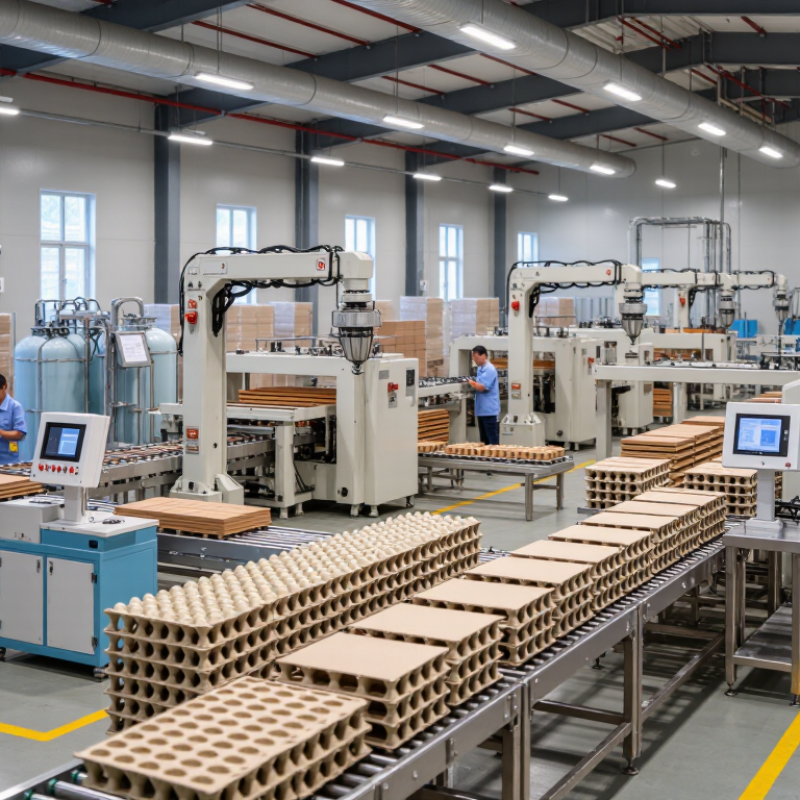
China’s fiber molded packaging industry serves food, electronics, household goods, and industrial supply chains. Manufacturers commonly use recycled paper, bamboo fiber, or agricultural residues such as bagasse. These materials are pulped, formed on molds, dried, trimmed, and inspected.
The product scope is broad. It includes egg trays, fruit holders, takeaway containers, bottle protectors, electronics inserts, and molded corner guards. Some factories offer custom tooling for unusual product shapes. Others focus on high-volume standard items with faster production cycles. Surface finishes may include water-based coatings, printing, or moisture-resistant treatments. However, “compostable” does not always mean suitable for every disposal system.
Reliable manufacturers normally control pulp consistency, wall thickness, moisture, and dimensional tolerance. Food-contact products require migration testing and careful material documentation. Protective packaging needs compression, vibration, and drop testing. Production audits should also review drying capacity, mold maintenance, worker training, and traceability records.
Factory capability can vary significantly. A polished sample may hide weak batch control. That matters. Buyers should request recent test reports, production samples, and quality records before approving a supplier. Environmental claims also deserve scrutiny, because recycled fibers may lose strength after repeated processing. Better design often balances material reduction with realistic protection, rather than chasing the thinnest possible package.
China’s molded fiber packaging industry is part of the broader paper and paperboard sector. The chart shows total production and apparent consumption from 2019 to 2023, providing market context for applications such as food trays, egg cartons, molded pulp cushions, bowls, clamshells, and protective packaging.
Source: China Paper Association industry statistics. Unit: million metric tonnes.
How the Top 10 Manufacturers Are Selected and Compared
China Top 10 Fiber Molded Packaging Manufacturers?
To compare China’s top ten manufacturers, I would use a weighted scorecard, not factory size alone. Smithers’ 2024 analysis forecasts the global fiber-based packaging market to exceed US$300 billion by 2028. This growth makes supplier verification more important.
Production evidence matters.
The selection should examine annual output, molding equipment, tooling capability, recycled fiber content, and defect rates. A factory should provide recent audit records, material test reports, and sample approval data. ISO 9001, FSC chain-of-custody status, and food-contact compliance can support reliability, but certificates need checking. They are not automatic proof of quality.
Cost is only one comparison point.
Delivery stability, minimum order quantities, prototype speed, and packaging performance should receive clear weights.
For example, a supplier may score 25% for product quality, 20% for production capacity, 15% for sustainability data, and 15% for delivery performance. The remaining points can cover engineering support and total cost. Mordor Intelligence identifies steady growth in molded pulp packaging demand, yet market forecasts vary by scope and region. That matters.
I would also test three physical samples:
a dry box
a humid box
a dropped box
Small cracks often appear after transport, not inside a showroom. My own caution is simple: supplier rankings can become subjective when factory data is incomplete. Transparent scoring is better, but never perfect.
Manufacturing Technologies, Materials, and Sustainability Practices
China’s top fiber molded packaging manufacturers increasingly compete through process control, not appearance alone. Wet-formed fiber uses recycled paper, bamboo pulp, or agricultural residues such as bagasse. The slurry is shaped on porous molds, pressed, dried, and trimmed. Dry molding can reduce water use, while thermoformed fiber creates smoother trays with tighter dimensions.
Factory Capability
Factory capability matters. Buyers should inspect pulp preparation, mold accuracy, drying temperature, and edge strength. A stable drying line prevents warping and weak corners. Some manufacturers use heated presses to improve surface quality and reduce coating requirements. Others combine recycled fibers with virgin pulp for better stiffness. That choice affects both performance and traceability.
Sustainability Verification
Sustainability claims need evidence. Ask for recycled-content records, fiber sourcing documents, wastewater data, and energy measurements per thousand units. Compostability depends on local facilities, additives, inks, and actual disposal conditions. It is not automatic. Manufacturers with environmental management systems and routine third-party testing offer stronger reliability, but certificates do not replace factory audits. Packaging samples should face compression, humidity, oil, and drop tests before approval.
There are trade-offs. Molded fiber can need more space during shipping than thin plastic. Some water-saving processes may consume more heat. No process is impact-free. A thoughtful top-ten comparison should examine the full production chain, not just a green label or polished product sample.
How to Choose the Right Chinese Fiber Molded Packaging Supplier
Choosing the right Chinese fiber molded packaging supplier requires more than comparing prices. Start with the product’s real conditions: weight, drop height, humidity, stacking time, and contact requirements. A supplier should explain how recycled paper fiber, bamboo fiber, or other approved materials fit your application. Ask for material specifications, compression data, and recent test reports.
Request physical samples made with production-intent tooling. A polished prototype can hide weaknesses. Check edge strength, surface dust, odor, moisture resistance, and fit after repeated assembly. Measure the sample yourself. Small dimensional changes may affect automated packing lines.
Confirm whether the supplier controls pulping, molding, drying, trimming, and inspection internally or relies on subcontractors. Clear process ownership improves traceability.
Audit communication as carefully as machinery. Reliable suppliers provide drawings, tolerance records, batch codes, and corrective-action reports. Visit the factory when possible, or arrange an independent inspection before shipment. Confirm production capacity during peak seasons, mold ownership, minimum order quantities, packaging methods, and realistic lead times. Certifications should match your market and product use; verify their scope and validity instead of accepting copied files. Ask how wastewater, fiber dust, and rejected parts are handled. Responsible production matters.
Price still matters, but the cheapest quotation may create higher tooling, rejection, or freight costs later. Leave room for design changes. My own evaluation checklist would not be perfect; supplier claims need evidence, and one successful sample proves little. Small trial orders reveal more than confident presentations.






 English
 Polski
 Čeština