
Choosing fiber molded packaging for global shipping is not simply a material decision. It is a risk decision.
A package may look sustainable in a warehouse and fail after three weeks at sea. Salt air, humidity, vibration, compression, and sudden temperature changes can weaken its structure. Product weight matters too. A light tray protects differently from a dense machine component. This guide examines how molded fiber performs under real shipping pressure. It considers cushioning, stacking strength, moisture resistance, dimensional accuracy, and storage conditions. It also explores recycled content, end-of-life options, and regional recycling limitations. “Packaging must protect the product before it can be judged sustainable,” says Dr. Steven M. Selke, a respected packaging educator and materials researcher. That principle remains easy to forget.
The right fiber molded packaging should fit the product closely. Excess space invites movement. Excess material increases cost and may complicate recycling. Testing should include drop trials, vibration exposure, compression tests, and humidity conditioning. Laboratory results help, but they are not the entire story. A design can pass controlled testing and still disappoint during rushed loading or uneven pallet stacking. We should admit that uncertainty. Global logistics rarely behaves perfectly. Suppliers may also describe fiber products as universally recyclable, although local collection systems differ widely. Therefore, buyers need documented specifications, realistic performance data, and supplier experience across shipping routes. This article offers a practical framework for making that choice with greater confidence, fewer assumptions, and room for honest reassessment.
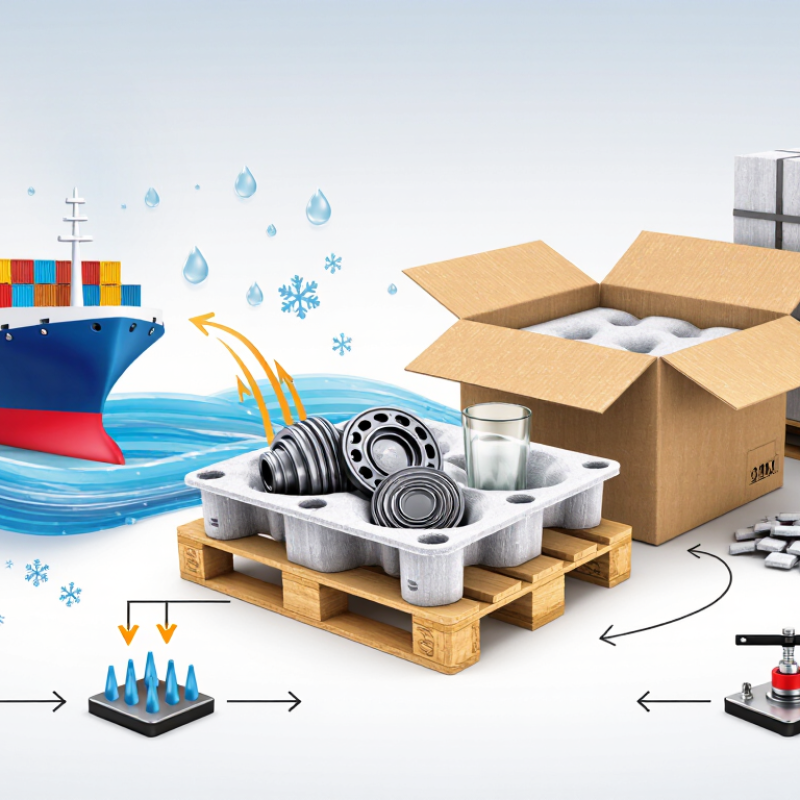
Fiber molded packaging is a protective material shaped from recycled paper fibers or agricultural by-products. Manufacturers press wet or dry fibers into trays, inserts, corner supports, and custom shells. These parts hold products firmly, reducing movement inside export cartons. The material feels light, but it can absorb shocks when designed with suitable ribs and walls.
Why use it for global shipping? Fiber packaging can reduce plastic use, improve carton organization, and lower shipping weight. It also stacks efficiently in warehouses and containers. However, it is not automatically suitable for every route. Humidity, compression, vibration, and rough handling can weaken poorly designed parts. Local recycling or composting access also varies widely. A responsible selection needs real transit testing, not attractive samples alone. Sometimes, the first design fails.
Tips: Measure the product carefully. Add clearance for insertion and removal. Test compression, vibration, drops, and moisture exposure. Check whether the fiber grade matches the product’s weight and surface sensitivity. Ask for consistent dimensions and documented material information. Do not ignore small gaps; they can become major damage points during long journeys. A simple pilot shipment often reveals weaknesses that laboratory testing misses.
Fiber molded packaging should match the product’s weight, shape, and shipping risks. Recycled paper pulp often suits lightweight items with moderate impact exposure. Dense molded fiber works better for heavier products and repeated stacking. For delicate components, add shaped ribs, corner supports, or a separate cushioning layer. Do not judge protection by appearance alone. A thick tray may still fail under compression.
In practical packaging trials, I check drop resistance, vibration, stacking pressure, and humidity changes. Sea freight can expose packaging to damp air for weeks. Fiber may soften if its moisture resistance is insufficient. A water-resistant treatment can help, but it may affect recycling options. Confirm the final material with suppliers and test samples before mass production. My first design was too tight, which caused scratches during assembly. That mistake changed the internal clearances.
Tips: Match the fiber density to product weight. Use deeper cavities for unstable shapes. Leave small gaps around fragile surfaces. Test packed cartons after storage in warm, humid conditions. Check whether the molded parts recover after compression. If the product has sharp edges, add protective folds or softer contact zones. Keep testing realistic. A laboratory drop may not reflect rough warehouse handling.
Global shipping also requires consistent dimensions and stable nesting. Efficient nesting reduces carton movement and storage volume. However, tighter nesting can complicate unpacking. Protection and usability must be tested together.
Choosing fiber molded packaging for global shipping means designing for movement, moisture, and repeated handling. The most protective features are shaped corners, deep nests, and molded ribs that keep products away from outer walls. These structures spread impact across the package instead of concentrating force on one fragile point. Fit matters greatly. A product should not rattle, even after vibration loosens small contact areas.
During transit testing, use drop, compression, vibration, and climate conditioning tests. Test samples should face temperature changes and high humidity before evaluation. Molded fiber can absorb moisture, so drainage paths, ventilation gaps, or moisture-resistant treatments may protect dimensional stability. However, coatings can affect recyclability and should be reviewed carefully. That trade-off deserves attention. Edge protection also matters when cartons are stacked in warehouses or containers. Reinforced corners and a firm base help prevent crushing under uneven loads.
Reliable designs come from measured evidence, not appearance alone. Record product movement, corner damage, and package deformation after every test. A simple internal clearance check can reveal problems that photographs miss. Packaging engineers should also confirm nesting efficiency, because excessive empty space increases movement and shipping volume. One design may perform well in dry conditions but fail after ocean humidity exposure. That is an uncomfortable finding, but useful. Small improvements, such as thicker support ribs or a tighter retention point, can reduce damage without adding unnecessary material.
How to Choose Fiber Molded Packaging for Global Shipping?
Fiber molded packaging must protect the product and satisfy different market requirements. Check material declarations, recycled content records, and testing reports before approving a supplier. Ask whether the packaging contains coatings, adhesives, or additives that complicate recycling. Import rules can differ by destination, so verify current requirements with qualified local experts.
Tips: Request compression, vibration, drop, and moisture testing. Inspect samples after simulated sea and air transport. A package that survives the warehouse may fail beside a humid container door. Measure the product, package, and pallet together. Dimensional weight can increase freight charges more than material savings reduce them.
Sustainability needs more than a recycled-content percentage. Compare fiber sources, production energy, transport distance, and end-of-life options. Recyclability may depend on local collection systems, not only package design. In packaging trials, teams sometimes choose a lighter tray too quickly. It can deform during stacking and create costly product damage. That mistake deserves attention. Calculate total shipping cost using freight, labor, storage space, damage rates, and disposal fees. Also consider nesting efficiency, because empty volume travels worldwide. Supplier quality controls matter as much as the fiber specification. Review batch consistency, moisture limits, dimensional tolerance, and corrective-action records. A slightly higher unit price may be reasonable when it reduces returns and repacking. However, assumptions should be tested with real shipment data.
Screening comparison of compliance readiness, sustainability profile, and total shipping-cost efficiency.
The scores use a 0–100 evaluation scale for an early design-screening model. Compliance should be verified against the destination market, food-contact requirements where applicable, packaging labeling rules, coating chemistry, and recognized standards such as EN 13432 or ASTM D6400 when compostability is claimed. Sustainability scores depend on recycled content, fiber sourcing, additives, and local recycling infrastructure. Shipping-cost efficiency should be recalculated using actual package dimensions, unit weight, pallet density, transport mode, and current freight quotations.
How to Choose Fiber Molded Packaging for Global Shipping?
Choosing fiber molded packaging globally requires more than replacing plastic with pulp. UNEP’s Turning off the Tap report states that packaging represents about 40% of global plastic use. This pressure encourages fiber adoption, but performance still comes first. Smithers’ market analysis forecasts molded fiber packaging growth of roughly 7% annually through 2028. That growth may hide a practical weakness: humidity can soften fibers during ocean transport.
Test it damp. Build samples with the real product, cushioning, and closure system. Run drop, compression, vibration, and warehouse-stacking tests under ISTA procedures or ASTM D4169. Add conditioning at high humidity, especially for routes crossing tropical ports. Measure deformation, product movement, dust, and seal failure. A package that survives a laboratory drop may still fail after six weeks in a humid container. Do not guess.
Selection should compare recycled content, basis weight, tooling accuracy, nesting efficiency, and recovery options. The World Bank’s What a Waste 2.0 report projects global waste could reach 3.4 billion tonnes by 2050, making material efficiency increasingly important. During implementation, approve one specification, one inspection method, and clear tolerances for every plant. Audit moisture levels and compression strength by batch. A pilot shipment is valuable. It may expose problems that prototypes miss. I would also review the design after launch; fiber packaging often needs small changes in fit, drying, or stacking geometry before it becomes reliably global.