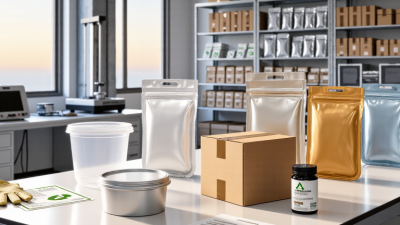
Choosing a full service packaging supplier is not just a sourcing decision. It affects how products move from the production line to a customer’s hands. A good partner can coordinate design, materials, printing, assembly, and delivery. That can reduce handoffs, but it does not automatically guarantee better results. The details matter.
Packaging educator Walter Soroka is known for treating packaging as a system, rather than a container alone. A useful principle consistent with that approach is: “Evaluate the package, the process, and the supply chain together.” This is a practical lens, not a direct quotation. It points to the questions buyers should ask: Can the supplier explain material choices? Can they show sample runs? How do they manage color consistency, lead times, and quality checks?
Look closely at the work itself. Ask to review a physical sample under ordinary store lighting. Check the seal, print alignment, carton strength, and how easily the package opens. Request clear timelines and named contacts for design approval, production, and shipping. A supplier’s technical knowledge matters. So does their willingness to flag a weak assumption before it becomes an expensive reprint.
Small tests help. Real evidence counts. Compare proposals on total cost, not just unit price, and ask what changes if order volumes shift. One point deserves reflection: consolidating services can simplify coordination, yet it may also create dependence on one provider. A thoughtful full service packaging partnership should offer clear accountability, measurable quality standards, and room to question the plan. A glossy sample is encouraging. Repeatable performance is stronger.
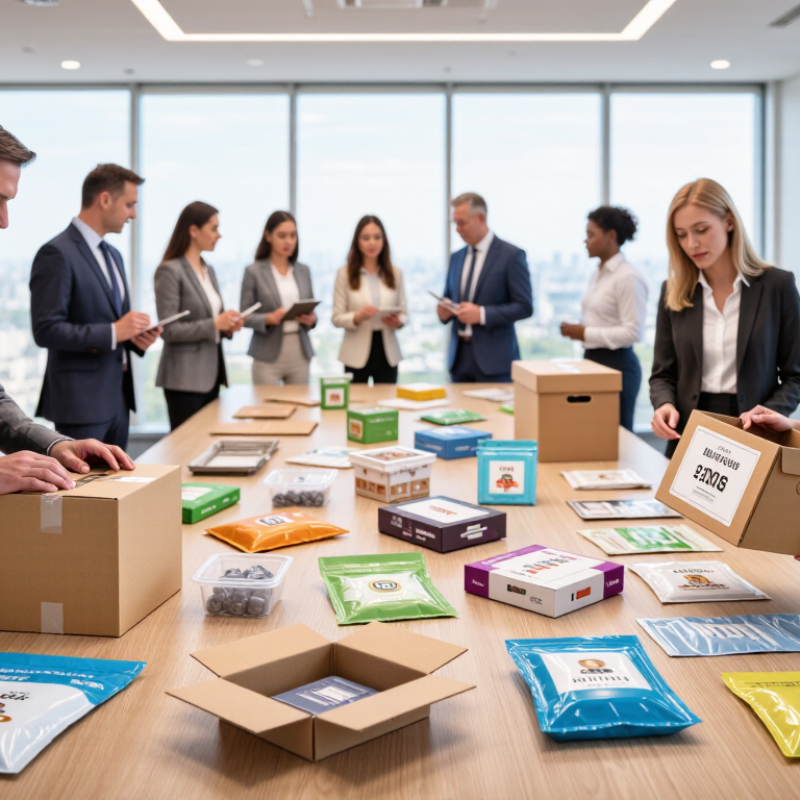
A supplier comparison only works when every candidate prices the same job. Write down the product’s dimensions, weight, fragility, fill temperature, and required shelf life. Specify the packaging format, materials, print needs, and shipping conditions. A glass jar shipped across several distribution centers needs different protection from a lightweight pouch sold locally. Small details matter.
Estimate annual demand, typical order size, and peak-month volume. Ask suppliers to quote against the same forecast, including setup costs, minimum order quantities, lead times, and storage fees. Then define “full service” in practical terms: does it include structural design, prototypes, material sourcing, production, quality checks, inventory management, and delivery?
OECD’s Global Plastics Outlook (2022) reports that packaging generated 40% of global plastic waste in 2019. That figure makes material choice worth discussing early, not after a quote is approved. Still, a recyclable option is not automatically the best fit; product protection and local collection access matter too.
Tips: Send each supplier one shared brief and a sample product. Request a written breakdown of included services, exclusions, and change fees. Compare the details, not just the headline price.
The EPA reported that U.S. packaging and containers generated 82.2 million tons of waste in 2018. This figure measures waste generated, not the amount sent to landfills. That distinction matters. When choosing a full-service packaging supplier, use it as a reason to examine material choices across a package’s life.
Ask suppliers to compare material weight, recycled content, product protection, and local recovery options using written specifications. A lighter pouch may reduce shipping weight, yet mixed layers can complicate sorting. A paper carton may seem recyclable, but coatings, inks, and food residue can affect acceptance. Test real packages: stack filled cartons, check seals after temperature changes, and inspect for breakage during transit. Small failures create waste.
Request a side-by-side assessment of fiber, glass, metal, and plastic formats, including what nearby facilities accept. Ask for evidence behind recycled-content claims and clear limits on environmental comparisons. A material label alone is not enough. Look for a supplier willing to explain tradeoffs, support trial runs, and track damage or scrap. The data may be imperfect; share assumptions and revisit them after launch.
A full-service packaging supplier should provide more than a certificate on a wall. Ask for its current ISO 9001:2015 certificate and check that the certified scope covers the site, processes, and packaging you will actually use. The ISO Survey 2022 recorded 1,265,216 ISO 9001 certificates worldwide. That shows broad adoption, not supplier performance. A certificate is a starting point, not a verdict. Request recent audit findings, corrective-action records, and evidence that recurring defects are investigated.
Walk through a real production record with the supplier. Can it trace a finished carton or pouch back to its material batch, inspection results, and release approval? Check how changes to inks, adhesives, or specifications are reviewed. For regulated uses, request current declarations and test reports relevant to the product and destination market; requirements can differ. Eurostat reported 186.5 kilograms of packaging waste per EU inhabitant in 2022, making reliable material data and documentation increasingly important. Look for clear ownership of compliance updates, not a vague promise to “follow regulations.” Some records may be incomplete. Note that—and agree on a dated corrective plan before approval.
| Verification Dimension | What to Check | Evidence to Request | Practical Acceptance Check |
|---|---|---|---|
| ISO 9001:2015 certification | Confirm the certificate is current and covers the actual manufacturing site and relevant packaging activities. ISO 9001 certification concerns the quality management system; it does not, by itself, certify that packaging complies with product-specific regulations. | Certificate showing the site address, scope, issue and expiry dates, certification body, and accreditation details. | Verify the certificate with the certification body or its public directory. Check that the stated scope includes the processes and location proposed for your work. |
| Documented quality processes | Assess how the supplier controls specifications, production changes, nonconforming product, corrective actions, internal audits, and management review. | Quality manual or process overview; redacted examples of change-control records, corrective-action reports, and internal-audit findings. | Ask for a recent example showing how an issue was contained, investigated, corrected, and checked for effectiveness. |
| Supplier and material controls | Check how raw materials, inks, coatings, adhesives, and outsourced processes are approved and monitored against agreed specifications. | Supplier-approval procedure, material specifications, incoming-inspection records, and relevant declarations or test reports. | Confirm that material substitutions require documented review and customer approval where agreed in the specification. |
| Lot traceability and recall readiness | Determine whether finished packaging can be linked to production records and incoming material lots, and whether affected shipments can be identified. | Traceability procedure, sample batch records, and a redacted mock-recall or trace exercise. | Review whether the exercise identifies the relevant materials, production date or lot, quantities, and shipment destinations within the supplier’s defined process. |
| Food-contact requirements, where applicable | For packaging intended to contact food in the EU, assess applicability of Regulation (EC) No 1935/2004 and good manufacturing practice under Regulation (EC) No 2023/2006. Plastic food-contact materials may also fall under Regulation (EU) No 10/2011. Requirements depend on material, intended use, and market. | Applicable declarations of compliance, supporting documentation, intended-use conditions, and relevant migration or other test reports. | Check that documents identify the material and intended conditions of use, such as food type, contact time, and temperature, where relevant. Do not treat a generic certificate as proof for every use. |
| Food-contact requirements, United States | For U.S. food-contact uses, determine whether each substance and use is authorized under applicable FDA requirements, including relevant provisions of 21 CFR, an effective Food Contact Notification, or another applicable basis. | Material composition information as appropriate, supplier compliance statements, and supporting regulatory documentation for the intended food-contact conditions. | Verify the regulatory basis for the specific substance and intended use. FDA compliance should not be represented as a blanket approval of all packaging or all uses. |
| Packaging and packaging-waste rules | Identify the markets where the packaging will be placed on the market and check applicable requirements for composition, recyclability, labeling, and extended producer responsibility. In the EU, Regulation (EU) 2025/40 on packaging and packaging waste generally applies from 12 August 2026, subject to its provisions and transitional arrangements. | Market-specific compliance assessment, packaging material and weight data, and available information needed for customer reporting or producer-responsibility obligations. | Confirm who is responsible for each compliance task and verify dates and requirements against current official guidance for the destination market. |
| Testing and inspection capability | Review how the supplier verifies dimensions, print quality, seal or closure performance, and other agreed critical characteristics. Confirm that testing is suitable for the product and application. | Inspection plans, calibrated-equipment records, test methods, sample results, and external laboratory reports where applicable. | Compare acceptance criteria and sampling frequency with the approved specification; check that external reports identify the tested sample and method. |
| Artwork, specifications, and change control | Check controls for approved artwork, version management, proof approval, and changes to materials, manufacturing sites, or processes. | Document-control procedure, approved-specification examples, proof-approval records, and change-notification process. | Confirm that production uses the current approved version and that changes affecting fit, function, compliance, or appearance are communicated before implementation. |
| Audit and ongoing monitoring | Assess whether the supplier supports risk-based audits and tracks quality performance, complaints, delivery issues, and corrective actions over time. | Audit procedure, redacted audit responses, complaint trends, and agreed quality or service metrics. | Set review frequency and escalation expectations according to packaging risk, regulatory exposure, and supplier performance. |
| Overall qualification decision | Evaluate the quality system and product-specific regulatory evidence separately, then confirm that both match the packaging specification and destination markets. | Completed supplier assessment, approved specification, applicable compliance documents, and documented open-item list. | Approve only for the defined site, scope, packaging type, intended use, and markets. Reassess when requirements, materials, sites, or processes change. |
How to Choose a Full Service Packaging Supplier?
Compare the full supply chain, not just the unit price. A design fee may include dielines, structural samples, and artwork checks, or only basic file setup. Ask what each line covers. A prototype with the right dimensions can prevent costly changes later. Small details matter.
Production quotes should show material, print method, finishing, setup, and minimum order costs separately. Compare like for like: board thickness, coating, color coverage, and tolerance can change the price. Ask how defects and overruns are handled. A low unit cost may rely on a large order that ties up cash and storage space. That trade-off is easy to miss.
Then map logistics from factory to delivery point. Check packing configuration, pallet count, freight, insurance, duties where applicable, and warehousing fees. Request estimates for both a typical shipment and a smaller replenishment order. Not always. Real shipping costs can shift with fuel rates, dimensions, and seasonal congestion, so confirm how long quotes remain valid. Compare the landed cost per usable package, including expected waste and any extra handling. If figures are vague, ask for assumptions in writing; some suppliers may not have precise answers yet.
Compare the illustrative share of project costs across design, production, and logistics.
Illustrative planning allocation, not an industry benchmark or supplier quote. Actual cost shares vary with packaging materials, design complexity, order volume, quality requirements, and shipping distance. Compare itemized quotes across the full supply chain.
A supplier’s proposal can look convincing on paper. A pilot run shows what happens on the production floor. Request a small, representative order using the intended materials, artwork, and packing steps. Observe setup time, changeovers, and finished-unit checks. Keep test conditions close to routine production. No shortcuts.
Measure actual output against quoted capacity, not the fastest hour of a shift. Record good units per hour, rejects, downtime, and the reason for each stoppage. Check whether the supplier can add labor or equipment without weakening inspections. One smooth run is useful, but it does not prove repeatable performance. Consider a second run when demand changes by season or product variation.
Traceability should work in practice. Select a finished carton and follow its lot code back to component receipts, production records, and inspection results. Confirm that records are clear and retrievable by someone beyond the operator. Compare promised lead times with dated milestones: material arrival, line booking, sampling, and dispatch. A pilot can still mislead if it uses unusually favorable conditions. Note exceptions, even small ones, and review them with the supplier before routine orders begin.