Global buyers entering 2026 face a packaging market that is larger, faster, and less forgiving. Smithers’ The Future of Global Packaging to 2029 forecasts continued growth across flexible, rigid, paper, and sustainable packaging formats. Meanwhile, the World Packaging Organisation highlights rising pressure for recyclable materials, better resource efficiency, and safer supply chains. These trends make full service packaging more than a sourcing shortcut. It connects design, material selection, prototyping, testing, production, logistics, and compliance.
Packaging consultant Lisa McTigue Pierce describes packaging as “the product’s silent salesman.” That observation still matters. A carton arriving crushed, or a label missing required information, can damage trust immediately. A capable supplier should therefore provide documented specifications, quality inspections, migration testing where applicable, and clear production controls. Buyers also need evidence of certifications, factory capability, and responsible material claims. Beautiful samples are not enough.
This guide reviews leading full service packaging suppliers for global buyers in 2026. It considers design expertise, manufacturing depth, communication, minimum order quantities, sustainability practices, and delivery reliability. Data from PMMI, Smithers, and other industry sources helps frame the comparison, although market forecasts are not perfect. Supplier performance can change by region, product category, and factory load. That is easy to overlook. A supplier with impressive equipment may still struggle with small launches or complex international documentation. The strongest partner is not always the largest one. It is the company that can make your packaging practical, compliant, traceable, and commercially ready.
What Full-Service Packaging Suppliers Provide to Global Buyers
Full-service packaging suppliers manage more than box production. They turn a product brief into a workable packaging system. Their teams may handle structural design, material selection, artwork preparation, sampling, production, and delivery planning. For global buyers, this reduces handoffs between separate vendors. It also creates clearer responsibility when specifications change.
Practical support often begins with a detailed packaging review. Engineers check dimensions, closure strength, stacking performance, and protection during transport. Sample cartons can undergo drop, compression, and humidity testing. Color tolerances and print details need written approval. Small gaps here can create expensive problems later. A reliable supplier keeps approved samples, batch records, inspection reports, and traceable material information.
Global buyers also need export-ready coordination. Suppliers may prepare packing lists, pallet plans, shipping marks, and required technical documents. They should explain material choices clearly, including recycled content and end-of-life limitations. Sustainability claims need evidence, not attractive wording. A supplier can still miss a deadline or overlook a minor artwork change. That is why buyers should use milestone checks, pre-production samples, and independent quality reviews when appropriate. Good communication matters, but documented controls matter more.
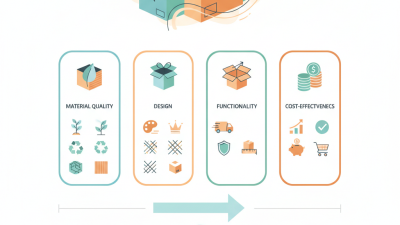
Choosing a full-service packaging supplier requires more than comparing prices. Global buyers should examine materials, design skills, and production controls together. A low-cost package may fail during humid storage, long transport, or repeated handling.
Ask for material specifications, recycled-content details, barrier performance, and batch consistency. Request samples from normal production, not only polished prototypes. Check how the supplier tests compression, sealing, color accuracy, and print durability. A strong supplier should explain testing methods clearly and provide traceable records. I have learned that one attractive sample proves very little. Production conditions can change the result.
Design should protect the product and communicate its purpose quickly. Review dielines, stacking efficiency, opening behavior, and accessibility. Confirm that artwork files, color references, and language versions are controlled before printing. Production capability matters just as much. Review equipment capacity, quality checkpoints, backup plans, lead times, and inspection procedures. Factory visits or independent audits can reveal crowded storage areas and weak process discipline. Not every checklist catches everything.
Tips: Compare at least three suppliers using the same brief. Test packaging in realistic heat, moisture, vibration, and drop conditions. Ask who approves material substitutions. Confirm current market requirements with qualified local specialists. Keep written records of every change, because small revisions can create large shipment problems.
Supplier evaluation data table using measurable packaging, engineering, manufacturing, quality, sustainability, and international fulfillment criteria.
| Evaluation Area | Data Dimension | Measurable Requirement or Industry Reference | Recommended Evaluation Target | Evidence to Request from Supplier |
|---|---|---|---|---|
| Material | Paper and paperboard basis weight | Paperboard commonly ranges from approximately 180 to 600 g/m², depending on folding-carton structure, product weight, and required stiffness. | Select the lowest basis weight that meets compression, folding, and presentation requirements. | Material specification sheet, basis-weight test report, caliper data, and approved production sample. |
| Material | Corrugated board strength | Box performance is commonly assessed using edge crush resistance, flat crush resistance, burst strength, and box compression testing. | Specify the required test method and minimum value according to product weight, stacking height, and transport conditions. | Corrugated board grade, flute profile, compression test results, and transport simulation report. |
| Material | Plastic film thickness | Flexible packaging films are often specified by thickness in micrometres; common commercial structures may use approximately 20–150 μm layers depending on function. | Define total thickness, layer structure, sealant layer, tensile strength, and puncture resistance rather than thickness alone. | Film construction drawing, thickness tolerance, tensile data, seal-strength results, and migration documentation where applicable. |
| Material | Barrier performance | Oxygen transmission rate and water-vapour transmission rate are used to evaluate protection against oxygen and moisture; results depend on material, thickness, temperature, and humidity. | Set project-specific maximum transmission values based on product shelf-life and storage conditions. | Laboratory reports identifying test standard, temperature, relative humidity, sample thickness, and measured values. |
| Material | Recycled content | Recycled-content claims should identify the percentage by mass, material type, and whether the content is pre-consumer or post-consumer. | Use a documented recycled-content percentage that does not compromise safety, strength, barrier performance, or local recyclability. | Supplier declaration, material composition statement, chain-of-custody documentation, and independent verification when required. |
| Material | Food-contact suitability | Food-contact packaging must comply with the applicable rules in the destination market, including restrictions on substances that may migrate into food. | Require a current declaration of compliance for every material, coating, adhesive, ink, and functional layer. | Declaration of compliance, migration testing, formulation compliance statement, and change-control procedure. |
| Design | Structural design validation | Packaging should be tested for fit, compression, vibration, impact, drop, and environmental exposure relevant to the distribution route. | Complete a documented design verification plan before mass production approval. | CAD drawings, dielines, prototype photographs, test plan, test results, and signed sample approval record. |
| Design | Dimensional tolerance | Dimensional tolerances vary by material, converting process, and package size; an agreed tolerance must be included in the technical specification. | Define critical dimensions, measurement points, acceptable tolerances, and inspection equipment before quotation. | Dimensioned drawing, inspection standard, measurement report, and control plan for critical-to-quality dimensions. |
| Design | Artwork and color control | Color consistency is controlled through approved proofs, defined color references, ink specifications, and an agreed visual inspection method. | Approve a signed color standard and define acceptable variation before production. | Artwork checklist, digital proof, physical proof where needed, color measurement results, and print approval procedure. |
| Design | Pack-out efficiency | Package design affects material consumption, pallet utilization, shipping volume, handling time, and damage risk. | Compare product protection and total delivered cost using packed dimensions, pallet pattern, and container utilization. | Pack-out drawing, pallet pattern, load plan, dimensional-weight calculation, and transport damage analysis. |
| Production | Prepress and tooling capability | Full-service suppliers should manage artwork preflight, dielines, plates or cylinders where applicable, tooling, sampling, and revision control. | Use a controlled approval workflow with revision numbers and documented tooling ownership. | Prepress checklist, tooling register, approval workflow, change history, and sample retention policy. |
| Production | Printing and finishing processes | Relevant processes may include flexographic, gravure, offset, digital printing, coating, lamination, die-cutting, folding, gluing, and embossing. | Match process selection to order volume, artwork complexity, substrate, lead time, and required finish. | Process flow chart, equipment list, production samples, process capability data, and subcontractor disclosure. |
| Production | Minimum order quantity | Minimum order quantity depends on setup time, tooling, material purchasing, print process, and production-line economics. | Request separate pricing for prototype, pilot, standard production, and repeat-order quantities. | MOQ schedule, setup-cost breakdown, material-stock policy, and price tiers by order volume. |
| Production | Capacity and scalability | Available capacity should be evaluated by process, shift pattern, monthly output, bottleneck equipment, and peak-season allocation. | Confirm reserved capacity for forecast volumes and identify qualified backup production routes. | Capacity statement, machine list, production calendar, utilization data, and documented contingency plan. |
| Quality | Quality management system | A documented quality management system should control incoming materials, in-process inspections, final release, nonconformities, and corrective actions. | Prefer an independently audited quality system with traceable inspection records. | Quality certificate, internal audit summary, inspection plan, corrective-action records, and batch traceability example. |
| Quality | Defect classification and acceptance | Defects should be classified as critical, major, or minor, with agreed sampling plans and acceptance criteria. | Approve a written quality standard before production; do not rely only on visual samples. | Quality manual, defect catalogue, sampling plan, inspection checklist, and pre-shipment inspection report. |
| Sustainability | Recyclability and material simplicity | Packaging is generally easier to sort and recycle when it uses compatible materials and avoids unnecessary layers, coatings, or inseparable components. | Design for the collection and recycling infrastructure available in the destination market. | Material composition, recyclability assessment, disassembly instructions, and destination-market compliance review. |
| Sustainability | Environmental management | Environmental performance may include energy use, water consumption, waste recovery, emissions management, and environmental incident control. | Require measurable environmental objectives and periodic performance records. | Environmental management certificate, utility data, waste records, emissions policy, and improvement targets. |
| Compliance | Chemical and restricted-substance control | Packaging may be subject to restrictions covering inks, coatings, adhesives, heavy metals, plastic additives, and other substances. | Require a current restricted-substance declaration and documented supplier change notification. | Restricted-substance test report, material safety documentation, chemical inventory, and change-control records. |
| Compliance | Social and ethical manufacturing | Responsible sourcing reviews commonly cover working hours, wages, health and safety, forced labor, child labor, and grievance mechanisms. | Use an independent social audit or equivalent documented assessment for production sites. | Social compliance policy, audit report, corrective-action plan, worker safety records, and site identification. |
| Logistics | Lead-time structure | Total lead time includes artwork approval, tooling, raw-material procurement, production, inspection, export documentation, and transit. | Obtain a stage-by-stage timeline with a defined critical path and escalation process. | Project schedule, standard and expedited lead times, production milestones, and delay-notification procedure. |
| Logistics | Export and documentation capability | International shipments require accurate commercial invoices, packing lists, transport documents, tariff classification, and destination-specific compliance information. | Confirm that the supplier can provide complete export documentation and support the agreed delivery term. | Sample shipping document set, export experience by region, packaging marks, and delivery-term responsibilities. |
| Commercial | Total cost of ownership | Packaging cost includes unit price, tooling, setup, inspection, freight, duties, storage, damage, obsolete stock, and end-of-life costs. | Compare suppliers using landed cost and performance, not unit price alone. | Itemized quotation, tooling amortization, freight assumptions, payment terms, claim policy, and cost-change mechanism. |
| Commercial | Sample and pilot-order process | A controlled pilot can reveal fit, print quality, sealing performance, packing speed, transport damage, and production repeatability. | Require written pilot acceptance criteria before releasing a full production order. | Prototype quotation, pilot schedule, sample approval form, test results, and production-release checklist. |

Global buyers should treat certifications as evidence, not decoration. ISO 9001 helps confirm controlled production, documented procedures, and corrective actions. For food, cosmetics, or pharmaceutical packaging, request valid food-contact declarations and migration test reports. Check whether testing matches the destination market, material, ink, adhesive, and intended use.
Environmental claims also need careful review. ISO 14001 indicates an environmental management system, while FSC Chain of Custody can support responsible paper sourcing. Recycled-content claims should include traceable evidence, such as GRS or equivalent documentation. For export shipments, ask whether the supplier follows recognized transport testing, including drop, vibration, compression, and humidity tests. A carton that survives a warehouse may still fail during a long sea journey.
Look closely at every certificate. Check the legal company name, production site, scope, issuing body, and expiry date. A certificate may cover one factory, not the entire supplier network. Request batch records, material specifications, inspection reports, and a recent Certificate of Analysis. Sample approval is useful, but it is not enough. Production conditions can change. This is where buyers sometimes become overconfident. An independent factory audit and pre-shipment inspection add stronger evidence. Still, audits are only snapshots. Keep a retention sample, define acceptance limits, and review complaints by batch. Small gaps in traceability can become expensive problems later.
A strong full-service packaging supplier manages more than artwork and production. It coordinates material selection, prototypes, testing, documentation, shipping, and final delivery. Experienced teams begin with the product’s dimensions, handling risks, target markets, and storage conditions. A rigid carton may protect glass better, while moisture-resistant materials suit humid warehouses. Small errors compound. A supplier should provide approval samples, production records, and clear change-control procedures.
Compliance requires practical evidence, not confident promises. Suppliers should review labeling needs, material declarations, food-contact requirements, recycling marks, and import documents with the buyer’s compliance team. Requirements differ across markets and can change. Reliable suppliers maintain inspection checkpoints, batch records, and traceable corrective actions. Still, no process is flawless. A rushed artwork approval or unclear translation can create expensive delays. Buyers should ask who owns each decision and when it is verified.
Tips: Request a written specification before sampling. Ask for recent test reports, factory audit details, and a pilot-run plan. Confirm carton dimensions, pallet patterns, delivery terms, and customs responsibilities. Keep a signed reference sample. For fulfillment, suppliers may combine inventory planning, batch labeling, warehouse storage, and scheduled dispatches. Shared forecasts help, but forecasts are not guarantees. Review demand monthly and set a backup plan for material shortages, port delays, or damaged cartons. Ask for evidence.
Selecting the best full-service packaging supplier in 2026 requires more than comparing unit prices. Global buyers should examine design, material sourcing, prototyping, production, inspection, and international delivery as one connected system. A supplier that only sells cartons may create costly gaps between artwork approval and final shipment.
Industry data supports this broader view. Smithers’ Future of Sustainable Packaging to 2028 reports continued growth in recyclable and fiber-based packaging demand. PwC’s 2024 consumer survey found that 46% of consumers are buying more sustainable products. Ask suppliers for evidence, not promises. Request material certificates, recycled-content records, factory audit results, and batch-level traceability. Check whether their testing covers compression, moisture, drop impact, and color consistency.
Start with a small pilot order. Review the physical samples under warehouse lighting, not only on a screen. Measure dimensions, stacking strength, opening feel, and print accuracy. Confirm minimum order quantities, tooling ownership, lead times, packaging waste, and contingency plans. The best partner should provide one accountable project manager and clear escalation procedures. Short answers are warning signs.
A supplier may hold ISO certifications yet still communicate poorly. I have seen attractive samples fail during humid ocean transport. That mistake is expensive. Compare three suppliers using the same scorecard, then inspect the highest-scoring factory when possible. No scorecard is perfect. Recheck it after the first production run.