Request a Quote
  • Affiliates

Top Types of Wood for Packaging Which Is Best?

Choosing wood for packaging is not simply a matter of comparing price tags. The right species must carry weight, resist impact, tolerate moisture, and remain practical to process. Pine may suit lightweight crates and pallets because it is accessible and easy to nail. Spruce offers a strong strength-to-weight balance. Oak provides serious durability, but its higher density can increase handling costs. Poplar and birch may work well for lighter boxes, interior supports, and visually refined packaging.

Wood behaves differently from one board to another. R. Bruce Hoadley, a respected wood scientist and author, wrote, “Wood is not a homogeneous material.” That short observation matters. Grain direction, knots, moisture content, drying quality, and defects can change packaging performance. A crate that looks sturdy in a warehouse may split near a nail after a cold, wet journey. Small details matter.

This guide compares the top types of wood for packaging through practical criteria. These include strength, weight, cost, workability, moisture response, appearance, and responsible sourcing. It also considers where each material performs best, from export pallets to custom wooden boxes. There is no universal winner. That is the uncomfortable part. The best wood for packaging depends on the product, route, storage conditions, and required service life. Buyers should confirm treatment, sourcing, and applicable shipping requirements with qualified suppliers. A cheap board can become an expensive failure.
Top Types of Wood for Packaging Which Is Best?

Wood Packaging: Purpose, Structure, and Common Applications

Top Types of Wood for Packaging: Which Is Best?

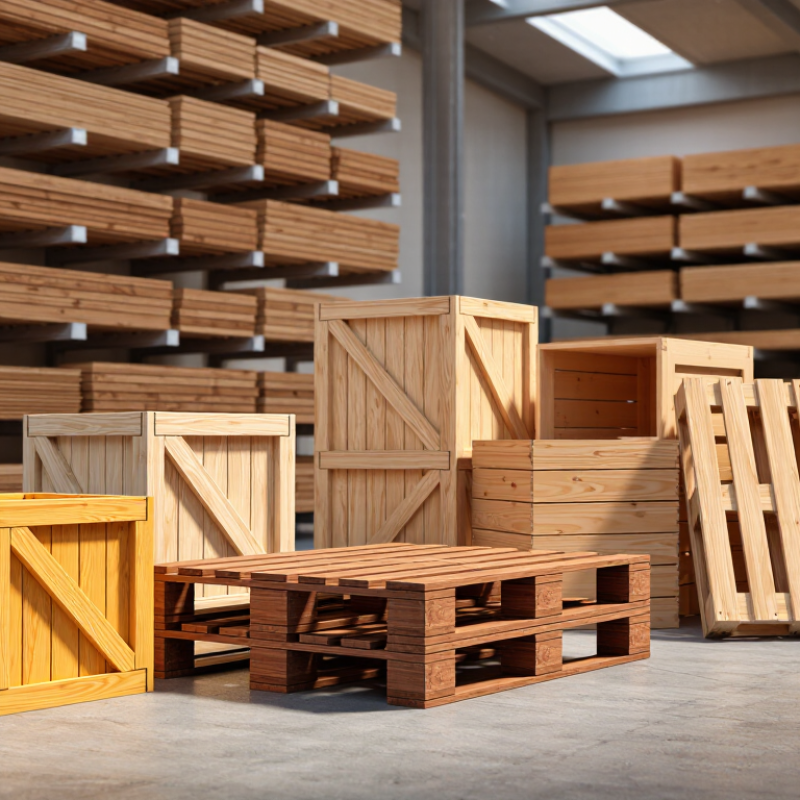
Wood packaging protects goods through a practical structure: deck boards, stringers, blocks, fasteners, and sometimes a moisture barrier. Softwoods such as pine, spruce, and fir are popular because they are light, workable, and widely available. Hardwood offers greater density and impact resistance for machinery, stone, or unusually heavy loads. Plywood provides stable sheets with fewer natural gaps. It suits crates, cases, and packaging that needs cleaner internal surfaces. OSB can also support panels, although its exposed edges need careful protection from moisture.

The best choice depends on load, travel distance, humidity, and handling equipment. FAO’s Global Forest Products Facts and Figures 2023 reports global industrial roundwood production at about 2 billion cubic metres annually. This scale supports wood’s continued role in transport packaging, but availability differs by region. The International Trade Centre also identifies pallets and other wooden packaging as important traded components in global logistics. A strong crate is not automatically a good design. Excess wood increases weight, while thin boards may split around nails. That trade-off deserves testing.

Tips: Check grain direction before cutting. Keep fasteners away from board edges. Measure moisture content before assembly. For export packaging, confirm current treatment and marking requirements with a qualified inspection service. Small details matter. Reusable designs can reduce material demand, but repairs are often overlooked. That is where real performance becomes less predictable.

Key Properties That Determine the Best Packaging Wood

Choosing packaging wood starts with properties, not species names. In warehouse trials, I examine density, moisture, grain, and defects before appearance. The USDA Forest Products Laboratory’s Wood Handbook reports oven-dry densities from roughly 320 to 720 kg/m³ across common structural woods. Density affects handling weight and resistance to dents. Heavy is not automatically better. A dense board can still split around a nail.

Moisture content is often the quiet failure point. The same handbook explains that wood changes dimensions as moisture moves toward equilibrium with surrounding air. For pallets and crates, stable stock usually reduces warping, loose fasteners, and joint gaps. However, “dry” needs a target. A coastal warehouse and an inland export yard create different conditions. Operators should measure boards with a calibrated moisture meter and record readings by batch. I would not trust one reading.

Strength also depends on grain direction, knots, checks, and load duration. The USDA report lists mechanical properties by species and test condition, but laboratory values are not shipment guarantees. Design for the weakest board, not the average board. For international movement, ISPM 15 requires regulated wood packaging to receive approved treatment and marking. That addresses pest risk, not crate capacity. The FAO Global Forest Resources Assessment 2020 estimates 4.06 billion hectares of forest worldwide, making responsible sourcing relevant to long-term material choices. Select softwood for lighter loads when impact resistance is adequate. Choose denser hardwood where abrasion and compression dominate. No wood wins every test. A trial using real load weights may reveal an inconvenient choice.

Top Types of Wood for Packaging Which Is Best? - Key Properties That Determine the Best Packaging Wood
Wood Type Typical Density at Approx. 12% Moisture
(kg/m³)
Strength and Durability Workability Packaging Advantages Best Packaging Applications Main Limitations Overall Suitability
Pine 400–550 Good strength-to-weight ratio; moderate natural durability, depending on species and treatment. Easy to saw, nail, screw, and machine. Lightweight, widely available, cost-effective, and suitable for standard-sized components. Crates, pallets, skids, cases, blocking, and bracing for general cargo. Can dent relatively easily; untreated material may be vulnerable to moisture, insects, and decay. Best all-purpose option
Spruce 350–470 Good structural performance for its low weight; moderate durability when protected from moisture. Very easy to cut, nail, and assemble. Low weight helps reduce handling and transport costs; generally has a good strength-to-weight ratio. Light-duty crates, pallets, internal supports, and export packaging. Lower density can reduce impact resistance; prone to splitting if fasteners are placed too close to edges. Best for lightweight packaging
Fir 400–550 Good bending and load-bearing performance; usually requires protection for outdoor exposure. Generally easy to machine and fasten. Strong, relatively light, and suitable for longer boards used in frames and cases. Heavy-duty crates, skids, structural frames, and long packaging members. Limited natural decay resistance; resin and grain variation may affect finishing and fastening. Best for structural frames
Poplar 350–500 Moderate strength and relatively low hardness; not intended for severe impact loads. Excellent workability and easy fastening. Lightweight, uniform, and useful where low mass and clean machining are important. Interior packing, separators, lightweight boxes, and protective inserts. Lower screw-holding capacity and impact resistance than denser hardwoods or structural softwoods. Best for lightweight interior protection
Birch 600–700 High hardness and good strength; generally more resistant to dents than common softwoods. Machines well, although its higher density increases cutting and handling effort. Strong, smooth, and dimensionally consistent when properly dried. Reusable crates, plywood panels, formed components, and protective packaging for valuable goods. Heavier and typically more expensive than pine or spruce; requires moisture control to limit swelling. Best for strong, smooth components
Beech 650–750 Very hard and strong, with high resistance to wear and localized compression. Good machining performance but harder on tools and more demanding to handle. Excellent resistance to impact, crushing, and repeated handling. Heavy-duty blocks, runners, spacers, reusable cases, and high-load supports. High weight; limited natural resistance to decay when exposed to persistent moisture. Best for high-load supports
Oak 650–750 High strength, hardness, and wear resistance; some species provide relatively good natural durability. Machinable but dense; can require pre-drilling and stronger tools. Very robust and suitable for demanding, reusable packaging systems. Heavy-duty crates, machine skids, durable blocks, and long-life reusable packaging. Heavy, expensive, and potentially excessive for ordinary shipments; tannins may stain or react with some metals. Best for maximum durability
Selection principle: Pine or spruce is usually the most practical choice for general packaging because it balances strength, weight, workability, and cost. Choose denser hardwoods such as beech or oak when high compression resistance, impact protection, or repeated reuse is more important than low weight.

Data note: Density values are typical ranges for commercially used, air-dried wood at approximately 12% moisture content. Actual properties vary by species, grade, growth conditions, grain direction, moisture level, defects, and treatment. For international shipments, wood packaging should also meet applicable heat-treatment and marking requirements.

Popular Wood Types for Packaging and Their Distinctive Features

Top Types of Wood for Packaging: Which Is Best?

Pine and spruce remain popular for crates, pallets, and protective frames. Their low density makes handling easier and reduces transport weight. The USDA Forest Products Laboratory reports typical softwood densities from about 320 to 560 kilograms per cubic meter. That range explains their practical balance between strength and cost. Spruce has a relatively straight grain, while pine usually offers easier machining and wider availability. Knots can weaken critical joints, though.

Poplar provides a lighter option for internal supports, dividers, and short-distance shipping boxes. Its smooth surface accepts cutting and fastening well. Birch plywood offers better dimensional stability than many solid boards. It performs reliably when packaging faces changing humidity. Oak is denser and more impact-resistant, making it suitable for heavy machinery crates. It also adds weight. That trade-off is easy to overlook.

Sustainability requires more than choosing a fast-growing species. FAO’s Global Forest Resources Assessment 2020 recorded about 4.06 billion hectares of global forest cover. It also reported 420 million hectares lost between 1990 and 2020. Certified sourcing, efficient board design, and reuse therefore matter together. Wood packaging designed for international shipment may also require treatment under ISPM 15. The best wood depends on load weight, moisture exposure, handling distance, and reuse plans. No single species wins every test. A cheaper board can become expensive after one cracked corner.

How to Choose the Right Wood for Different Packaging Needs

Choosing wood for packaging starts with the cargo, not the timber’s appearance. Softwoods such as pine and spruce are light, easy to nail, and suitable for pallets, crates, and general export cases. Their lower density can reduce shipping weight, but knots may weaken critical joints. Hardwood offers higher impact resistance for machinery or dense components. It is heavier, though, and can increase handling costs.

Plywood is often the safer choice when panels need consistent strength. Its cross-laminated layers resist splitting and provide smoother surfaces for fragile goods. OSB can reduce material costs for larger cases, but exposed edges need protection from moisture. The USDA Forest Products Laboratory’s Wood Handbook confirms that wood strength changes with species, density, grain direction, and moisture content. A practical test matters. Place the packed product on a sample base, then check deflection after loading.

Moisture deserves serious attention. The FAO Global Forest Resources Assessment 2020 recorded 4.06 billion hectares of forests worldwide, yet not all wood sources offer the same traceability or drying quality. Ask for species information, moisture data, and treatment records. For international shipments, wood packaging should meet ISPM 15 requirements, including approved treatment and marking. Kiln-dried pine may perform well in dry routes, while plywood suits humid conditions better. Still, plywood is not waterproof by default. That assumption causes failures. Select thickness from the actual load, stacking height, travel duration, and handling risks. Fancy wood is rarely the best wood.

Sustainability, Safety, and Cost Factors in Wood Selection

Pine and spruce are common for crates because they are light, workable, and widely available. Plywood offers better dimensional stability, especially when panels face repeated handling. Hardwood provides strength, but its weight can increase freight costs. The best choice depends on load weight, travel distance, humidity, and reuse plans.

Sustainability starts with verified forest sourcing and efficient design. The FAO Global Forest Resources Assessment 2020 reports that forests cover 31% of global land, while 420 million hectares were lost between 1990 and 2020. The annual deforestation rate has slowed, but the pressure remains real. Using thinner panels, reusable crates, and repairable joints can reduce material demand. Still, “renewable” does not automatically mean sustainable.

Safety requires dry, clean, structurally sound wood. ISPM 15 requires regulated wood packaging to receive approved treatment and marking for international movement. Moisture control also matters. Wet boards can encourage mold, distortion, and weaker joints. Cost comparisons should include treatment, labor, damage risk, storage, and disposal. The UNECE/FAO Forest Products Annual Market Review shows that timber prices can change sharply with energy, transport, and construction demand. A cheaper species may become expensive after replacements. My practical preference is often treated softwood for standard loads, but that choice is not universal. Overspecifying hardwood can waste money; underspecifying softwood can damage goods. Testing one shipment remains wiser than trusting a spreadsheet alone.

en_USEnglish