Why Choose Home Appliance Connectors for Global Sourcing?
Global appliance makers rarely win on price alone. They win when every small connection performs consistently across markets. A Home Appliance Connector may sit behind a washing machine panel, exposed to heat, moisture, vibration, and repeated service work. Its size is modest. Its responsibility is not.
Global sourcing brings access to broader manufacturing capacity, specialized tooling, and competitive production costs. It also creates practical questions. Can the supplier maintain stable dimensions between batches? Does the terminal resist corrosion after storage and transport? Are materials, insulation ratings, and traceability documents available? Engineers should compare drawings, mating cycles, current ratings, temperature limits, and test reports before approving a sample. A useful supplier can explain failure modes, not merely quote a unit price. Factory audits, first-article inspection, and controlled samples add confidence.
Real experience often appears in details: secure packaging for pins, readable lot codes, and contacts that lock with a clear click. These details reduce assembly delays and field complaints. No sourcing plan is perfect. A supplier may pass initial tests yet struggle during peak production. That possibility deserves honest attention. Clear specifications, independent verification, and regular communication make global purchasing more reliable. Choosing the right Home Appliance Connector is therefore a technical and operational decision, linking product safety, manufacturing efficiency, and long-term customer trust.
What Are Home Appliance Connectors and Where Are They Used?
Why Choose Home Appliance Connectors for Global Sourcing?
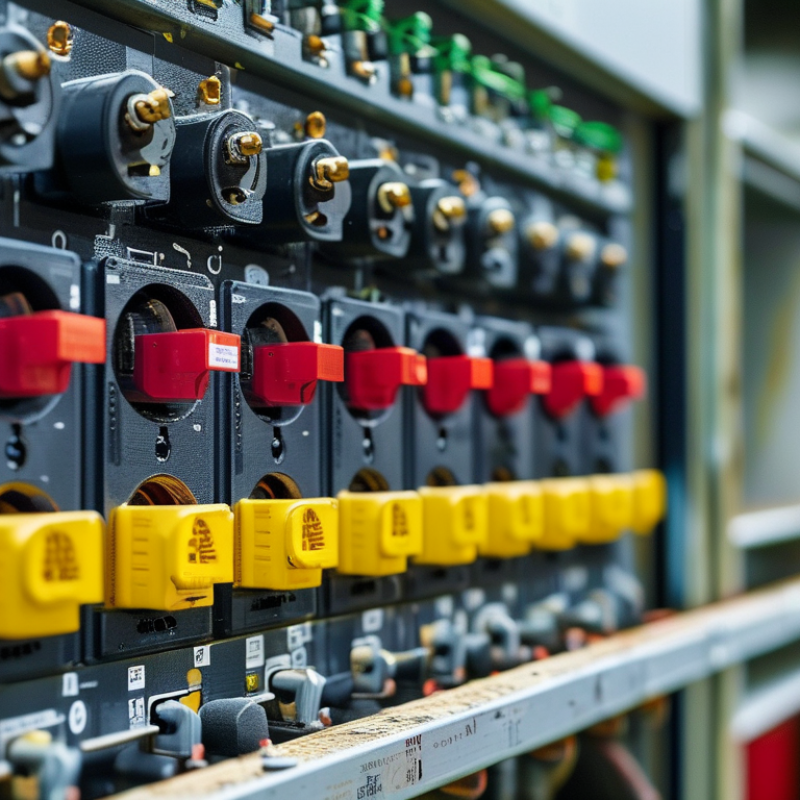
Home appliance connectors are electromechanical components that join wires, circuit boards, sensors, and control modules. They usually include terminals, plastic housings, locking clips, and strain-relief features. In a washing machine, one connector may link the motor, water-level sensor, and control board. In a refrigerator, similar parts carry power and signals between the compressor, fan, temperature sensor, and display.
Their usage is expanding as appliances become more connected and energy-sensitive. The International Energy Agency reports that cooling demand has more than tripled since 1990. This growth increases the need for reliable connections in refrigerators, air conditioners, and heat-pump equipment. The IEA’s 2024 Energy Efficiency report also highlights stronger efficiency requirements across household equipment. A loose terminal can create heat, signal loss, or intermittent operation. Small part. Serious consequence.
Global sourcing teams usually evaluate connector temperature ratings, current capacity, sealing performance, vibration resistance, and assembly consistency. IEC 60335 safety requirements are widely referenced for household appliances, but compliance still depends on the complete product design. In factory inspections, I have found that drawings often specify the connector body but overlook wire crimp quality. That is an avoidable weakness. Suppliers should provide dimensional records, material details, and test evidence before volume production. The best choice is not always the cheapest connector; it is the one that remains stable beside heat, moisture, and repeated movement.
Why Choose Home Appliance Connectors for Global Sourcing?
Typical Electrical Roles of Connectors in Household Appliances
Home appliance connectors are used to join power, control, sensor, heating, motor, and communication circuits. Mains-powered connections commonly support regional household voltages of 100–120 V or 220–240 V, while control and sensor circuits typically operate at lower DC voltages. This combination makes standardized connectors important for reliable assembly, maintenance, and global sourcing.
How Do Connectors Support Global Appliance Manufacturing?
Why Choose Home Appliance Connectors for Global Sourcing?
Home appliance connectors support global manufacturing by linking motors, sensors, control boards, and power modules. Their value goes beyond simple electrical contact. A well-designed connector reduces wiring time and helps technicians service appliances safely. In high-volume factories, this can improve assembly consistency across different production sites.
Global sourcing also demands stable specifications. Connector housing materials should tolerate heat, vibration, moisture, and repeated connection cycles. Terminal plating affects conductivity and corrosion resistance. Clear drawings, verified tolerances, and traceable batches help engineers compare suppliers accurately. Small details matter. A loose terminal can stop an entire production line.
Manufacturers should also test connectors under realistic conditions. Thermal cycling, pull-force checks, insulation tests, and vibration trials reveal weaknesses early. Regional requirements may differ, so documentation must remain current and complete. However, no connector is perfect for every appliance. A low-cost option may increase maintenance later. An advanced design may complicate assembly. This trade-off deserves careful review. Teams should examine failure records, sample results, and supplier response times before approving large orders. One overlooked detail can become an expensive lesson.
Which Technical Features Matter in Connector Selection?
For global appliance sourcing, connector selection should begin with electrical reality, not catalogue appearance. Rated voltage and current must match motor startup surges, heating cycles, and compressor loads. The International Energy Agency projects space-cooling electricity demand could more than triple by 2050, reaching about 6,200 TWh annually (IEA, The Future of Cooling, 2018). That pressure makes low contact resistance and controlled temperature rise increasingly important.
Safety details deserve equal attention. Check creepage, clearance, insulation rating, flame resistance, and touch protection against IEC 60335-1 and IEC 61984 requirements. For washing machines or outdoor units, an IP rating under IEC 60529 helps address water and dust exposure. Vibration-resistant terminals, positive locking, and clear polarization reduce assembly mistakes. Small details matter.
Material selection also needs evidence. Copper alloys should retain spring force after repeated thermal cycles. Plating must resist oxidation without creating unnecessary cost. UL testing is useful, but it does not replace application-level validation. A connector may pass a laboratory test and still loosen inside a vibrating appliance. That uncomfortable gap is often missed. Request traceability, lot records, test conditions, and mating-cycle data before approving a supplier. I would not rely on a certification logo alone. Suppliers change materials, tooling, or processes, sometimes quietly. Periodic audits and sample testing remain necessary.
What Are the Sourcing Benefits of Standardized Connectors?
Standardized connectors make global appliance sourcing more predictable. They support repeatable assembly across factories, regions, and production lines. The World Bank’s 2023 Logistics Performance Index covered 139 economies and measured customs, infrastructure, shipment reliability, and tracking. These factors expose a practical problem: small connector differences can create large delays during international production.
A defined connector specification reduces tooling changes, inspection disputes, and emergency substitutions. Engineering teams can compare pin layouts, current ratings, locking methods, insulation, and temperature limits before ordering. The International Trade Centre reported that manufactured goods represented about 63% of global merchandise exports in 2022. For appliance makers, standardized interfaces can therefore simplify cross-border purchasing and widen the qualified supplier pool.
There is a catch.
Standardization is not automatic compatibility. A connector may fit physically but fail under heat, vibration, moisture, or repeated cycling. Procurement teams should request traceable test records, dimensional controls, and material declarations. The IEC 60320 family offers a useful reference for appliance couplers, but product-specific requirements still matter. In practice, a shared specification can lower sourcing risk, yet excessive standardization may limit design flexibility. That trade-off deserves review before volume commitments.
How Can Buyers Evaluate Suppliers and Manage Sourcing Risks?
Choosing home appliance connectors is easy; qualifying the factory is not. Buyers should verify copper-alloy certificates, plating thickness, crimp-force records, contact resistance, and temperature-cycle results. IEC 60512 test evidence can support these checks. Request lot-level traceability, calibrated equipment, change-control procedures, and recent corrective-action records. Ask for samples from normal production, not a polished demonstration batch. A clean audit file is not proof of resilience. McKinsey’s 2022 Global Supply Chain Leader Survey found that 92% of respondents invested in resilience after disruptions. For connectors, that supports approving a qualified second source before the first shipment.
Supplier risk scoring should combine quality, capacity, financial stability, logistics, and regulatory evidence. The World Bank’s Logistics Performance Index 2023 shows wide gaps in customs, infrastructure, and shipment reliability across economies. Do not treat a low quotation as the complete landed cost. Model tooling, inspection, freight, duties, inventory, and failure costs. Resilinc’s EventWatchAI 2023 report recorded more than 10,000 supply-chain disruption events, warning against single-lane logistics. Use dual logistics routes where justified, and reserve buffer stock for critical appliance models. Define escalation times contractually. I would also challenge my own scorecard. Weighting can hide weak evidence. Recheck supplier data quarterly, especially after material, process, or sub-tier changes. Require written notice before any tooling, resin, plating, or production-site change.


 English
 Polski
  Čeština