What Is Port Logistics and How Does It Work?
port logistics is the coordination of cargo, information, equipment, and transport around a seaport. It connects ships with terminals, trucks, rail services, and warehouses. A container may arrive by vessel, wait in a terminal stack, then leave by truck or train. Each handoff depends on accurate schedules and clear records. Small delays can spread.
The work often begins before a ship reaches port. Shipping lines, terminal operators, freight forwarders, and transport providers share arrival details and plan resources. At the terminal, cranes move containers between ships and the quay, while yard equipment places them in designated spaces. Gate teams check that outgoing loads match transport bookings and required documents. Safety checks matter throughout.
The process varies by port, cargo type, technology, and local operating procedures. Some terminals rely on automated equipment; others use more manual coordination. In either case, visibility helps teams spot missed connections, crowded storage areas, or changing arrival times. Yet digital tools do not remove every problem. Weather, equipment faults, and late information still disrupt plans. That is worth remembering.
Understanding port logistics means looking beyond the ship itself. It involves the linked decisions that keep cargo moving, safely and predictably, from vessel to its next destination. The system can look orderly on a diagram, but real operations are less tidy. A useful overview should explain both the handoffs and the weak points.
What Port Logistics Means and Why It Matters
Port logistics is the coordination of cargo, vessels, equipment, storage, and inland transport around a seaport. It links ship schedules with cranes, yard space, truck appointments, and rail connections. A container might be unloaded, scanned, stacked in a marked zone, then moved to a truck or train. Each handoff needs accurate timing and records.
This coordination matters because delays at one point can spread quickly. If a vessel arrives late, a berth may stay occupied longer, while containers wait in the yard. That can mean extra handling, crowded access roads, and missed delivery windows for manufacturers or retailers. Small details count. A clear container ID, a working crane, and a realistic pickup slot can save hours.
Port logistics also supports safety and reliable planning by helping teams know where cargo is and what equipment is needed. Operators monitor dwell time, queue length, and equipment availability, then adjust plans as conditions change. The process is not perfectly smooth. Weather, mechanical faults, or sudden volume peaks can disrupt even a careful schedule. A useful plan leaves room for uncertainty, though ports do not always have enough space to do that well.
The Main Participants and Facilities in Port Logistics
Port logistics depends on people and facilities working in sync. A port authority oversees shared areas and coordinates safe movement around the harbor. Terminal operators manage berths, cranes, storage yards, and truck gates. Shipping lines plan vessel calls and communicate cargo requirements. Freight forwarders and shipping agents help coordinate documents, bookings, and handoffs between transport providers. Customs and other public agencies may inspect shipments or process required clearances.
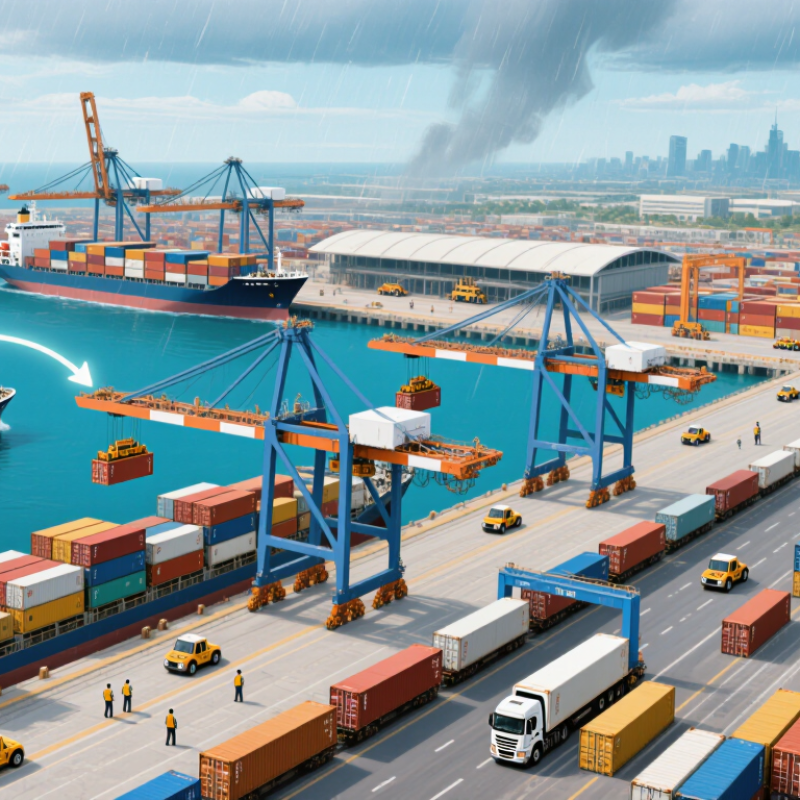
The physical layout shapes how cargo moves. At the quay, ship-to-shore cranes lift containers onto the terminal. Yard tractors carry them to marked blocks, where reach stackers or gantry cranes position them for pickup. Reefer plugs keep refrigerated containers powered, while warehouses provide covered space for cargo needing extra handling. Gates connect the terminal with road carriers, and rail sidings can move large volumes inland. The handoffs are not always neat. A late truck or a changed vessel schedule can leave a container waiting in the yard. That is why clear updates between terminal teams, carriers, and cargo owners matter as much as the equipment. Even a well-designed port can feel congested when those updates arrive too late.
How Cargo Moves Through a Port: A Step-by-Step Process
Port logistics begins before a vessel reaches the berth. The carrier shares arrival details and cargo records with port teams. Planners coordinate berth space, cranes, workers, and yard capacity. Weather, congestion, or a late departure can change the plan.
At the berth, mooring crews secure the ship while terminal staff prepare equipment. Ship-to-shore cranes lift containers onto waiting vehicles. Each container’s identification number is checked against electronic records, and its condition may be recorded. Delays happen. A damaged label or a misplaced container can slow the next handoff. Terminal vehicles carry cargo to a storage area, where workers position it for collection or transfer. Yard systems track its location, helping staff find the right unit later.
Before cargo leaves, required records and release details are checked by the responsible parties. Cleared containers are matched with a truck or rail service, then moved through the terminal gate or onto a train. Drivers may wait while staff verify the container and dispatch information. In practice, the sequence can feel less orderly than a diagram suggests; a crowded yard may require a container to be moved twice. Clear records and timely communication help reduce those extra moves.
How Ports Coordinate Cargo, Transport, and Information
Port logistics is the coordinated movement of goods through a port, from vessel arrival to onward transport. A vessel schedule, berth plan, yard space, labor, and truck or rail capacity must fit together. Not perfectly. Terminal teams, carriers, customs authorities, and transport operators need current information about each container’s location and status. Shared records help them plan crane work, gate appointments, and transfers. A box due for rail needs a confirmed release and rail slot. Staff can then move it across the yard. Small timing errors can create queues.
Information links each handoff. A gate system may show a truck appointment, while terminal records track container location and readiness. Rail operators need forecasts to allocate space and crews. When updates arrive late, teams may reshuffle moves or leave equipment waiting. Paper and digital records can still disagree. That matters. A practical workflow checks key details before cargo moves: container identifier, destination, release status, and assigned transport. Teams also share changes to vessel arrival times, berth plans, and yard capacity. Weather, congestion, or a delayed connection can disrupt even a sound plan. Plans change. The useful test is whether staff can spot a mismatch early and clearly alert the next team.
Factors That Affect Port Logistics Efficiency
Port logistics coordinates cargo as it moves between ships, terminals, trucks, and rail. Efficiency depends on how well these handoffs are planned. A late vessel can disrupt berth schedules, while incomplete cargo information may slow checks and loading decisions. Even a short delay can leave containers waiting in a crowded yard.
Terminal layout and equipment capacity also matter. If containers are stacked far from their next transport connection, extra moves consume time and fuel. Cranes, yard vehicles, and gate systems need reliable maintenance; one unavailable crane can create a bottleneck. Staffing levels, shift handovers, weather, and road or rail congestion all affect the pace. Digital tracking helps teams spot delays, but poor data can create false confidence. Plans still miss things.
Tips: Share accurate arrival and cargo details early. Keep equipment maintenance schedules current, and review yard plans when vessel times change. Track truck queues at busy gates. A brief daily review can reveal recurring slowdowns, though not every delay is preventable.
What Is Port Logistics and How Does It Work?
Factors That Affect Port Logistics Efficiency
Port logistics coordinates vessel calls, cargo handling, customs clearance, and onward transport. The chart ranks established operational factors on a qualitative 1–5 scale; the scores are illustrative, not measured universal statistics. Efficient coordination can reduce delays as cargo moves through the port.


 English
 Polski
 Čeština