
Finding where to buy top Silent Diesel Generator Sets in China takes more than comparing prices. Buyers can explore manufacturers, export-oriented suppliers, and established industrial equipment marketplaces. Each route has trade-offs. A factory may offer customization, while a trading company may simplify communication and shipping. Neither label guarantees product quality.
A Silent Diesel Generator Set should be assessed against the job it must perform. Check its rated and standby power, engine and alternator brands, fuel use, enclosure materials, and control system. Ask for sound-pressure readings and the conditions under which they were measured. “Silent” does not mean noiseless. A unit’s actual sound can change with distance, load, and installation.
Before requesting a quotation, share the intended load, operating hours, site conditions, and required voltage. Then compare written specifications rather than relying on catalogue images. Request recent test records, warranty terms, spare-parts details, and a clear list of included accessories. Where possible, arrange a factory or video inspection and verify the supplier’s business information independently. These steps do not remove every risk. They do make gaps easier to spot.
The right supplier is not always the one with the lowest price or most polished brochure. Delivery schedules, service access, and honest answers matter too. Some details may remain uncertain until the equipment is tested under real conditions. This guide outlines practical ways to compare Chinese suppliers and choose a generator that fits your application.
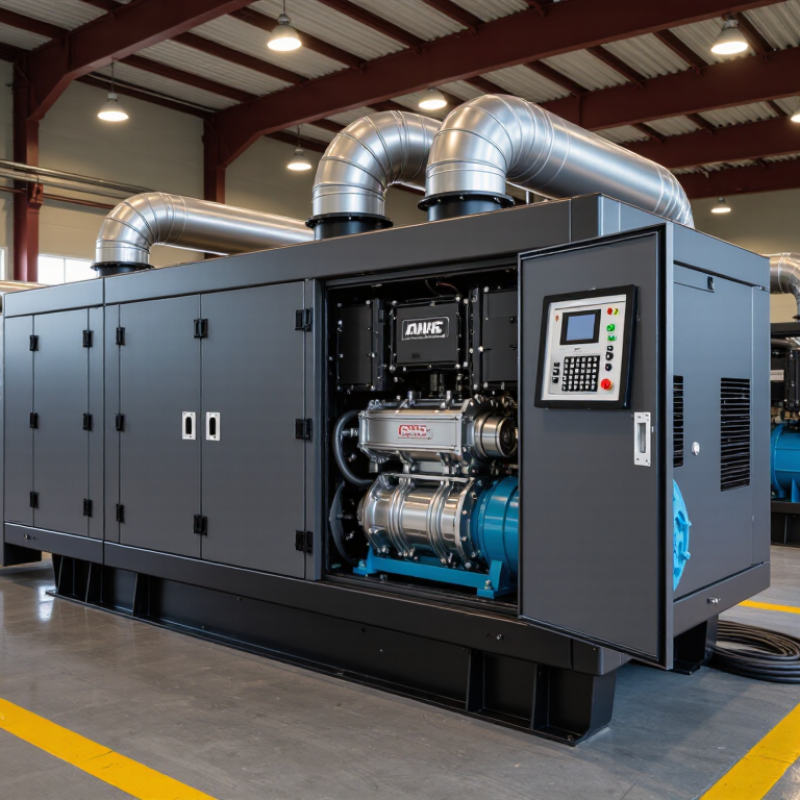
A silent diesel generator set is not truly silent. Its enclosure uses acoustic lining, controlled air passages, and an exhaust silencer to reduce operating noise. The engine still needs steady airflow and room to release heat. Poor placement can make a quiet unit seem surprisingly loud. Noise still travels.
These sets are used at construction sites, farms, clinics, and commercial buildings where grid power is unreliable or unavailable. Before choosing one, estimate the starting and running loads of connected equipment. Check the rated output, fuel consumption, voltage, frequency, and expected runtime. Ask for documented sound-pressure readings and clarify the distance and test conditions. Figures without test details are hard to compare. For buyers sourcing in China, request inspection records, load-test results, spare-parts information, and clear warranty terms from the supplier. A polished canopy is not proof of dependable performance.
Tips: Confirm the generator’s dimensions, lifting points, and ventilation clearances before delivery. Ask how filters, batteries, and routine service parts can be obtained. Verify the noise level at the intended measurement distance. Check the basics. A small detail, such as an undersized access door, can make maintenance slower than expected.
Before comparing silent diesel generator sets from suppliers in China, define the load the machine must actually serve. List running power in kW, required kVA, power factor, and the largest motor’s starting current. A pump that starts under pressure can demand far more briefly than its normal running load. Specify whether the set will provide prime or standby power, and note expected operating hours. Small details matter.
For noise, request the sound level in dB(A), with the measurement distance, load, and test conditions stated. A reading without those details is hard to compare. Consider where the set will sit: a courtyard can reflect sound, while a tight enclosure may restrict cooling airflow. Check the stated rating against the installation plan. Emissions need equal care. Tell the supplier the destination and intended use, then request applicable engine documentation and test records. Requirements can vary by market and application, so do not assume one certificate fits every project. After-treatment equipment may also affect maintenance needs. It is easy to focus on the lowest quoted number; I would pause there and verify the duty rating, noise-test basis, and paperwork. That takes time. But a neat specification sheet can still leave important questions unanswered.
Chinese manufacturers and suppliers serve different needs, so compare the seller’s role, not only the quotation.
A factory-direct purchase can offer clearer access to production details, component lists, and quality checks.
Ask for a recent load-test record and the sound-pressure reading, including its measurement distance. A quiet rating without test conditions tells you little.
Trading companies may coordinate multiple suppliers and simplify communication, but verify who handles warranty claims and replacement parts.
Engineering integrators can be useful for projects needing fuel systems, control panels, or site-specific acoustic treatment.
Local dealers may provide quicker service, though their stock and technical support vary. That matters.
Request a written scope covering engine and alternator specifications, enclosure materials, delivery terms, and commissioning. Compare like with like.
A showroom visit can help, but inspect a running unit if possible; listen near the enclosure and check for vibration at the base.
A lower price may exclude cabling, installation, or routine service. Not always obvious.
Ask for references from comparable installations, then confirm that spare filters and belts can be sourced.
Even a careful checklist has gaps, so clarify who responds when the generator trips under load.
Where to Buy Top Silent Diesel Generator Sets in China?
When comparing Chinese suppliers, treat certificates as evidence to verify, not decoration. Ask for current documents covering the exact generator model, factory, and intended destination. A quality-management certificate does not prove that every unit meets local emissions or electrical requirements. Check the issuing body, validity dates, and certificate scope. If documents are unclear, request clarification before paying a deposit.
Product quality shows up in details you can inspect. Ask for a witnessed load test and a report recording voltage, frequency, temperature, and test duration. Check the enclosure’s steel thickness, door seals, ventilation path, and sound measurements under stated conditions. A quiet rating without distance and load data tells you little. That matters. Photos help, but they cannot replace a factory inspection or traceable test records. I would also check whether the quoted configuration matches the tested unit; small differences can be missed.
After-sales support deserves the same scrutiny as price. Get response times, spare-parts availability, warranty coverage, and troubleshooting procedures in writing. Ask who handles commissioning and whether remote diagnosis is available across time zones. Request a sample maintenance schedule and parts list before ordering. One weakness in my own checklist is that response promises are hard to judge until a fault occurs. Speak with recent customers, and ask what happened when a replacement part was actually needed.
| Evaluation area | Evidence to request from the supplier | What a sound assessment looks for | Buyer’s verification step |
|---|---|---|---|
| Quality management | Current ISO 9001 certificate showing the certified legal entity, site, scope, and validity dates. | The certificate covers the facility and activities involved in manufacturing or assembling the offered generator set. | Check the certificate with its issuing certification body or accreditation records; confirm that the factory address and scope match the supplier’s claims. |
| Product conformity | Applicable test reports, conformity declarations, and supporting technical documents for the exact model and configuration. | Documents identify the offered model and match its engine, alternator, control system, enclosure, and rated output. | Compare model numbers and ratings across the quotation, nameplate draft, test report, and shipping documents. Confirm destination-market requirements before ordering. |
| Electrical performance | Factory test results for voltage, frequency, power, protective functions, and operation under load; request the stated ISO 8528 performance class where specified. | Test conditions and results are clearly recorded, and the proposed rating is suitable for the site’s load and operating conditions. | Agree on the test procedure and acceptance criteria in the purchase contract. Arrange a witnessed factory test for critical projects. |
| Noise performance | Noise-test report stating the measurement method, distance, operating load, test environment, and result in dB(A). ISO 8528-10 addresses measurement of airborne noise from reciprocating internal-combustion engine-driven generating sets. | The reported result is tied to a defined test setup; “silent” or “super silent” alone is not a measurable specification. | Specify the acceptable noise limit and measurement conditions in writing. Check local site rules and compare only results measured under comparable conditions. |
| Emissions and destination rules | Engine emissions documentation applicable to the destination, engine power category, and installation type. | Compliance is assessed against the regulations that apply at the installation site; requirements can differ by jurisdiction and application. | Confirm requirements with the local authority or project consultant before selecting the engine. Do not treat a general certificate as proof of compliance in every market. |
| Build quality and configuration | Bill of materials or configuration sheet, component specifications, enclosure details, and production photographs or inspection records. | The supplied set matches the agreed rating and options, including cooling, fuel system, starting system, controls, weather protection, and acoustic enclosure. | Record make-independent component specifications and approved substitutions in the contract. Inspect the finished unit and nameplate before dispatch. |
| Factory testing and traceability | Serial-number-linked inspection and test records, including the final functional test and any agreed load test. | Records can be traced to the actual generator set being shipped rather than only to a similar model or sample. | Request copies before shipment and match serial numbers, ratings, and test records during pre-shipment inspection. |
| Warranty terms | Written warranty covering duration, start date, covered parts and labor, exclusions, claim process, and responsibility for transport or travel costs. | Terms are specific to the application and destination and clearly distinguish warranty coverage from routine maintenance. | Put the complete warranty terms in the signed contract; confirm who handles claims locally and what documentation is required. |
| After-sales support and spare parts | Service contact details, response process, parts list, recommended initial spares, and written information on parts availability and dispatch arrangements. | The supplier can explain how technical issues are handled and how commonly needed parts can be identified and ordered. | Ask for support hours, escalation contacts, typical response commitments, and a parts quotation. Verify local service arrangements independently. |
| Export and delivery readiness | Confirmed scope of supply, packing details, shipping documents, delivery terms, and a schedule covering production and inspection milestones. | Responsibilities for transport, export documentation, installation, commissioning, and taxes are clearly allocated. | Use a written purchase contract that defines the delivery term, required documents, inspection rights, and remedies for non-conforming goods or delays. |
| Overall supplier assessment | Completed document review, reference checks where available, and a model-specific technical and commercial comparison. | Selection is based on verifiable evidence and total project suitability, not price or “silent” claims alone. | Recommended: verify before purchase Treat certificates, performance data, and service commitments as items to validate for the specific supplier and generator configuration. |
When deciding where to buy a silent diesel generator set in China, verify the supplier before comparing prices. Check its business registration, factory address, and whether it manufactures equipment or trades it. Details matter. Ask for a live factory walkthrough or an independent inspection, not only edited videos. Confirm that the company can show production records and test documents matching the model you plan to purchase.
Request a written specification for rated output, fuel consumption, enclosure materials, and noise level. Ask how noise was measured, including distance and operating load; figures without test conditions are hard to compare. Ask for evidence of load testing and documentation required for the destination market. A supplier’s answer should be specific, not just reassuring. Ask for evidence.
Before paying, review the warranty, spare-parts availability, service response times, and delivery terms in writing. Have the contract identify the exact model, configuration, inspection process, and remedies for missing or damaged parts. Use traceable payment methods and confirm the beneficiary matches the contracting company. A video call can help, but it is only one clue. I would still want independent checks; they take time, and sometimes the paperwork is untidy. That hesitation is worth investigating, not ignoring.
A practical supplier-verification scorecard for comparing potential sellers.
Rate each supplier from 1 (not verified) to 5 (independently verified). Check business registration, applicable product certificates, rated output and fuel-consumption test records, noise-measurement conditions, warranty terms, spare-parts support, and availability of a factory inspection. The chart shows suggested evaluation priorities, not survey results or ratings of specific suppliers.
