Top Lip Gloss Maker for Global Wholesale Buyers
Choosing the right Lip Gloss Maker can shape product quality, delivery reliability, and long-term customer trust. Global wholesale buyers need more than attractive samples and competitive prices. They need a manufacturing partner with repeatable processes, clear communication, and documented quality controls.
A capable supplier should explain its formula options, ingredient sourcing, and production workflow in practical terms. Ask for current INCI lists, batch records, stability information, and suitable safety documentation. Review shade consistency under natural and showroom lighting. Examine applicator fit, bottle sealing, label accuracy, and carton strength. Small details often reveal larger production habits. They matter.
Reliable manufacturers also understand wholesale realities. They can discuss minimum order quantities, sample approval, private labeling, packaging customization, production capacity, and realistic lead times. Export paperwork should be handled carefully and aligned with destination-market requirements. Product claims must remain accurate and properly supported. A professional supplier will not promise impossible results.
No factory is perfect.
Even experienced buyers may overlook communication delays or packaging changes between sample and mass production. Therefore, written specifications and approval checkpoints remain essential. A trial order can expose problems before a larger commitment. It may also reveal whether the supplier responds responsibly when something needs correction.
This guide examines what global buyers should evaluate when selecting a Lip Gloss Maker. It focuses on manufacturing experience, technical knowledge, transparent documentation, and dependable service. The goal is not to promote the loudest supplier. It is to identify a partner capable of delivering safe, consistent, market-ready lip gloss at wholesale scale.
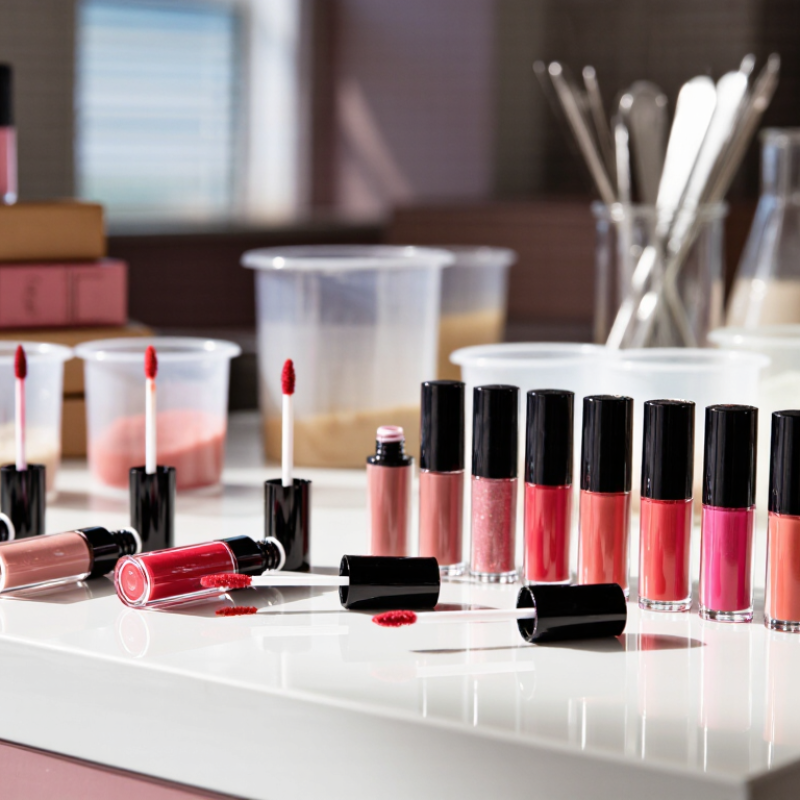
What Defines a Top Lip Gloss Maker for Global Wholesale Buyers
A top lip gloss maker for global wholesale buyers offers more than attractive samples. It provides stable quality, clear documentation, and dependable communication. Experienced manufacturers understand that gloss texture can change with temperature, filling speed, and storage time.
Wholesale buyers should request ingredient lists, product specifications, safety files, and batch records. These documents support responsible purchasing and help meet local market requirements. A reliable manufacturer also explains testing methods instead of making vague promises. Shade accuracy matters, especially when buyers reorder the same color months later.
Tips: Ask for production samples from different batches. Check shine, scent, stickiness, applicator fit, and leakage after transport. Review minimum order quantities, lead times, packaging options, and payment terms before approval. Written answers are safer than casual promises.
A strong supplier maintains clean production areas and follows documented quality procedures. Factory audits, sample retention, and final inspections add practical confidence. However, no factory is perfect. A trustworthy maker admits possible variation and explains how problems are corrected. Buyers should also test products independently, because one successful sample cannot prove long-term consistency. Responsive after-sales support is important when cartons arrive damaged or a batch performs differently. In my experience, honest communication often reveals more than polished sales language.
Manufacturing Standards, Quality Control, and Safety Compliance
Top Lip Gloss Maker for Global Wholesale Buyers
Global wholesale buyers need more than glossy samples. They need documented manufacturing discipline. McKinsey’s 2023 beauty report estimates the global beauty market may reach about $580 billion by 2027, growing nearly 6% annually. This scale increases pressure on suppliers to prove consistency, not merely promise it. Cosmetics Europe’s 2024 market report places Europe’s cosmetics and personal care market near €104 billion in 2023. Reliable compliance therefore supports commercial access.
A capable lip gloss maker should operate with ISO 22716-based cosmetic GMP procedures. Incoming oils, pigments, polymers, and packaging need identity checks before production. Each batch should carry traceable lot numbers, approved formulas, and retained samples. Microbial limits, heavy-metal screening, preservative efficacy, and stability testing require documented laboratory methods. For European sales, Regulation (EC) No 1223/2009 requires a safety assessment and product information file. For United States distribution, MoCRA adds facility registration, product listing, and serious adverse-event reporting duties. Compliance is market-specific.
Quality control must continue after filling. Operators should inspect wipers, caps, leakage, odor, color, and applicator performance. Packaging compatibility testing can reveal swelling or pigment migration after weeks of storage. That detail matters. A clean tube proves little. We still see avoidable variation between pilot samples and mass production. Sometimes the root cause is rushed mixing or weak supplier records. No responsible manufacturer should hide that risk. Honest corrective actions, audit trails, and independent test reports give buyers stronger evidence than polished claims.
Packaging, Private Label Services, and Minimum Order Requirements
For global wholesale buyers, packaging is not a decorative afterthought. It protects the formula, supports filling accuracy, and shapes shelf appeal. A capable lip gloss maker should offer clear tubes, doe-foot applicators, squeeze tubes, and recyclable cartons. Ask for material specifications, compatibility testing, leak checks, and print samples before approving production. Small details matter. A tight cap, clean wiper, and readable batch code can prevent costly complaints. Packaging must also meet the destination market’s labeling and safety requirements.
Private label service should cover formula selection, shade development, artwork setup, sample revisions, and production documentation. Request ingredient lists, safety data, stability results, and finished-product inspection records. Requirements vary by formula and packaging. A standard gloss may begin around 1,000 to 5,000 units, while custom molds or special finishes usually require more. Confirm whether the minimum applies per shade, per package, or per total order. That difference is easy to miss. Lower quantities may increase unit costs when cartons, labels, and color matching are customized. Sampling can take several rounds, and one approval may not be enough. Buyers should leave room for corrections. Even experienced teams sometimes underestimate packaging changes. A dependable supplier explains limitations clearly and keeps records from sample to shipment.
Top Lip Gloss Maker for Global Wholesale Buyers
Packaging, private label services, and minimum order planning benchmarks
This chart presents practical planning ranges commonly used by global wholesale buyers when evaluating lip gloss manufacturing programs. Packaging development usually involves one primary container, applicator, cap, and decoration method, while private label projects commonly begin with several hundred to several thousand units depending on customization, formula, and packaging requirements. Actual minimum order quantities, lead times, and customization options should be confirmed directly with the manufacturer.
How to Evaluate Pricing, Production Capacity, and Global Shipping Support
Top Lip Gloss Maker for Global Wholesale Buyers
When evaluating a lip gloss maker, start with the complete landed cost, not the unit price. Request a detailed quotation covering formula, tube, applicator, printing, cartons, inspection, and freight. Ask whether the price changes at different order quantities. A low quote can still be useful, but I have learned not to trust it alone. Confirm payment terms, sample fees, tooling charges, and possible seasonal increases.
Production capacity should be measured with evidence. Ask for monthly output, current utilization, lead times, and backup production arrangements. A capable supplier should explain filling speed, batch testing, shade matching, and packaging inspections. Request recent production records or an independent factory audit when possible. During my sourcing experience, impressive capacity claims sometimes lacked enough trained workers. That detail matters during peak seasons. Approve a physical sample before placing a large order, because gloss texture can change after scaling.
Tips: Compare three landed-cost quotations. Ask for a written production schedule. Check carton strength with a drop test. Confirm export documents, customs classification, labeling support, and destination-port options. Reliable shipping support includes tracking, commercial invoices, packing lists, and clear responsibility for delays. Do not assume every route is stable; freight schedules and port conditions can change. A supplier that reports problems early is often more dependable than one promising perfection.


 English
 Polski
  Čeština