What Are the Top Laser Equipment Manufacturers in China?
China’s Laser Equipment market includes manufacturers serving metal cutting, marking, welding, engraving, and precision-processing needs. Choosing among them is not just a matter of comparing machine prices. Buyers should examine laser source quality, motion systems, control software, safety design, and service coverage. Small details matter. A clean weld seam, steady cutting edge, or legible serial mark can reveal how well a system performs on the factory floor. Yet no single “top” list fits every buyer; production volume, materials, and local support change the answer.
Theodore Maiman, the laser pioneer, is often credited with the observation, “The laser is a solution looking for a problem.” That line remains useful when evaluating equipment. Start with the manufacturing task, then match the machine’s power, work area, accuracy, and automation to it. This guide compares leading Chinese manufacturers by product focus, technical capability, application range, certifications, and after-sales support. It also distinguishes broad industrial groups from specialists in cutting, marking, or micromachining. Company claims deserve scrutiny. Published specifications may not predict uptime, consumable costs, or response time after installation. Ask for a sample test using your material, and inspect the results closely. No ranking is perfect. The best choice is the one that reliably meets your process needs, not the one with the loudest marketing.
China’s Laser Equipment Industry: Scope and Product Categories
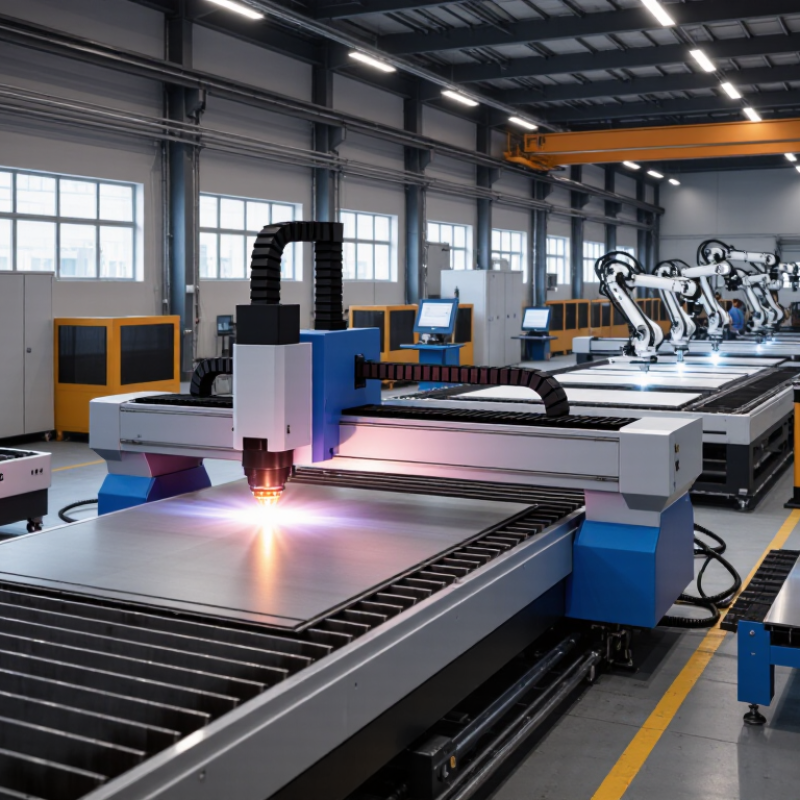
China’s laser equipment industry covers the design, integration, and production of machines that use concentrated light to process materials. A typical system combines a laser source, optics, motion controls, cooling, software, and protective housing. The complete system matters. Different configurations serve sheet-metal workshops, electronics lines, medical-device production, and research laboratories, though their requirements vary sharply.
Core product categories include laser cutting, welding, marking, engraving, cleaning, and surface treatment. Cutting systems process materials such as steel, aluminum, and acrylic; power and worktable size affect suitable workloads. Welding machines join components with controlled heat, while marking units add serial numbers or fine graphics. UV and ultrafast systems can process delicate materials, but they are not automatically the best choice. Application testing matters.
Chinese manufacturers range from suppliers of compact workshop machines to builders of automated production cells and specialized industrial platforms. Comparisons should cover repeatability, beam quality, uptime, software compatibility, and technical support, not headline wattage alone. A catalog figure can mislead without test conditions. Buyers should confirm sample results, maintenance intervals, spare-part availability, and operator training. Real production may still reveal gaps that a demonstration did not show.
How Leading Chinese Laser Equipment Manufacturers Are Identified
Leading Chinese laser equipment manufacturers are identified by evidence, not polished brochures. Look for a clear record of machines built for specific materials and production needs. Ask how cutting speed, edge quality, and uptime were measured. Reliable suppliers can explain test conditions, including material thickness, assist gas, and operating hours. Numbers without context are weak evidence.
Examine engineering and support together. Review sample cuts, maintenance schedules, spare-part availability, and response times. Ask to see inspection records and speak with customers using similar equipment. A factory visit can reveal practical details: calibration routines, clean assembly areas, and how operators handle faults. No single score tells the whole story. Published specifications may also be outdated, so verify current configurations directly.
Tips: Bring a real production sample and request a repeatable test. Record settings and results. Compare more than price. A neat demonstration is useful, but it may not reflect a full shift. That distinction is easy to miss.
Major Manufacturers in China and Their Areas of Specialization
China’s laser equipment manufacturers often specialize by process rather than building every machine type. One group focuses on fiber laser cutting systems for sheet metal, using enclosed work areas, automated loading, and high-power sources. These machines suit factories processing steel panels and metal parts. Cutting quality still depends on material, thickness, assist gas, and setup.
Other manufacturers concentrate on laser marking and engraving. Their systems can add serial numbers, codes, or fine graphics to metal and plastic components. CO2 equipment is commonly selected for materials such as wood, paper, and some plastics. For delicate electronics or medical components, precision-focused suppliers may offer compact machines and tighter control over heat.
It varies. A neat ranking can mislead. A manufacturer strong in high-volume cutting may not be the best fit for small-batch marking. Buyers should compare sample results, cutting tolerances, software compatibility, maintenance access, and local service response. Ask for a test using your actual material; a polished demonstration on a different sample proves little. Published specifications help, but confirm them in writing, since options and performance can differ between configurations.
Key Factors for Comparing Laser Equipment Manufacturers
When comparing laser equipment manufacturers in China, start with the work the machine must do. Cutting thin stainless steel differs from marking plastic or welding metal. Ask for a sample test using your actual material, thickness, and design. Inspect the edges, heat marks, and repeatability—not just the demonstration speed. A polished sample may not reflect a full production shift.
Compare the laser source, motion system, control software, and extraction setup as a complete package. Check whether stated power and accuracy match the process you need. Ask about routine maintenance, operator training, spare-part availability, and typical response times for technical support. A detailed specification sheet helps, but it can still feel cleaner than day-to-day production. That gap deserves attention. Request references from users with similar workloads, and clarify warranty coverage in writing.
Tips: Bring a real job file and material sample to a machine trial. Record cycle time and inspect several finished parts. Also ask what maintenance the machine needs each week. Small details matter.
Applications and Trends in China’s Laser Equipment Market
Laser equipment in China is increasingly part of everyday factory production. Fiber laser cutters process steel panels for machinery, construction, and vehicle components. In electronics plants, compact systems mark codes on metal housings and cut thin materials. Medical-device makers also use controlled laser processes for precise component work. Small details matter.
A visible market trend is the move toward connected production lines. Cutting machines may work alongside robotic loading, machine vision, and production software. This can reduce manual handling and help operators spot inconsistent edges sooner. Ultrafast lasers are also gaining attention for delicate materials that need less heat damage. However, they are not a universal replacement for established systems; material, throughput, and maintenance needs still shape the choice.
Practical limits deserve attention. A fast machine may sit idle if extraction, operator training, or material handling cannot keep pace. In smaller factories, installation cost and technical support can weigh as heavily as cutting speed. The market’s next gains may come less from headline power figures and more from reliable integration, easier maintenance, and measurable quality control. Progress is real, but uneven.
China’s NEV Production: A Demand Signal for Laser Processing
New-energy vehicle manufacturing uses laser equipment for processes such as battery welding, component cutting, and marking.
Source: China Association of Automobile Manufacturers (CAAM). Production figures are in millions of vehicles; this chart shows an industry demand indicator, not laser equipment sales.


 English
 Polski
  Čeština