What Are the 2026 Top Egg Packaging Machines?
Egg packaging is entering 2026 under pressure from rising food demand, labor shortages, stricter hygiene expectations, and unstable operating costs. The OECD-FAO Agricultural Outlook 2024-2033 projects continued growth in global poultry and egg consumption, while FAOSTAT data confirms that eggs remain a major animal-protein source worldwide. More eggs require faster handling, but speed alone does not define the best equipment.
A modern Egg Packaging Machine must protect shell integrity, maintain accurate counting, and reduce contamination risks. Industry guidance from the International Egg Commission emphasizes food safety, traceability, and responsible production across the egg supply chain. Meanwhile, PMMI’s packaging machinery reports highlight automation, digital monitoring, and labor-saving technologies as major investment priorities. These trends explain why robotic loading, vision inspection, automatic grading, and flexible carton handling are receiving stronger attention.
The top machines for 2026 will not be identical for every producer. A high-capacity processor may need a servo-driven system handling thousands of eggs per hour. A regional farm may value compact cleaning, quick format changes, and simple maintenance more. In real facilities, small details matter: cracked shells near the transfer point, dusty sensors, or cartons misaligned by only a few millimeters. That is where advertised performance can disappoint. This guide compares leading machine categories through capacity, hygiene design, automation, energy use, product protection, and total operating value. The ranking is practical, not absolute. Conditions differ. That deserves honest reflection.
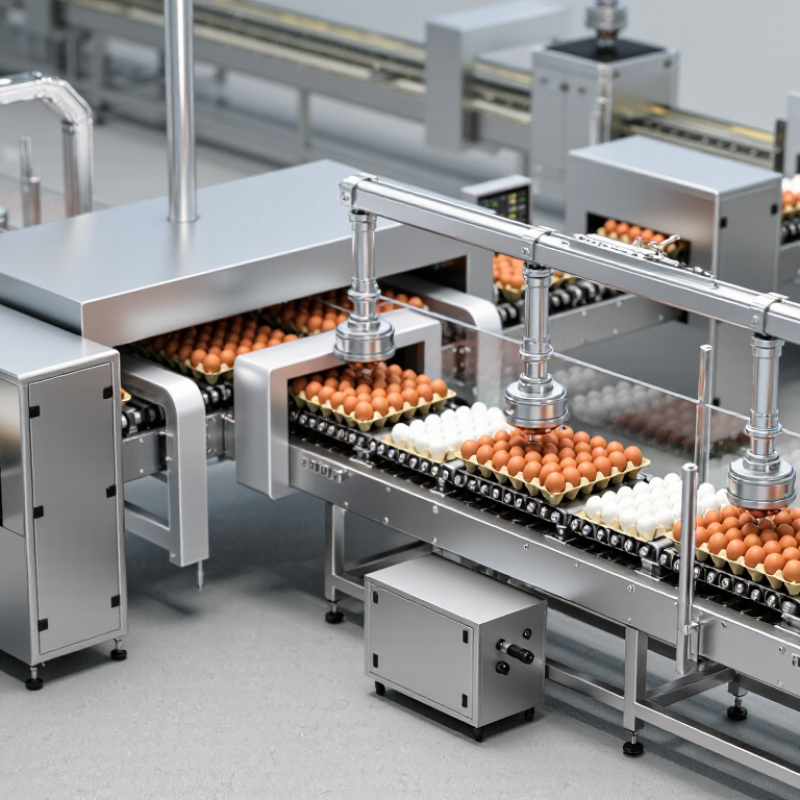
2026 Egg Packaging Machine Rankings by 15,000–30,000 Eggs per Hour
What Are the 2026 Top Egg Packaging Machines?
For 2026, the strongest machines are not judged by speed alone. The practical ranking covers systems processing 15,000–30,000 eggs per hour. The International Egg Commission’s 2024 industry overview places global egg production above 90 million tonnes annually. That scale increases demand for stable, measurable packaging performance. The OECD-FAO Agricultural Outlook 2024–2033 also expects continued growth in food demand and processing efficiency.
The 15,000-eggs-per-hour class ranks highly for small and mid-sized farms. It offers lower energy use, simpler maintenance, and better control during frequent product changes. The 20,000-eggs-per-hour class suits expanding facilities with moderate labor savings. It usually balances speed, footprint, and capital cost. The 25,000-eggs-per-hour class serves larger grading centers. It needs stronger conveyors and more accurate egg-flow control. The 30,000-eggs-per-hour class ranks first for volume, but only when supply remains consistent.
Real production is less clean than a brochure suggests. A 30,000-egg rating can fall sharply with cracked shells, uneven sizing, or overloaded conveyors. I would inspect changeover time, reject accuracy, washdown access, and sensor reliability. The FAO food-loss research also shows why careful handling matters, even when packaging speed looks impressive. Fast is useful. Consistent is better.
Automatic Graders Using EU S–XL Egg Classes: <53 g to ≥73 g
What Are the 2026 Top Egg Packaging Machines?
Automatic egg graders are gaining importance as packhouses manage stricter size specifications. The European Commission defines four EU egg classes. S means under 53 g. M covers 53–63 g, while L spans 63–73 g. XL begins at 73 g or more. These thresholds require stable weighing, not rough visual sorting.
The International Egg Commission’s 2024 industry overview places global egg production above 90 million tonnes annually. That volume increases pressure on accurate, continuous grading. Leading 2026 systems typically combine multi-lane conveyors, dynamic load cells, cameras, and servo-controlled outlets. Fast and accurate. A 60-egg-per-minute line may perform well, but speed alone proves little. Dust, shell moisture, vibration, and uneven egg spacing can distort readings. Operators should inspect calibration records and reject rates during live trials.
The USDA Agricultural Marketing Service Egg Grading Manual also separates weight classification from external quality inspection. That distinction matters. A machine may assign XL correctly while missing cracks or dirty shells. Reliable equipment should therefore record each class, flag uncertain readings, and support quick cleaning. Cloud dashboards sound useful, but poor connectivity can weaken traceability. I would not trust a brochure’s maximum speed without observing a full shift. Real packhouse conditions are less polite.
Food-Safety Systems Under USDA 7 CFR 56 and EU Class A Rules
The top egg packaging machines in 2026 will prioritize food safety over speed alone. For operations serving USDA markets, equipment should support the sanitation controls described in 7 CFR Part 56. Smooth stainless-steel surfaces, enclosed transfer points, cleanable belts, and tool-free access reduce contamination risks. Integrated candling and crack detection can remove damaged eggs before packing. Clean design matters.
Under EU Class A rules, machines must protect shell cleanliness and product identity during handling. Packaging lines should gently orient eggs, avoid shell damage, and separate rejected units automatically. Operators also need clear lot coding, traceability records, and controlled storage data. An aggressive washing module may suit one market, but conflict with EU Class A expectations for unwashed eggs. Market-specific configuration is essential.
The strongest systems connect sensors with practical operator checks. Temperature monitoring, reject counts, sanitation logs, and alarm histories create useful evidence during audits. However, software cannot replace validated cleaning procedures or trained staff. That gap matters. A machine may promise high output, yet poorly positioned inspection cameras can miss hairline cracks. Regular verification with test eggs, calibrated sensors, and documented corrective actions improves reliability. I would also question overly complex lines, because more components can create hidden cleaning points and slower maintenance.
Selection Metrics: Breakage, Labor, Traceability, and Energy per 1,000 Eggs
The 2026 top egg packaging machines should be judged by measurable production evidence, not display speed. FAOSTAT’s 2023 data records global hen-egg production above 90 million tonnes. At this scale, a small breakage increase becomes expensive. Track cracked eggs per 1,000 packed eggs during normal shifts, not only factory trials. A practical target is below 1%. Still, flock size and shell quality can distort comparisons.
Labor is the next test. Measure operators per line, changeover minutes, and manual handling points. The International Egg Commission’s Global Egg Industry Overview 2024 highlights continuing pressure from labor availability and operating costs. Automation should reduce lifting and repetitive inspection. It should not simply move workers toward difficult cleaning tasks. That mistake is easy to miss.
Traceability needs a readable record for each lot, shift, and carton format. GS1’s General Specifications support standardized identification and barcode data, but a barcode alone proves little. Verify recall drills with real production records. Energy deserves the same discipline. Record electricity and compressed-air use, then divide total consumption by 1,000 eggs. The IEA reports that electric motors drive a major share of industrial electricity demand, making conveyor efficiency important. Yet energy data may exclude washing, refrigeration, or standby time. That weakens comparisons. A machine using less power but causing more stoppages is not necessarily better. Test both.


 English
 Polski
 Čeština