
China’s 250 Cc Motocross sector attracts global buyers with a broad mix of factory capabilities, price points, and export experience. Yet a polished product photo cannot tell you how a frame handles repeated landings or how easily a local technician can source a replacement lever. Those details matter.
As motocross champion and coach Ricky Carmichael has often emphasized, “You have to be in shape to ride motocross.” The same practical mindset applies to choosing a bike: match its performance to the rider, terrain, and maintenance capacity. This guide introduces ten Chinese manufacturers and gives buyers a starting point for comparing engine specifications, suspension components, assembly quality, parts support, and communication.
Look closely. A 250cc badge alone does not establish equivalent performance. Ask for current specification sheets, clear warranty terms, and evidence of quality-control procedures. Where possible, arrange an inspection or request detailed component photographs. Consider how the motorcycle will be used: a sandy practice track places different demands on cooling and suspension than a compact, hard-packed circuit. Small details count, too, from accessible air-filter service to the finish on welds and controls.
This comparison is not a substitute for independent testing, and manufacturer claims should be checked. Some information may change between model years or export markets. That uncertainty deserves attention, not gloss. The goal is a shortlist built on verifiable details, realistic support, and a bike suited to its intended rider.
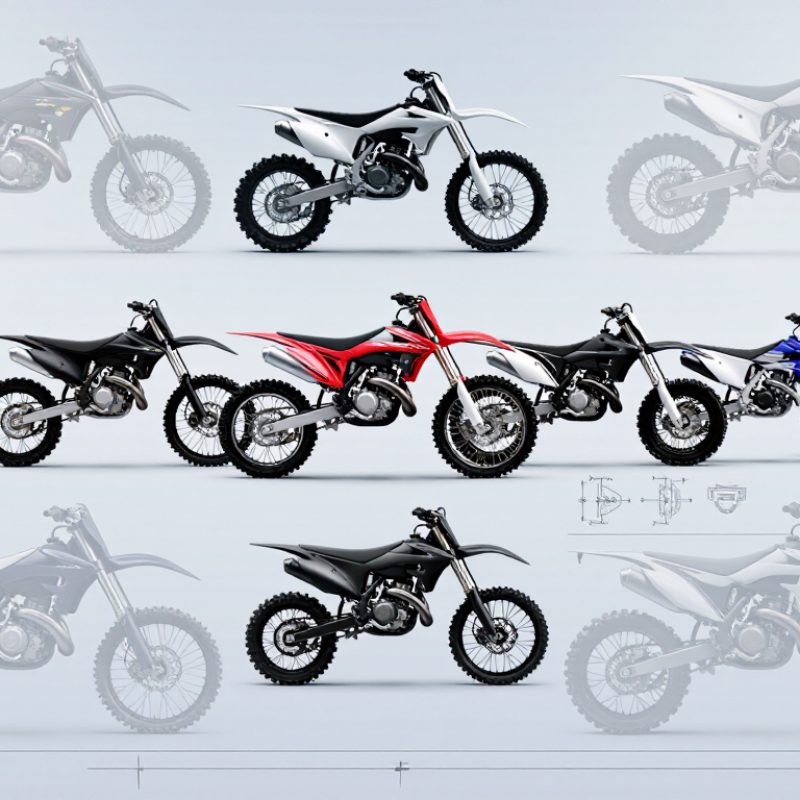
Understanding the 250cc Motocross Motorcycle Segment
A 250cc motocross motorcycle sits between lightweight learning bikes and larger, more demanding race machines. The FIM’s 2024 Motocross World Championship regulations define the MX2 four-stroke class as 175cc to 250cc. That range makes 250cc a useful reference point for buyers comparing competition-focused models. It is not, however, a guarantee of identical performance: engine tuning, gearing, suspension setup, and rider weight all change how a bike feels on track. Small details matter. A firm seat and sharp throttle can feel tiring after several laps.
For global buyers, compare specifications against the intended terrain and service conditions, not displacement alone. A technical sheet should state engine type, suspension travel, wet weight, and recommended maintenance intervals. The Motorcycle Industry Council’s market reporting groups off-highway motorcycles within broader powersports data; it does not provide a clean global sales total for 250cc motocross bikes. Treat broad market estimates cautiously. Ask manufacturers for test procedures, parts availability, and warranty terms in writing. In my view, published horsepower figures are easy to compare but rarely tell the whole story. A stable chassis and predictable power delivery may matter more on a rough, rutted circuit.
How to Evaluate Chinese Motocross Manufacturers
A polished showroom tells little about how a 250cc motocross bike handles repeated landings. Ask for measured dyno results, suspension test records, and sample inspection reports tied to the exact model year. Check whether frame welds, steering-head alignment, and engine tolerances are documented—not merely described as “strictly controlled.” The World Bank’s Logistics Performance Index 2023 scores countries on a 1–5 scale, including customs and logistics competence. Use it as a prompt to examine shipping plans, not as proof of one factory’s performance. Request recent delivery records and clarify who handles spare-parts shipments.
Then inspect the evidence behind durability claims. Ask for test hours, terrain conditions, maintenance intervals, and failure rates; a number without its test method is weak evidence. Review parts lists for stable specifications across production batches, especially brake components, bearings, and suspension seals. Ask to see a real inspection checklist, with measurements and rejected-part records. For context, Grand View Research’s global motorcycle market report forecasts continued market growth, but broad market demand cannot verify a supplier’s build quality. Important caveat: one factory visit can miss inconsistent shifts. Compare records from multiple production dates, and have an independent technician inspect a sample bike before committing.
Recommended procurement assessment weights for global buyers. The model emphasizes product quality, regulatory readiness, supply reliability, and after-sales capability rather than company or brand names.
Buyers can score each supplier from 0 to 10 for every dimension, multiply the score by the corresponding weight, and compare the resulting weighted totals before requesting samples or placing an order.
Profiles of ten Chinese 250cc motocross manufacturers are most useful when they compare real production strengths, not marketing claims. Some factories focus on steel-frame bikes for recreational riders, while others offer aluminum components or suspension options for demanding tracks. Several serve export buyers with configurable plastics, wheels, and gearing. Others keep specifications simpler, which can make maintenance and replacement parts easier. Their differences matter: a firm experienced in engine assembly may not have the same expertise in frame welding or quality control. Ask each supplier for current specifications, inspection records, and clear photos of finished bikes. A polished brochure proves little.
The strongest profiles also examine practical support. Check whether the manufacturer can provide parts diagrams, packing details, and a realistic production schedule. Ask how it tests brakes, steering, welds, and engine performance before shipment. Request samples of key components where possible. Some suppliers may have limited testing data; that deserves a closer look, not an automatic rejection. I would avoid treating price as a quality score. It is tempting, but incomplete.
Tips: Compare the same details across all ten profiles. Confirm component specifications in writing, and ask who handles warranty questions. A short video of a cold start helps. So does a parts list.
For global buyers, comparing 250cc motocross manufacturers means looking beyond engine output. Check frame weld consistency, suspension adjustment range, parts availability, and documented quality checks. Ask for production capacity by month, not just an annual estimate. A factory may assemble quickly but struggle to supply replacement plastics, clutch plates, or air filters six months later. Request a sample inspection report and a written lead-time schedule.
Export support matters. The World Bank’s Logistics Performance Index 2023 assessed 139 economies across customs, infrastructure, and shipment reliability—useful context when evaluating a supplier’s shipping plan. Ask who prepares packing lists, export documents, and crate specifications, then verify responsibilities in writing. For landed-cost comparisons, check the relevant motorcycle classification and duties through official customs sources; rates vary by destination. Details can be missed.
Tips: Request a parts list with clear item codes, a crate photo, and a sample commercial invoice before placing a bulk order. Compare warranty response times and technical-document quality, not only unit prices. A practical test is to ask how the supplier handles a damaged shipment or a delayed component. Their answer may reveal gaps. Even capable manufacturers can give optimistic delivery estimates, so build buffer time into your schedule.
Supplier comparison framework for buyer research. The entries below are anonymous evaluation slots, not verified rankings or claims about specific manufacturers. Specifications, production capacity, certifications, and export services vary by supplier and model; confirm them directly and request supporting documents before ordering.
| Supplier slot | 250cc product details to verify | Production capability evidence | Quality and compliance checks | Export support to confirm | Buyer assessment |
|---|---|---|---|---|---|
| Supplier 01 | Confirm engine displacement, 2-stroke or 4-stroke configuration, cooling system, transmission, and model-year specification. | Request factory audit access, process flow, monthly capacity by model, and evidence of in-house versus outsourced assembly. | Ask for inspection records, traceability method, warranty terms, and market-specific compliance documents where applicable. | Confirm export experience, shipping terms, packing method, spare-parts availability, and document support. | Pending documentary verification |
| Supplier 02 | Compare frame material, suspension adjustability, brake specification, wheel sizes, and published vehicle weight. | Request a recent production schedule, sample build records, component sourcing overview, and peak-season lead times. | Check pre-shipment inspection options, serial-number records, defect handling, and written acceptance criteria. | Confirm whether manuals, labels, invoices, and packing lists can be prepared for the destination market. | Pending documentary verification |
| Supplier 03 | Request a model-specific specification sheet and verify that advertised 250cc displacement matches the engine documentation. | Verify assembly-line capability, workforce and equipment through an audit or independent inspection. | Review test procedures for engine, brakes, electrical system, and final vehicle inspection; request sample reports. | Confirm shipment consolidation options, export packaging, and responsibility for customs documentation. | Pending documentary verification |
| Supplier 04 | Check starting system, fuel delivery, exhaust configuration, service intervals, and availability of replacement parts. | Request capacity figures with the reporting period and product scope clearly stated, plus evidence of repeat-order performance. | Confirm incoming-part inspection, final inspection checklist, and process for handling nonconforming units. | Ask about spare-parts ordering, parts diagrams, technical assistance, and warranty claim timelines. | Pending documentary verification |
| Supplier 05 | Compare seat height, ground clearance, suspension travel, control layout, and rider-use limitations stated by the supplier. | Request production photos or live video, facility address, audit availability, and subcontractor disclosure. | Check whether certificates are current, issued to the relevant legal entity, and applicable to the exact product and destination. | Confirm minimum order quantity, sample-order terms, production deposit terms, and agreed delivery milestones. | Pending documentary verification |
| Supplier 06 | Verify component brands or specifications only where documented; request exact part references for critical components. | Review capacity allocation for export orders, order-change controls, and the supplier’s method for managing production delays. | Request evidence of batch identification and retained inspection records for the production lot. | Confirm language options for manuals, packaging marks, and after-sales communication. | Pending documentary verification |
| Supplier 07 | Ask for fuel capacity, stated consumption if tested, noise data where relevant, and operating or maintenance guidance. | Verify tooling ownership, model changeover capability, and whether production can be scaled without changing approved specifications. | Clarify responsibility for independent testing and the remedy if a pre-shipment inspection fails. | Confirm carton or crate dimensions, gross weight, loading plan, and shipping damage procedures. | Pending documentary verification |
| Supplier 08 | Request clear photos and specifications for tires, rims, chain and sprockets, controls, and protective components. | Check whether the supplier can provide a dated production plan and identify capacity reserved for the buyer’s order. | Review complaint escalation, corrective-action records, and the process for replacement parts or repairs. | Ask for destination-specific import document support, while independently confirming local import requirements. | Pending documentary verification |
| Supplier 09 | Compare available configurations and confirm which options are standard, optional, or subject to minimum order quantities. | Request evidence of production planning, component availability management, and stated lead times for repeat orders. | Confirm the exact scope of any quality-system certification and whether it covers the manufacturing site involved. | Verify payment safeguards, contract entity, bank account ownership, and procedures for resolving shipment discrepancies. | Pending documentary verification |
| Supplier 10 | Obtain a signed final specification, bill of materials or controlled component list, and sample approval before bulk production. | Assess site access, production records, capacity evidence, and the supplier’s ability to maintain consistent specifications. | Agree on inspection sampling, acceptance criteria, defect classification, and written corrective-action deadlines. | Confirm warranty coverage, technical support, spare-parts supply terms, and post-shipment claim handling in writing. | Pending documentary verification |
Buyer note: “250cc” alone does not establish road legality, safety compliance, or suitability for a particular market. Verify the exact model, intended use, import rules, required certification, and shipping classification with the supplier and relevant authorities.
When comparing China’s top 10 250cc motocross manufacturers, global buyers should verify more than engine size and catalog photos. Request a complete specification sheet, including bore, stroke, cooling method, gearbox type, suspension travel, frame material, and tested weight. Ask whether the 250cc engine is supplied consistently across production batches. A polished website proves very little.
Visit the factory or arrange an independent inspection before placing a large order. Check welding quality, wheel alignment, cable routing, brake response, and cold-start performance. Request sample test reports for noise, emissions, durability, and electrical safety according to the destination market. Confirm the VIN process, user manuals, spare-parts list, warranty terms, and after-sales response time in writing. Payment details should match the contracted company, not an unrelated account. Small errors here become expensive later. Even a careful checklist can miss problems.
Tips: Ask for timestamped production videos and a live video inspection. Compare sample parts with mass-production parts. Confirm packaging dimensions, moisture protection, and replacement-part availability. Test at least one finished unit before shipment. Keep every promise in the purchase contract. Be cautious with unusually low prices; they may reflect thinner materials, weaker quality control, or missing compliance documents. Inspections cost money, but one overlooked weld or incorrect document can cost far more.
