
Request a Quote
  • Affiliates

7 Tips for Sourcing Magnet Zippers in Bulk?

Sourcing Magnet Zippers in bulk looks simple until a sample fails after washing. The slider sticks, the tape twists, or the magnetic pull weakens inside a winter coat. These small defects can create large return costs. A practical sourcing process must examine performance, consistency, supplier capability, and documentation before negotiating a low unit price.

Industry data shows why material choices deserve closer attention. Textile Exchange’s Materials Market Report 2024 estimates that global fiber production reached about 124 million tonnes in 2023, with polyester representing approximately 57% of output. This scale increases pressure on brands to verify fiber content, recycled claims, and supply-chain records. The State of Fashion 2024 report from The Business of Fashion and McKinsey also highlights continued volatility in costs, demand, and sourcing networks. Magnet Zippers should therefore be evaluated as engineered components, not decorative accessories.

This guide presents seven practical tips for bulk purchasing. It considers magnet strength, zipper dimensions, corrosion resistance, fabric compatibility, sample testing, minimum order quantities, and supplier verification. Ask for measurable specifications. Request test samples. Inspect the zipper after repeated opening, washing, and bending. A neat spreadsheet is not enough. In my view, many buyers focus too heavily on price and underestimate packaging damage during shipping. That assumption deserves questioning. Supplier audits, batch records, and clear inspection criteria can improve reliability, although no checklist removes every production risk. Buyers should also confirm applicable product-safety requirements for their markets and intended uses before approving mass production.
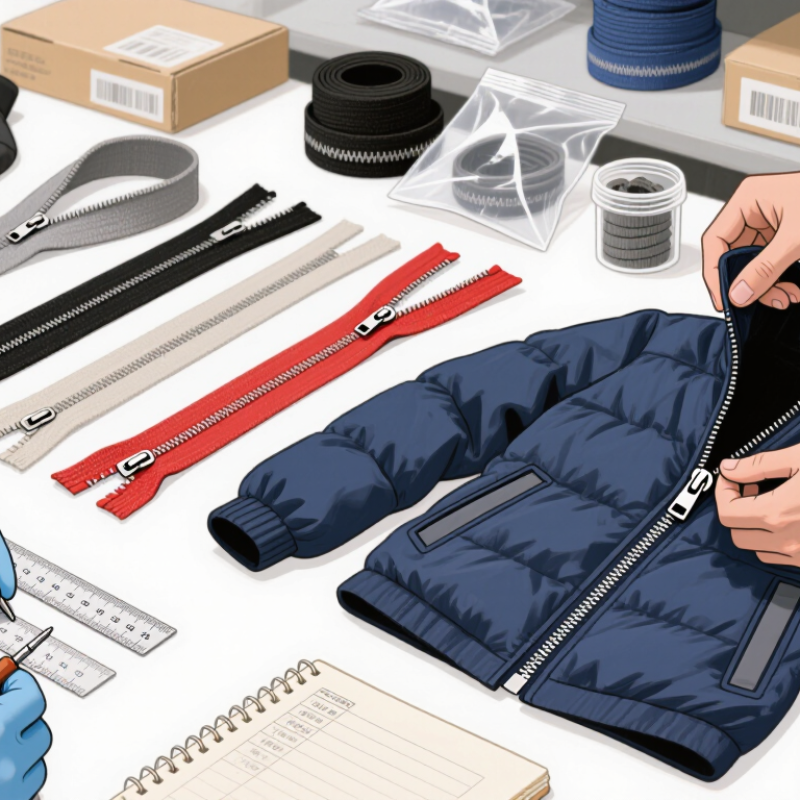
7 Tips for Sourcing Magnet Zippers in Bulk?

Define Magnet Zipper Requirements Before Placing a Bulk Order

Define Magnet Zipper Requirements Before Placing a Bulk Order

Before requesting bulk pricing, write down where the magnet zipper will be used. A closure on a lightweight pouch faces different demands from one on a thick work jacket. Note the fabric weight, opening length, expected daily use, and whether the garment needs to stay closed during movement. Small details matter.

Choose the magnet layout and strength with the finished product in mind. Ask whether the magnets should run along the full zipper or sit at selected points. Stronger attraction is not always better; it can make the zipper awkward to separate or affect nearby components. Test a sample with the actual fabric layers, lining, and seam construction. Check alignment, opening force, and how the closure behaves after repeated use. It may feel fine on a flat table, then shift when worn.

Specify the slider, teeth or tape material, color, tolerances, and any required pull direction. Confirm how the supplier measures zipper length, since measurement methods can differ. Request a written specification and a pre-production sample before approving the full quantity. Keep one sample as a reference during inspection. I have seen assumptions create avoidable rework. A clear checklist is less exciting, but it helps both sides catch mismatches before production begins.

Evaluate Suppliers’ Quality, Capacity, and Manufacturing Experience

When sourcing magnet zippers in bulk, assess suppliers with samples, records, and production evidence—not sales claims alone. Ask for documented checks on magnet placement, pull strength, slider movement, and corrosion resistance. Test samples on the actual fabric and garment construction; a zipper that works on a flat swatch may snag on a thick seam. Request inspection criteria and recent batch records. ISO’s 2023 Survey of Management System Standard Certifications counted more than one million ISO 9001 certificates worldwide. Certification can indicate a quality-management system, but it does not prove every zipper batch meets your specifications.

Capacity needs verification too. Ask suppliers to show monthly output, current machine utilization, lead times, and backup plans for magnet or tape shortages. Textile Exchange’s Materials Market Report 2024 estimated global fiber production at 124 million tonnes in 2023, highlighting the scale of material demand across textile supply chains. It is not a zipper-capacity measure, so request zipper-specific figures rather than treating broad industry growth as proof. Check whether a supplier can reserve materials and maintain the same magnet strength across repeat orders.

Manufacturing experience matters most when specifications are unusual. Review past production records for comparable zipper lengths, tape types, and end-stop designs. Ask how defects are traced and corrected. Visit the factory, or commission an independent production inspection when travel is impractical. Small gaps matter. I would also ask for a pilot run before committing; it adds time, but can expose inconsistent slider feel or uneven stitching. A polished sample is not a guarantee.

Compare Materials, Magnet Strength, Prices, and Minimum Order Quantities

7 Tips for Sourcing Magnet Zippers in Bulk?

Compare materials before comparing quotes. Textile Exchange’s Materials Market Report 2024 estimates that global fiber production reached 124 million tonnes in 2023, with polyester accounting for 57%. That scale makes polyester tape widely available, but availability alone does not prove it suits your product. Compare tape weave, coating, color consistency, and wash performance. For metal teeth, request details on alloy and corrosion testing. Ask suppliers to identify magnet grade and provide pull-force measurements, not just “strong” or “heavy-duty” descriptions.

Tip: Request samples made with your intended fabric. Test opening and closing with one hand, then check whether the magnets misalign after repeated use. A small sample can reveal awkward snags that a specification sheet misses. I would not rely on a single strength reading; the garment’s thickness and seam construction can change the feel.

Compare prices on a like-for-like basis: zipper length, slider type, tape material, magnet configuration, testing, and packaging. Ask whether the quote includes sample fees, setup charges, freight, and any price breaks at higher volumes. Minimum order quantities may differ by color or custom dimensions, so request a written breakdown for each option. Record lead times and defect replacement terms, too. Low prices can be useful, but I have seen a tidy quote leave important details unclear. Confirm the production sample and agreed tolerances before approving a bulk order.

Request Samples and Verify Durability, Safety, and Product Compatibility

Before placing a bulk order, request production samples from the same materials and process planned for the full run. Test several pieces, not just the best-looking one. Open and close each zipper repeatedly, then inspect the slider, teeth, stitching, and magnetic ends for loosening or wear. A small test can reveal issues that a product photo cannot.

Check safety and handling in the context of the finished item. Feel for sharp edges, exposed components, or magnets that detach under a firm pull. If the zipper will be used near children or sensitive equipment, ask the supplier for relevant material and safety documentation, and assess the finished product carefully. Do not assume a sample proves every batch will match. It helps, but it is not a guarantee.

Compatibility matters just as much as durability. Sew a sample into the intended fabric or product, then test it with the actual lining, seam allowance, and closure layout. A magnet that works well on a thin swatch may feel weak through padded fabric. Check alignment, closure force, and whether nearby metal parts interfere. Record the results and request adjustments before approving production. I have seen a zipper pass a bench test yet sit awkwardly after sewing; that detail is easy to miss, and worth checking twice.

7 Tips for Sourcing Magnet Zippers in Bulk: Request Samples and Verify Durability, Safety, and Product Compatibility
No. Sourcing Tip What to Request or Check Practical Verification Record for Approval
1 Define the product specification Specify zipper type, finished length, tape material and color, tooth or coil size, slider configuration, magnet placement, and end-stop details. State tolerances for critical dimensions. Compare the supplier’s written specification with the product drawing and intended installation method before requesting a quotation. Approved drawing, specification sheet, and tolerance list.
2 Request representative samples Ask for samples matching the proposed materials, magnet arrangement, slider, and production finish. For a bulk order, request samples from a production-representative batch when available. Inspect several samples for consistent length, alignment, stitching or attachment, smooth travel, and secure magnetic engagement. Sample identification, date received, inspection notes, and approved reference sample.
3 Test opening and closing durability Agree on a cycle-test method and pass criteria appropriate to the product. Ask the supplier to identify the test setup, cycle count, sample count, and any failures. Cycle the zipper repeatedly under the intended use conditions; check for jammed teeth, detached magnets, tape damage, slider loosening, and reduced closure performance. Test method, agreed cycle target, results, and corrective actions for failures.
4 Check magnet retention and closure function Ask how magnets are retained and whether retention or pull tests are available. Set acceptance criteria based on the product’s expected loads and foreseeable handling. Inspect magnet positions and attachment before and after use testing. Confirm that the closure aligns reliably without excessive force or unintended separation. Retention-test method, results, magnet placement, and agreed pass/fail limits.
5 Verify safety and regulatory needs Identify the destination market, intended user, and product category. Request relevant material declarations and test reports; confirm that applicable requirements are checked for the finished product, not assumed from a component alone. Assess risks from accessible small magnets, sharp edges, and detachment, especially for products intended for children. Obtain qualified compliance advice where required. Market, age group, applicable requirements, report scope, and document validity.
6 Confirm compatibility with the finished product Check zipper length, tape width, sewing allowance, fabric thickness, seam construction, curvature, and magnet orientation against the product design. Install samples in a prototype made with the intended materials. Test operation when the product is empty and loaded, and check nearby components for interference. Prototype version, installation notes, fit result, and any design changes.
7 Set bulk-order quality controls Agree on inspection criteria, packaging, lot identification, defect handling, and change approval. Require notification before changes to magnets, tape, slider, construction, or production site. Review a pre-production sample and define incoming checks for dimensions, appearance, zipper operation, and magnet attachment. Select sampling levels based on risk and order requirements. Signed-off sample, inspection plan, lot records, and written change-control agreement.
Note: Agree on test methods and acceptance limits with the supplier before production. Applicable safety requirements depend on the product, intended users, and destination market.

Confirm Customization, Packaging, Lead Times, and Shipping Terms

When sourcing magnet zippers in bulk, confirm customization before approving a large order. Ask the supplier to specify magnet strength, zipper length, tape color, puller shape, and tolerance for each measurement. A sample can reveal whether the magnets align smoothly or catch fabric during use. Test it on the actual material, not just a flat swatch. Small differences matter.

Tip: Get the details in writing. Request a sample with your chosen dimensions and finish, then compare it against the approved specification. If one point feels unclear, ask again. I have seen vague color references cause avoidable revisions; a physical swatch is more reliable than a screen image.

Packaging and delivery terms deserve the same attention. Confirm units per bag or carton, carton dimensions, labels, and any moisture protection needed for storage. Ask for a production schedule with dates for sample approval, manufacturing, and dispatch. Lead times can shift when custom components are involved, so build in a buffer rather than planning around the most optimistic estimate. Clarify whether shipping terms include freight, insurance, and customs-related charges, and identify who arranges each step. Even a tidy quote may leave gaps. Check those before paying a deposit.

Article Source:

en_USEnglish