
Request a Quote
  • Affiliates

How to Choose Furniture Grade Plywood?

Choosing Furniture Grade Plywood is more than selecting the smoothest sheet at a lumberyard. The surface may look flawless, yet the inner plies can contain gaps, weak glue lines, or uneven thickness. The USDA Forest Products Laboratory’s Wood Handbook, FPL-GTR-282, explains how veneer quality, moisture, bonding, and panel construction influence wood performance. These factors matter when a cabinet door must stay flat beside a warm kitchen wall.

The term “furniture grade” is useful, but not perfectly uniform. It can describe appearance, core quality, machining behavior, or a supplier’s own product category. That creates confusion. In the United States, ANSI/HPVA HP-1 provides recognized plywood requirements for hardwood and decorative panels. EPA TSCA Title VI also addresses formaldehyde emissions from composite wood products. Check the panel’s compliance documentation, not only the sales label. Ask for the species, thickness tolerance, core construction, adhesive standard, and emissions certification.

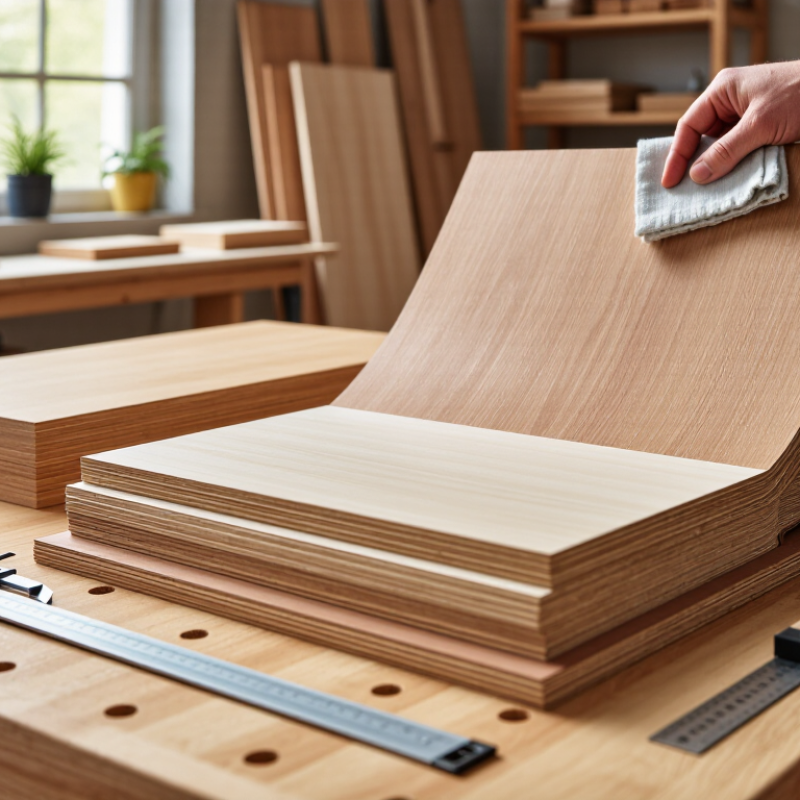
Small details reveal a lot. Inspect the sheet edge for open voids. Place it on a flat surface and check for bowing. Rub the face veneer lightly; loose fibers may show poor sanding or fragile grain. A quality supplier should provide technical data, test references, and clear storage guidance. APA publications and USDA research offer useful technical context, but neither replaces project-specific testing. A 19-millimeter panel may still sag across a long shelf. That is easy to overlook. This guide examines face grades, core types, stability, moisture exposure, machining, safety documentation, and real-world cost. The best choice is rarely the cheapest sheet. It is the panel that matches the load, finish, environment, and expected service life.
How to Choose Furniture Grade Plywood?

What Furniture-Grade Plywood Means and Where It Is Used

Furniture-grade plywood is not one universal legal grade. It usually describes panels made for visible, shaped, or load-bearing furniture parts. The surface should be smooth and consistently sanded. The core should contain fewer voids and tighter veneers. Good panels also resist splitting around screws and edges. In a workshop, I check the cut edge before buying. A dark gap can reveal a hidden core defect.

The FAO Forestry Production and Trade database reported global wood-based panel production above 400 million cubic metres in 2022. That figure includes plywood, particleboard, and fibreboard, so it does not represent furniture plywood alone. Still, it shows the scale of panel manufacturing and the need for clearer specifications. ISO 12465 identifies plywood requirements for construction and industrial use, while furniture buyers often add stricter appearance expectations. A smooth face alone proves very little.

Furniture-grade plywood is commonly used for cabinet sides, drawer boxes, shelves, desks, bed platforms, and built-in storage. Interior furniture normally needs a clean face and stable bonding. Kitchens and bathrooms need moisture-resistant adhesive and carefully sealed edges. Exterior exposure requires a different panel specification. Do not assume “furniture grade” means waterproof. I made that assumption once. It failed near an unsealed sink cutout. Check veneer species, thickness tolerance, formaldehyde documentation, core gaps, and the applicable standard. The European Panel Federation’s market reports also show continued demand for engineered wood products, but demand does not remove manufacturing variation. A sample panel remains worth inspecting.

How to Compare Plywood Core Types and Veneer Quality

How to Choose Furniture Grade Plywood?

Furniture-grade plywood is judged from the inside out. Core construction affects screw holding, flatness, weight, and edge appearance. Veneer-core panels use crossed wood layers, so they usually hold fasteners well. However, visible core gaps can telegraph through thin faces. MDF-core panels machine cleanly and stay smooth under paint. They are heavier and less forgiving around prolonged moisture. Particleboard cores cost less, but edges need careful sealing. Combi cores balance stability and weight, though quality varies sharply.

On a sample edge, look for tight joints, uniform plies, and no open gaps. Tap several areas. A dull, hollow sound deserves investigation. Face veneer quality needs equal attention. Grade A faces should appear nearly free of open defects. Lower grades permit more knots, patches, and color variation under ANSI/HPVA HP-1. Book-matched leaves should align in grain direction and color. Yet perfect symmetry can hide repairs. Inspect under raking light.

USDA Forest Products Laboratory’s Wood Handbook, 2021, places typical interior wood moisture around 6–14%, depending on climate and use. Ask for moisture testing and construction details, not just a face-grade label. APA PS 1-19 also separates Exposure 1 panels from Exterior-bond panels, a distinction often missed in furniture workshops. EPA TSCA Title VI sets a 0.05 ppm formaldehyde limit for hardwood plywood in the United States. A certificate helps, but it is not proof of perfect bonding. I once trusted a beautiful face too quickly. The exposed edge later showed a loose inner ply.

Which Plywood Thickness and Panel Size Fit Your Project

How to Choose Furniture Grade Plywood?

Choosing plywood thickness starts with the furniture’s job, not its appearance. For drawer bottoms and cabinet backs, 6 mm plywood often provides enough support. Shelves and cabinet sides usually perform better with 12 mm or 18 mm panels. A wide shelf may still sag, even when the plywood looks strong. Add a front edging strip or central support when the span exceeds about 800 mm.

Panel size affects both strength and waste. A standard 2440 x 1220 mm sheet suits many cabinets, tables, and wardrobes. Measure your cutting plan before buying. Keep the visible grain running in the same direction across matching doors. Leave extra material for trimming, because factory edges can be slightly damaged. Small errors become obvious after assembly.

Check the actual thickness with a caliper. It may differ slightly from the stated size. Inspect the edges for gaps, soft spots, or uneven core layers. Better furniture plywood should have a stable surface and consistent inner plies. For a tall bookcase, I prefer thicker panels with a reinforced back. That choice costs more and adds weight, but it reduces movement during use. My early projects sometimes used thin shelves to save material. They looked fine at first. Later, the shelves bowed. The lesson was simple: panel size, load, and support must be considered together.

How to Check Adhesives, Emissions, and Surface Safety

Choosing furniture-grade plywood requires more than a clean veneer. Start by requesting adhesive and emissions documentation. The core may use urea-formaldehyde, phenolic, or another resin system. Each option affects odor, indoor air quality, moisture resistance, and finishing behavior. Do not rely on “eco-friendly” wording alone. Request the technical sheet and applicable emissions classification. Check the production date, thickness, and testing method. Documents matter.

Bring a small flashlight and inspect the cut edge. A sound panel shows tight layers, limited gaps, and no dark glue pockets. Press a fingernail against the face veneer. It should feel even, without loose fibers, splinters, or bubbling. Smell can provide a warning, but it is not proof. The smell test is imperfect. For indoor furniture, ask whether formaldehyde emissions were tested under a recognized standard. Compare the declared limit with local requirements, not only marketing language.

Surface safety also depends on sanding and finishing. Run a clean cotton cloth across the sheet; snagging suggests raised fibers or rough patches. Test stain, paint, or clear finish on a hidden offcut. Some adhesives resist coatings unevenly. An attractive sample can hide a poor inner core. That is an easy mistake. Also check moisture damage, repaired knots, and exposed fasteners before cutting. Keep the paperwork with the project records. If information is missing, order a sample or choose another panel.

How to Choose Furniture Grade Plywood?

Check adhesive emissions and surface safety before selecting panels for indoor furniture.

The chart compares published formaldehyde emission limits. Lower values indicate a stricter limit, but results should only be compared when the same test method and unit are used. For furniture-grade plywood, also request adhesive compliance documentation, confirm that panels are fully cured, and inspect every surface and edge for splinters, open voids, delamination, and unsafe coatings.

Adhesives
Ask for formaldehyde-emission test reports and the applicable product standard.
Emissions
Check the declared limit, test method, unit, and intended indoor-use classification.
Surface Safety
Choose panels with smooth faces, sealed edges, no loose fibers, and no visible delamination.

How to Select, Inspect, and Buy the Right Plywood Grade

How to Choose Furniture Grade Plywood?

How to Select, Inspect, and Buy the Right Plywood Grade

Choosing furniture-grade plywood starts with the project, not the label. Cabinet doors need stable, smooth panels, while shelves need stiffness and screw-holding strength. Ask the supplier about face veneer, core construction, thickness tolerance, and emissions documentation. “Furniture grade” is not a universal technical grade. Treat it as a description, not proof.

At the yard, inspect a full sheet under bright, angled light. The face should look even, with tight patches and no open knots, bubbling, or deep sanding marks. Sight along the long edge. A bowed sheet may create gaps during assembly. Tap the surface lightly and compare sounds; hollow spots can indicate internal voids. Check several points with calipers, because an 18-millimeter sheet may vary slightly. I have accepted attractive faces before and regretted weak cores later. Appearance can hide failure.

For buying, request a sample or cut edge before ordering a large quantity. Look for several plies, consistent glue lines, and minimal gaps through the core. Ask what A, B, or C grades mean under the supplier’s standard. Match the adhesive and emission class to the room and local requirements. For painted furniture, a lower face grade may work, but repair labor can erase the saving. Ask how sheets were stored; flat, dry storage matters. Do not rely on one perfect sample. Inspect the actual delivery. Small variations happen. Record thickness, defects, and batch details on the purchase order.

How to Choose Furniture Grade Plywood? - How to Select, Inspect, and Buy the Right Plywood Grade

Selection Dimension Available Options or Grade What to Look For Recommended Choice for Furniture Inspection or Buying Notes
Face Veneer Grade A, B, C, or D face classifications; exact rules depend on the applicable plywood standard. A faces are generally smooth and suitable for clear finishing or high-quality painting. B faces may contain small, sound repairs or minor visual defects. A-A for visible faces on both sides; A-B when one side is concealed or receives a less demanding finish. Do not rely on the phrase “furniture grade” alone. Ask for the actual face/back grade and the governing standard.
Core Construction Multi-ply veneer core, lumber core, composite core, or mixed core. Even plies, tight joints, no large voids, no overlapping veneer, and no loose or buckled inner layers. Multi-ply veneer core for general cabinets, shelves, doors, and panels; lumber core can be useful for wide, flat panels when properly supported. Inspect a freshly cut edge or ask for a core description. A decorative face does not guarantee a high-quality core.
Panel Flatness Flat, slightly bowed, twisted, or visibly warped. The sheet should lie reasonably flat on a level surface, with no severe bow, twist, cup, or edge lift. Flat and stable, especially for cabinet doors, drawer parts, desktops, and long shelves. Check several sheets because storage conditions can affect flatness. Reject panels with permanent or severe distortion.
Surface Quality Smooth, sanded, rough, patched, or textured. Uniform sanding, no deep scratches, open splits, delamination, resin pockets, or raised patches on the visible face. Sanded face with a consistent appearance and enough remaining veneer thickness for the planned finish. Run a clean cloth lightly across the surface to identify rough spots, loose fibers, or raised defects.
Voids and Edge Defects Void-free or low-void core; visible holes, gaps, or splits. Avoid large internal voids, open edge gaps, missing core sections, and soft areas that can cause weak screws or uneven edges. Low-void or void-free core for exposed edges, routed parts, shelving, and joinery. Examine the long edge under good lighting. Small concealed core imperfections may be acceptable for non-structural parts.
Thickness Common nominal sizes include 6 mm, 9 mm, 12 mm, 15 mm, 18 mm, and 25 mm, depending on the market and product standard. Consistent thickness across the sheet and compatibility with grooves, dados, hinges, and edge-banding systems. Use approximately 12–18 mm for many cabinet components and 18–25 mm for heavier shelves or load-bearing panels, subject to design calculations. Measure with calipers when joinery depends on exact thickness. Nominal thickness may differ from actual thickness.
Wood Species and Appearance Hardwood face, softwood face, or decorative sliced veneer. Consistent grain direction, color, figure, and veneer matching across panels that will be installed together. Matching face veneers for visible doors, drawer fronts, and side panels; utility faces are acceptable for hidden components. Buy enough material from the same production lot when color and grain consistency matter.
Moisture Resistance Interior, moisture-resistant, or exterior-bonded plywood. Select the bond type for the actual environment; moisture resistance does not automatically mean waterproof performance. Interior-grade for dry indoor rooms; moisture-resistant or exterior-bonded material for kitchens, bathrooms, utility rooms, or occasional humidity exposure. Seal all cut edges. Do not use interior-bonded plywood where repeated wetting or outdoor exposure is expected.
Formaldehyde and Emissions Emission class or regulatory declaration varies by region and product. Look for documented compliance with the emissions requirements applicable to the installation location. Low-emission compliant panel for bedrooms, nurseries, offices, and other regularly occupied indoor spaces. Request a technical data sheet or compliance statement rather than relying on an unverified “eco-friendly” claim.
Structural or Non-Structural Use Decorative panel, cabinet component, shelf, furniture frame, or load-bearing part. Confirm the panel’s structural rating, span requirements, screw-holding needs, and intended service conditions. Furniture-quality appearance plus suitable engineering performance; decorative grade alone is not a structural rating. For safety-critical or long-span parts, follow the applicable building, furniture, or engineering standard.
Dimensional Stability Standard veneer core, cross-banded construction, or engineered panel construction. Cross-laminated plies, balanced construction, and consistent moisture content help reduce movement and distortion. Balanced, cross-laminated panel for doors, wide sides, tabletops, and other broad components. Store panels flat, supported, and protected from direct moisture before fabrication.
Certification and Documentation Product standard, grade stamp, technical data sheet, or no documented classification. The documentation should identify face grade, core type, thickness, bond classification, emissions information, and intended use. Fully documented panel from a supplier able to provide traceable specifications. Keep the invoice, product sheet, and batch information for quality control and future matching.
Price-to-Performance Fit Premium appearance grade, standard furniture grade, utility grade, or shop-grade offcut. Match the quality level to visibility, machining demands, moisture exposure, and expected service life. Premium face for visible parts and a lower-cost but stable panel for hidden or secondary components. Using the highest face grade everywhere may increase cost without improving concealed components.
Practical buying checklist: Confirm the face/back grade, inspect the core for voids, check flatness and thickness, verify the bonding and emissions classification, compare several sheets, and select a panel that matches the furniture’s visibility, load, and moisture conditions.
en_USEnglish