2026 How to Enhance Your Brand Packaging for Greater Consumer Appeal?
In today's competitive market, effective brand packaging is crucial for attracting consumers. It serves as the first point of contact and can define consumer perceptions. Good brand packaging tells a story, opening a dialogue with customers.
To enhance appeal, consider the visuals. Color choices, fonts, and imagery play essential roles. They should align with your brand identity. A mismatch can confuse customers, leading to missed opportunities. Texture and materials also matter. Unique finishes can make your packaging stand out on the shelf. Reflect on the sustainability aspect, as eco-friendly materials attract more and more consumers.
Despite these strategies, some brands still struggle. They may overlook the emotional connection in their packaging. Consumers want to feel something when they see a product. If your brand packaging lacks that connection, potential sales may be lost. It is vital to evaluate your approach continuously and adjust. Create packaging that is not only functional but also memorable.

Understanding the Importance of Brand Packaging in Consumer Perception
Brand packaging plays a crucial role in shaping consumer perceptions. It is the first touchpoint between the consumer and the product, and it often creates a lasting impression. Attractive designs can catch the eye and spark curiosity. However, the effectiveness of packaging goes beyond aesthetics. Many brands overlook the tactile experience. Consumers love to engage with products. Textures and materials need careful consideration.
Innovative packaging can tell a story. It can convey values and authenticity. Consumers appreciate brands that are environmentally friendly. Sustainability initiatives in packaging can enhance brand loyalty. Yet, some brands still use excessive plastic. This becomes a missed opportunity to connect emotionally with eco-conscious shoppers. Brands must reflect on their choices.
Understanding target audiences is essential. Different demographics respond to varied designs and messages. Research and feedback can redirect efforts. Feedback is often ignored but critical for improvement. Brands should not fear imperfection. It opens pathways for dialogue. Embracing flaws can lead to refreshing ideas. Listening to consumers can make packaging truly impactful.
2026 How to Enhance Your Brand Packaging for Greater Consumer Appeal?
| Dimension |
Description |
Consumer Impact |
Example Strategy |
| Color Psychology |
Utilizing colors that evoke specific emotions and associations. |
Colors can influence purchasing decisions significantly. |
Incorporate brand colors that align with the intended brand message. |
| Sustainability |
Using eco-friendly materials and packaging solutions. |
Appeals to environmentally conscious consumers. |
Implement biodegradable packaging to reduce carbon footprint. |
| Functionality |
Designing packaging that enhances the user experience. |
Easy-to-use packaging can lead to higher satisfaction. |
Invest in resealable or easy-pour designs. |
| Brand Storytelling |
Communicating the brand story or values through packaging. |
Creates a personal connection between the consumer and the brand. |
Use graphics or text to share the brand's origin and mission. |
| Innovative Shapes |
Creating unique shapes to stand out on the shelf. |
Attracts consumer attention and increases visibility. |
Redesign packaging into distinctive forms like geometrical designs. |
Identifying Key Elements of Effective Brand Packaging Design
Effective brand packaging design is essential for capturing consumer attention. Your packaging should tell a story. It needs to communicate your brand’s values. Strong visuals can create an emotional connection. The choice of colors, fonts, and imagery matters. Keep it simple yet striking. Consumers often glance, not stare.
Tips: Always consider your target audience. Research their preferences. A design appealing to one group may alienate another. Test different designs. Gather feedback and analyze it. Be open to criticism.
Use quality materials. Consumers associate sturdiness with reliability. Eco-friendly options can appeal to conscious buyers. However, remember that sustainability should not compromise design. Balancing aesthetics and functionality is a challenge. Packaging must protect the product but also look good doing it. This dual purpose can elevate the overall consumer experience.
Enhancing Brand Packaging for Greater Consumer Appeal
Incorporating Sustainable Practices in Brand Packaging for Modern Consumers
In today’s market, consumers increasingly prioritize sustainability in their purchasing decisions. According to a recent survey by McKinsey, 67% of consumers are willing to pay more for sustainable brands. This statistic underscores the shifting expectations around packaging. Brands need to consider eco-friendly materials and practices to connect with modern consumers effectively.
Packaging made from recycled or biodegradable materials is gaining traction. In fact, a report from Deloitte indicates that 52% of consumers have changed their buying behavior based on sustainable packaging choices. Brands must evaluate their current materials and consider alternatives, like plant-based plastics. However, transitioning to sustainable options can be challenging. It may involve higher costs and sourcing complexities.
Moreover, the aesthetics of packaging must not be overlooked. Packaging should resonate with the values of eco-conscious consumers. Minimalist designs often communicate simplicity and purity. Yet, there is a fine line; over-simplification can lead to an unappealing appearance. Brands must find a balance between visual appeal and sustainability. This requires continuous feedback from consumers to refine their approach. Engaging with consumers directly can uncover insights that drive impactful changes in packaging.
Utilizing Color Psychology and Visual Elements to Enhance Packaging Appeal
Colors play a significant role in packaging design. They evoke emotions and influence consumer behavior. For instance, warm colors like red and orange can create excitement. In contrast, cool colors like blue and green evoke calmness and reliability. Choosing the right color can attract attention or even deter it. Brands need to reflect on how their color choices align with their message and target audience.
Visual elements are equally important. Typography, images, and shapes need to communicate effectively. Legible fonts help consumers easily read information. Unique shapes attract curiosity, while images can tell a story. A well-designed package invites consumers to engage. However, brands should regularly test new designs. Not every choice will resonate. Gathering feedback is crucial. Misalignment between visuals and brand identity can confuse consumers, leading to missed opportunities.
Ultimately, enhancing brand packaging requires thoughtful consideration. It's not just about looking good; it’s about creating a connection. Balancing creativity with clarity is challenging. Brands must evaluate their designs and ask, "Does this truly reflect who we are?" Visual appeal can be powerful, but it's essential to ensure it doesn't overshadow the product's purpose.
Gathering Consumer Feedback to Improve and Adapt Brand Packaging Strategies
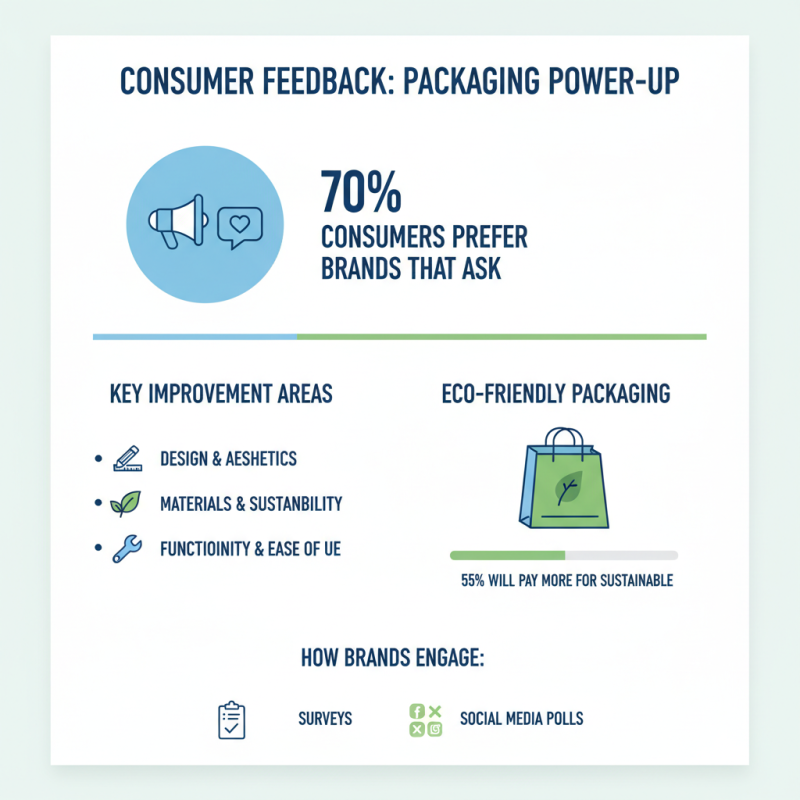
Consumer feedback is crucial for enhancing brand packaging. Recent studies show that 70% of consumers prefer brands that actively seek their opinions. This feedback can guide improvements in design, materials, and functionality. Engaging with customers through surveys or social media allows brands to pinpoint what resonates. For instance, many consumers value eco-friendly packaging. Approximately 55% express a willingness to spend more if it’s sustainably sourced.
Listening to consumers is not always straightforward. Brands may receive mixed responses, leading to confusion. It’s often easy to misinterpret feedback. A packaged product that seems appealing might not perform well. A survey by a leading marketing firm revealed that 40% of packaging redesigns fail to meet consumer expectations. This highlights the importance of continuous testing and adapting.
Brands must embrace a culture of reflection. Relying solely on initial feedback can create blind spots. Regularly revisiting consumer insights is vital. Not all packaging strategies will work, and that’s okay. Learning from failures is part of the process. Effective strategies evolve through trial and error.







 English
 Polski
  Čeština