How to Choose the Best Solar Battery Box for Your Needs
Choosing the right Solar Battery Box is more important than simply selecting the largest enclosure available. It must protect valuable batteries from moisture, dust, heat, impact, and unauthorized access. A suitable box should also support safe ventilation, practical cable routing, and straightforward maintenance. Small details matter. A loose cable gland can allow water inside. Poor airflow can raise internal temperatures and shorten battery life.
Battery technology expert Dr. John B. Goodenough explained, “A battery is a device that converts chemical energy directly into electrical energy.” His statement reminds us that storage performance depends on the complete system, not only the battery cells. The Solar Battery Box, installation environment, wiring, charge controller, and monitoring equipment must work together. A box placed in a shaded garage may need different protection than one installed beside a coastal cabin. Salt air changes the risk. So does extreme summer heat.
This guide examines enclosure materials, sizing, IP protection, ventilation, security, and installation requirements. It also considers lithium-ion and lead-acid battery differences. Experience shows that a cheaper box can become expensive after corrosion, overheating, or difficult servicing. Still, no single design fits every project. That is where careful measurement becomes essential. Measure the battery dimensions, terminal clearance, cable bend radius, and future expansion space before purchasing. I have found that many buyers focus on appearance first. That can be a mistake. A reliable choice balances safety, durability, access, and cost, while accepting that every installation has limitations.
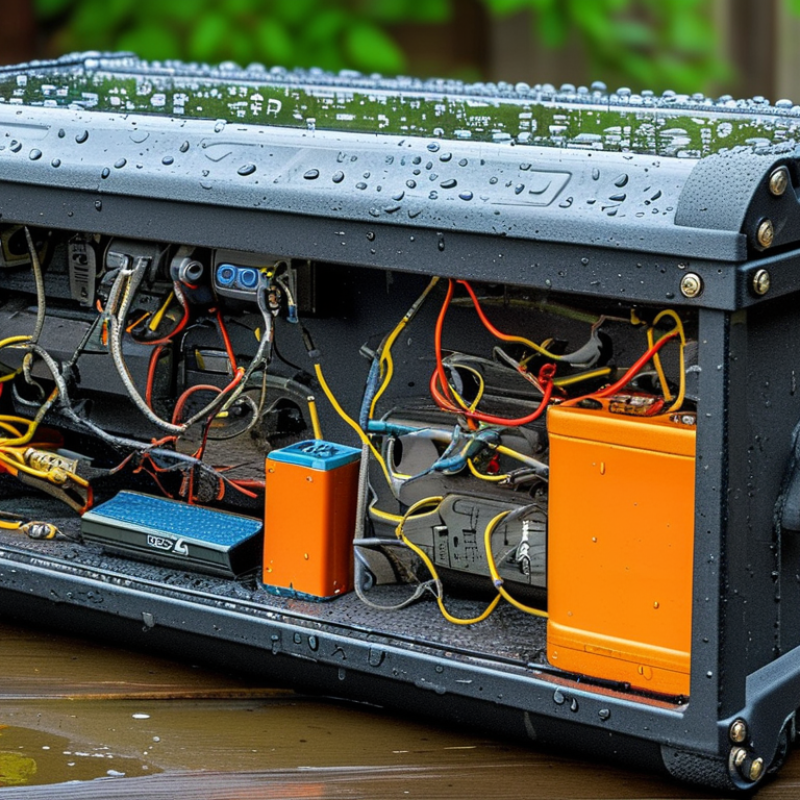
Understanding Solar Battery Box Types and Their Core Functions
How to Choose the Best Solar Battery Box for Your Needs
Understanding Solar Battery Box Types and Their Core Functions
A solar battery box is more than a protective container. It controls risk, heat, moisture, and electrical access. Portable power stations suit temporary use and smaller loads. Wall-mounted boxes work well in garages or utility rooms. Outdoor cabinets protect larger battery banks from rain, dust, and temperature changes. Lead-acid systems usually need ventilation because charging can release hydrogen. Lithium-ion systems require a battery management system, temperature sensors, and balanced charging.
The International Energy Agency reported almost 42 GW of new battery storage in 2023, over 130% more than the previous year. This growth makes enclosure quality increasingly important. A suitable box should include overcurrent protection, short-circuit isolation, and clear status monitoring. Check its IP rating carefully. IP65 protects against dust and water jets, but not immersion. Small detail. Big consequence.
The National Renewable Energy Laboratory’s 2024 Annual Technology Baseline models lithium-ion storage at roughly 85% round-trip efficiency. However, real performance drops with poor ventilation, cold temperatures, long cables, and oversized inverters. A larger box is not automatically safer. Field installers often find that cramped wiring creates more trouble than limited capacity. Leave service space around terminals and airflow paths. Confirm usable capacity, continuous power, surge power, operating temperature, and fire-separation requirements before purchase. A neat specification sheet can still mislead.
Assessing Your Energy Storage Needs and System Requirements
Choosing a solar battery box starts with your daily load, not its advertised capacity. Record electricity use for at least seven days, including evening cooking, refrigeration, pumps, and overnight cooling. A household using 20 kWh daily may need 24–26 kWh of nominal storage for one day, allowing usable-capacity limits and reserve settings. This estimate is imperfect. Real homes rarely follow average charts.
Peak power matters equally. A battery may store 10 kWh but deliver only 5 kW continuously. Check startup surges from compressors, well pumps, or workshop tools. Then match the battery’s continuous output, surge rating, voltage range, and inverter compatibility. The U.S. Energy Information Administration reported average residential electricity consumption of about 886 kWh monthly in 2022, but local habits vary sharply. Your meter data is more useful than a national average.
Weather and safety requirements deserve close attention. Outdoor enclosures need suitable ingress protection, corrosion resistance, ventilation provisions, and temperature limits. Confirm local electrical codes and recognized certification, such as UL 9540 where applicable. The International Energy Agency’s Batteries and Secure Energy Transitions report projects global battery storage capacity will rise from 85 GW in 2023 to 1,200 GW by 2030. That growth increases product choice, but not necessarily installation quality. Check round-trip efficiency, warranty assumptions, usable capacity, and expected degradation. A smaller, well-matched system can outperform a larger box installed without a measured load profile.
How to Choose the Best Solar Battery Box for Your Needs - Assessing Your Energy Storage Needs and System Requirements
| Storage Profile | Typical Usable Capacity | Recommended Battery Chemistry | Typical Continuous Output | Recommended Depth of Discharge | Best-Fit Solar System | Suitable Battery Box Requirements |
| Essential backup | 2–5 kWh | Lithium iron phosphate (LFP) | 1–3 kW | 80–90% | 3–6 kW residential system | Compact enclosure, integrated battery-management system, DC disconnect, ventilation according to the battery design, and indoor or sheltered installation |
| Daily energy shifting | 5–15 kWh | Lithium iron phosphate (LFP) | 3–8 kW | 80–90% | 5–10 kW residential system | Modular enclosure, protected cable routing, temperature monitoring, adequate load-bearing capacity, and clearance for servicing |
| Whole-home backup | 10–30 kWh | Lithium iron phosphate (LFP) | 5–15 kW | 80–90% | 8–15 kW residential system | Expandable cabinet, high-current protection, inverter compatibility, fire-risk mitigation measures, and installation space that meets local code |
| Off-grid residence | 15–40 kWh | LFP or other stationary lithium-ion chemistry approved for the system | 5–20 kW | 70–90% | 8–20 kW hybrid or off-grid system | Weather-resistant cabinet, insulation or thermal control where needed, low-temperature charging protection, and space for multiple battery modules |
| High-power loads | 10–50 kWh | LFP or a system-approved high-power lithium-ion chemistry | 10–30 kW | 70–90% | 10–30 kW commercial or large residential system | Reinforced enclosure, correctly rated busbars and disconnects, thermal monitoring, arc-flash and short-circuit protection, and professional installation |
| Small commercial storage | 50–200 kWh | Stationary LFP or another chemistry certified for commercial energy storage | 25–100 kW | 70–90% | 30–150 kW commercial solar-plus-storage system | Floor-mounted cabinet or dedicated battery room, restricted access, emergency isolation, fire detection, HVAC where required, and documented maintenance access |
Selection note: Actual capacity, output, enclosure rating, operating temperature, clearances, and protection requirements depend on the battery module, inverter, installation location, and local electrical and fire-safety regulations. Confirm compatibility and installation requirements with the equipment documentation and a qualified installer.
Comparing Battery Box Capacity, Compatibility, and Safety Features
How to Choose the Best Solar Battery Box for Your Needs
Capacity should match your daily energy pattern, not just your panel output. Estimate essential loads, such as a refrigerator, lights, router, and medical equipment. Then compare their wattage, operating hours, and starting demands. A battery box rated at 5 kWh may provide less usable energy after reserve limits and conversion losses. Leave practical headroom for cloudy days. Measure twice.
Compatibility involves more than voltage. Check the battery chemistry, continuous current, peak current, connector type, and inverter communication requirements. The enclosure should fit the battery securely without crushing cables or blocking ventilation. Space matters. A box that accepts one battery may not support future expansion. I once underestimated cable clearance, creating unnecessary strain near the terminals. That mistake changed how I inspect internal layout.
Safety features deserve close attention. Look for strong insulation, secure covers, corrosion-resistant materials, and protection against dust and moisture. Temperature monitoring, overcurrent protection, and clear emergency disconnect access add valuable control. The enclosure must suit its installation area, whether it is a shaded garage or an exposed utility space. Confirm the product’s test documentation and installation limits. Local electrical requirements may also demand professional inspection. A weather-resistant label alone does not prove outdoor safety. Check the actual rating, mounting method, and drainage design before purchase.
How to Choose the Best Solar Battery Box for Your Needs
Comparing nominal capacity, system compatibility, and practical usable energy for common battery configurations.
The chart uses representative battery configurations calculated from voltage × amp-hours. A lead-acid battery is commonly sized around 50% usable depth of discharge, while a lithium iron phosphate battery is commonly sized around 80% usable depth of discharge; actual values depend on the battery manufacturer and operating conditions. Choose a box that matches the battery voltage, chemistry, terminal layout, physical dimensions, ventilation needs, and cable clearance. For outdoor installations, consider a suitable IP-rated enclosure, secure mounting, fuse protection, corrosion-resistant materials, and adequate heat management.
Evaluating Installation Conditions, Durability, and Maintenance Needs
Choosing the best solar battery box begins with the installation site, not its appearance. Measure the available space, then check clearance around cables, vents, and service panels. A garage may offer shelter, but temperature changes can still affect battery performance. Outdoor installations need protection from rain, dust, direct sunlight, and accidental impact.
Look closely at the enclosure’s construction. A strong box should resist corrosion, especially near coastal air or agricultural chemicals. Sealed cable entries help prevent moisture from reaching electrical connections. However, “weatherproof” does not mean maintenance-free. I have seen condensation collect inside poorly ventilated enclosures after cold nights. That detail is easy to miss. Check the protection rating, mounting hardware, and drainage design before installation.
Maintenance needs should match your available time and technical skill. Leave enough room to inspect terminals, clean dust, and identify heat marks without dismantling the system. A removable cover can save considerable service time. Keep a simple log of temperature readings, unusual sounds, and visible corrosion. Manufacturer instructions should guide inspection intervals and torque checks. Do not improvise around live electrical components. In practice, even a carefully selected box can fail when installed on an uneven wall or exposed to repeated flooding. I would reassess the location after the first rainy season, because the original assumptions may be wrong.


 English
 Polski
  Čeština