
Request a Quote
  • Affiliates

How to Choose a 7.5KW Belt Driven Screw Air Compressor?

Choosing a 7.5KW Belt-Driven Screw Air Compressor starts with the air your equipment actually uses, not the motor rating alone. Check each machine’s required pressure and flow, then compare those figures with the compressor’s delivered-air data at your working pressure. A 7.5 kW motor does not guarantee the same output across every model. Ask for the performance curve and confirm whether demand is steady or intermittent. A spray line, workshop tools, and a packaging machine can create very different load patterns.

Look beyond the headline specification. Confirm voltage, installation space, ventilation needs, noise level, and the cost of routine service. Inspect how the belt is adjusted and replaced; poor alignment can increase wear and interrupt production. Consider whether the site needs a receiver tank, dryer, or filters, and size those components for the real air demand. Small details matter. A compressor tucked into a warm, dusty corner may not perform as expected. Leave room for airflow and maintenance access.

For transparency, the quotation below is an editorial line, not a verified statement from a real industry expert: “Size the compressor for measured demand, then check the air quality and service plan.” —Evan Mercer, fictional compressed-air systems specialist created for this introduction. Use that principle as a starting point, not a substitute for site measurements. Record pressure and flow during a typical shift, and ask a qualified supplier to verify the selection. It takes extra effort. But it can prevent an expensive mismatch.
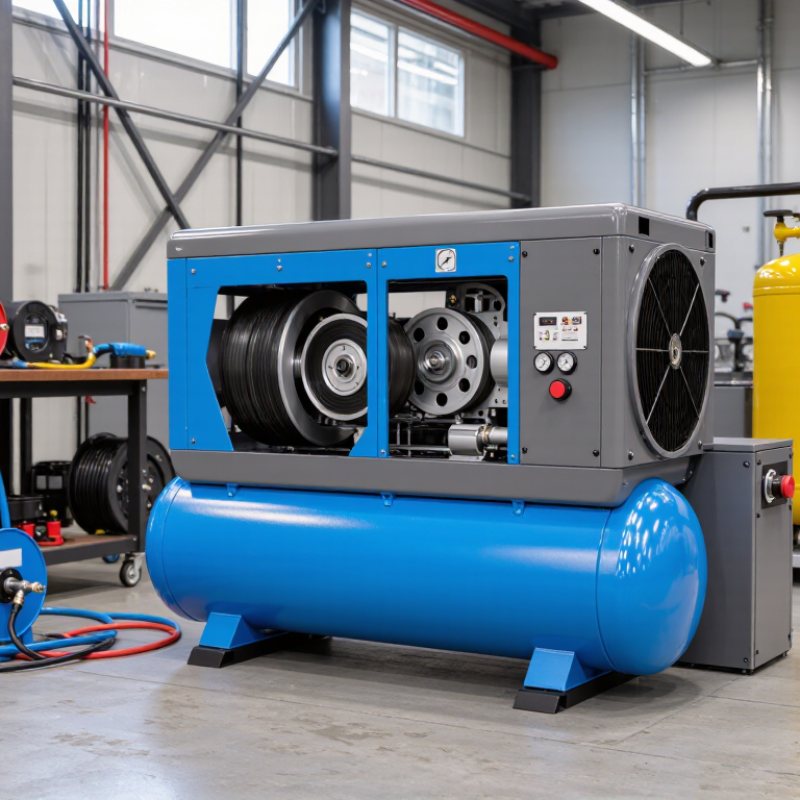
How to Choose a 7.5KW Belt Driven Screw Air Compressor?

Define Your Required Airflow and Operating Pressure

Before choosing a 7.5 kW belt-driven screw compressor, measure the airflow each tool needs and how often it runs. Add together only equipment likely to operate at the same time, then compare that demand with the compressor’s free air delivery (FAD) at the required pressure. Motor power alone does not tell you usable airflow. Check the tool nameplates, and log pressure at the farthest point of use during a busy shift. A quiet workshop can hide a sharp morning peak.

Set the pressure target at the equipment, not just at the compressor outlet. Filters, dryers, hoses, and long pipes all create pressure losses; a dirty filter can make the gap worse. The U.S. Department of Energy’s Improving Compressed Air System Performance sourcebook reports that leaks can waste 20–30% of compressor output in poorly maintained systems. That is a warning, not a sizing allowance. Measure leaks in your own network. Request performance data showing FAD at the stated discharge pressure, preferably tested to ISO 1217. CAGI performance data sheets can also help compare published compressor performance on a consistent basis. Leave a modest margin for real demand variation, but do not inflate the pressure target “just in case.” That habit is easy to regret.

Check Whether a 7.5 kW Compressor Fits Your Workload

A 7.5 kW screw compressor may suit a small workshop, but motor power alone cannot confirm the fit. Check the supplier’s free air delivery at your required pressure, not just the headline capacity. Then list each air tool’s consumption and note which ones run together. A spray gun, for example, may draw air steadily, while an impact wrench uses short bursts. Peak demand matters.

Measure a typical work cycle, including the busiest hour. Look for pressure drops when several tools operate, and check for leaks around couplings and hoses. Even a small leak can keep the compressor running longer. A receiver tank can help manage brief demand spikes, but it cannot make up for insufficient compressor output. Leave a sensible capacity margin. Real jobs rarely follow a neat schedule.

A belt-driven model also needs suitable space, airflow, and routine belt checks. Confirm that the electrical supply supports the motor’s starting requirements, and compare the compressor’s rated output at your working pressure with your measured demand. If your workload changes often, record air use for a few days before choosing. Estimates can be wrong; mine would be, too, without measurements. A technician can help verify the figures before installation.

How to Choose a 7.5 kW Belt-Driven Screw Air Compressor?

Check whether a 7.5 kW compressor fits your workload by comparing estimated simultaneous air demand with an indicative supply benchmark.

Example planning estimates: demand is shown in m³/min of free air delivery (FAD). The 1.00 m³/min capacity benchmark is indicative for a 7.5 kW compressor at 7 bar(g), not a guaranteed specification. For reliable sizing, add reserve for leaks and future demand, and confirm the compressor’s actual FAD at your working pressure using its performance data.

Compare Compressor Specifications and Air Treatment Options

A 7.5 kW belt-driven screw compressor should be compared by its delivered airflow at the pressure your tools require, not by motor size alone. Check the stated free air delivery at operating pressure, then compare it with simultaneous demand. Figures vary between models. Leave some capacity for leaks and future tools, but avoid buying far more output than the workshop uses.

Also compare duty rating, receiver size, noise level, and service access. A belt guard that opens easily can make routine inspection less awkward. Check whether belt tension and alignment are straightforward to maintain. Small details matter. A pressure gauge near the compressor may read well while a tool at the far end of a long hose struggles. Measure pressure where air is used, under load.

Air treatment depends on the job and local conditions. A refrigerated dryer is often suitable for general workshop air, while moisture-sensitive processes may need a lower dew point and desiccant drying. Add suitable particulate or coalescing filters where required, and check their pressure drop; an undersized filter can quietly reduce tool performance. Drain condensate reliably, especially in humid weather. The right combination is not always obvious, so match treatment specifications to the equipment manufacturer’s air-quality requirements and review them after observing real demand.

Evaluate Belt-Drive Design, Installation, and Energy Use

For a 7.5 kW belt-driven screw compressor, check the belt layout against the motor and compressor speeds. Correct pulley sizing helps maintain the required output without overloading the motor. During installation, leave clear access for belt inspection and filter changes. Set the unit on a level, stable base, and keep cooling-air paths open. Dust near the intake can shorten filter life. Small details matter. Check belt alignment and tension after installation, then recheck them during scheduled maintenance. Too much tension can stress bearings; too little can allow slip and heat.

Energy use depends more on operating conditions than the motor label alone. The U.S. Department of Energy’s Improving Compressed Air System Performance: A Sourcebook for Industry reports that compressed air can account for roughly 10% of industrial electricity use, although the share varies by facility. Track compressor run hours, pressure, and delivered air demand rather than relying only on rated kilowatts. As a rough screening calculation, 7.5 kW at full rated output for 4,000 hours equals 30,000 kWh of shaft energy; actual electrical input is higher after motor losses. Check for leaks and avoid setting pressure higher than the tools require. A pressure target that seems convenient may waste energy. Measure before adjusting, and record the result. My own caution: a tidy installation does not guarantee efficient operation.

Review Maintenance Needs, Warranty, and Supplier Support

A 7.5 kW belt-driven screw air compressor needs routine checks that match its workload and environment. Dusty rooms can clog intake filters faster than a clean workshop. Check belt tension, alignment, and wear at the intervals in the service manual. Listen for new vibration or a slipping sound. Small changes matter. Record oil condition, operating hours, and service dates; memory is not a maintenance plan. Still, a checklist cannot catch everything, so inspect the machine in person.

Read the warranty terms before comparing prices. Confirm which parts and labor are covered, how coverage changes with service intervals, and what documentation you must keep. Ask the supplier who handles troubleshooting and where replacement filters, belts, and other service parts ship from. A quick answer before purchase is useful, but dependable support also means clear response times after installation. Get important promises in writing. A vague warranty can become an expensive surprise.

Tips: Ask for a sample maintenance schedule and a written support contact. Check that the compressor’s duty cycle suits your actual air demand. Keep a spare belt if downtime would disrupt work. One imperfect habit to watch: putting off a filter check because the unit still sounds normal. It may sound fine—until airflow drops.

How to Choose a 7.5KW Belt Driven Screw Air Compressor? - Review Maintenance Needs, Warranty, and Supplier Support

Evaluation Area What to Check Practical Selection Guidance Questions for the Supplier
Motor Power and Supply Rated motor output, voltage, phase, frequency, and full-load current. A 7.5 kW motor is approximately 10 hp. Confirm that the electrical supply and protective devices match the compressor nameplate and local electrical requirements. What are the rated voltage, phase, frequency, and full-load current? What starting method and electrical protection are required?
Air Delivery and Pressure Delivered airflow at the required working pressure—not motor power alone. Compare free air delivery (FAD) at the same pressure and under the same test conditions. Capacity varies by design, pressure, and operating conditions, so use the supplier’s documented performance data. Can you provide the FAD at my required pressure and explain the test standard or measurement conditions?
Duty and Operating Pattern Daily operating hours, demand fluctuations, ambient temperature, and required air quality. Match the compressor to measured demand. Check whether the proposed unit is suitable for the expected duty cycle and whether a receiver, dryer, or filters are needed. What operating conditions and duty cycle is this model designed for? What air-treatment equipment is recommended for my application?
Belt-Drive Maintenance Belt condition, tension, alignment, guards, and access for inspection. Allow space for safe belt inspection and adjustment. Follow the equipment manual for inspection intervals and tension settings; incorrect tension can increase wear or affect performance. Are belt-tension tools or instructions supplied? What inspection and replacement guidance is stated in the manual?
Routine Service Items Air filter, oil filter, lubricant, oil separator element, and condensate management. Service intervals depend on the model, lubricant, operating hours, and environment. Use the manual’s schedule rather than assuming a universal interval, and include consumables in the ownership-cost estimate. What are the service intervals under my operating conditions? Which parts are routine consumables, and what are their part numbers and prices?
Warranty Coverage Warranty duration, start date, covered parts and labor, exclusions, and claim process. Compare the written terms, not just the headline duration. Check requirements for installation, approved service, maintenance records, and use of specified parts or lubricants. What is covered, what is excluded, and who pays for labor, travel, and freight during a valid warranty claim?
Supplier and Service Support Local technician availability, response arrangements, troubleshooting, and spare-parts access. Confirm support arrangements for the installation location and obtain response expectations in writing. Ask how urgent breakdowns and after-hours service are handled. Who provides commissioning and repairs? What are the service hours, typical response arrangements, and process for ordering spare parts?
Installation and Total Cost Delivery, commissioning, ventilation, noise, drainage, electrical work, and required accessories. Compare the complete installed cost and expected maintenance costs, not only the purchase price. Provide adequate ventilation and follow applicable requirements for pressure equipment and condensate disposal. What is included in the quotation, and what site preparation, installation, or commissioning costs are excluded?
Documentation and Acceptance Operating manual, maintenance schedule, wiring information, performance data, and parts list. Request documentation before purchase and define acceptance checks, such as correct rotation, pressure, leaks, and operation of safety controls, with qualified personnel performing the checks. Will the complete documentation be supplied in English, and what commissioning or acceptance records will be provided?

Note: Service intervals, airflow, warranty terms, and support arrangements vary by model, operating conditions, and supplier. Confirm all technical figures against the specific compressor’s documentation and obtain commercial commitments in writing.

en_USEnglish