

What are the Best Testing Packaging Solutions for 2026?
In the ever-evolving landscape of packaging solutions, testing packaging plays a crucial role. By 2026, the demand for innovative testing packaging will escalate. According to a recent report by MarketsandMarkets, the global testing packaging market is projected to reach $7.2 billion, reflecting a compound annual growth rate (CAGR) of 6.5% from 2021 to 2026. This growth indicates the increasing importance of ensuring product integrity and safety.
As e-commerce expands, the need for robust testing packaging becomes evident. Consumers expect products in perfect condition. A survey from Smithers indicates that around 30% of products are returned due to inadequate packaging. Such statistics underline the necessity for effective testing methods in packaging design. Innovations in materials and technology must be prioritized to meet these evolving demands.
However, industry professionals need to reflect on potential pitfalls in testing packaging strategies. Effective packaging must balance cost and durability, which can sometimes lead to overspending or inadequate assessments. Exploring eco-friendly options is vital, yet can complicate testing results. As we approach 2026, it is essential to continuously evaluate both performance and sustainability in testing packaging solutions.

Table of Contents
[Hide]
Emerging Trends in Testing Packaging Solutions for 2026
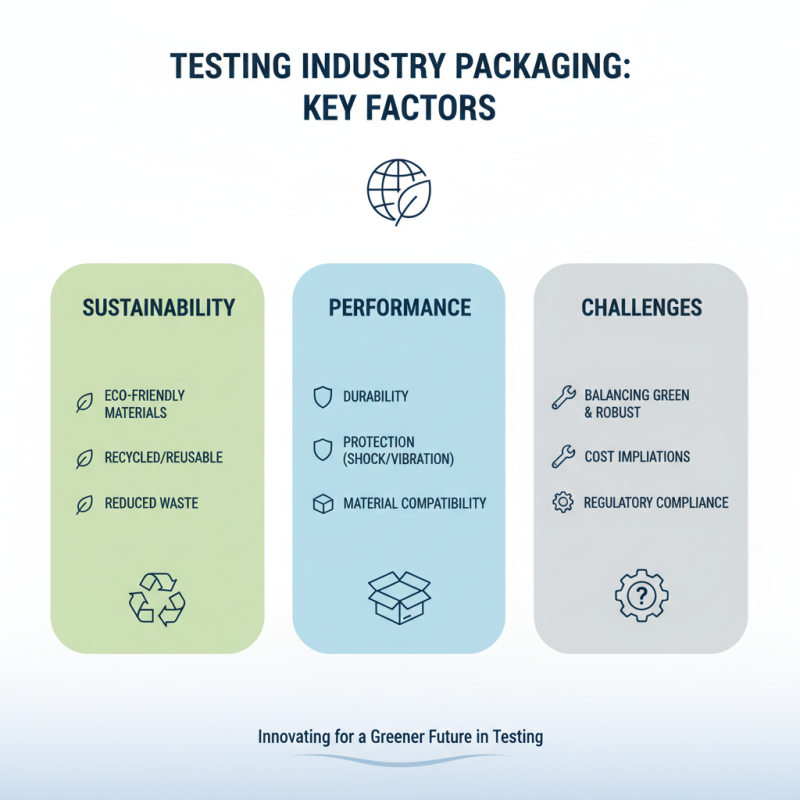
The landscape of testing packaging solutions is rapidly evolving. By 2026, we can expect increased focus on sustainability. Eco-friendly materials are becoming essential. Companies are investing in biodegradable and recyclable options. The demand for reduced waste is a priority. However, the challenge lies in balancing performance and environmental impact. Not all green materials meet high standards. This creates a need for ongoing evaluation.
Another emerging trend is automation in the testing process. Automated systems enhance efficiency and accuracy. They help in validating packaging durability and safety. Despite the advantages, there are hurdles. Implementing automation requires significant investments. Many companies might struggle with this transition. Upgrading equipment can be costly and time-consuming. Regular training for personnel is also necessary.
Consumer preferences are shifting, too. People now favor transparent packaging that reveals product quality. This trend requires innovative designs that capture attention while being functional. However, companies must be cautious. Overly complex designs can lead to higher production costs. They may fall short of effective testing. Balancing creativity with practicality is crucial for future success.
What are the Best Testing Packaging Solutions for 2026? - Emerging Trends in Testing Packaging Solutions for 2026
| Testing Method | Target Material | Key Benefits | Emerging Trends | Projected Adoption Rate (%) |
|---|---|---|---|---|
| Drop Testing | Plastics | Enhances durability assessment | Integration with smart sensors | 75% |
| Thermal Testing | Metals | Ensures temperature resistance | Real-time monitoring technologies | 60% |
| Vibration Testing | Glass | Simulates transportation conditions | Advanced simulation software | 70% |
| Barrier Testing | Composites | Improves shelf-life estimation | Nanotechnology applications | 65% |
| Accelerated Aging Tests | Flexible Films | Predicts long-term performance | AI-driven analytics | 80% |
Related Posts
-
Why Testing Packaging is Essential for Product Success and Quality Assurance
-

How to Improve Your Testing Packaging for Maximum Efficiency?
-

Top Customer Experience Packaging Strategies to Enhance Your Brand Loyalty
-
10 Essential Tips for Choosing Foam Cushion Packaging for Your Products
-

Top 5 3PL Packaging Trends to Watch in 2025 for Your Business
-

Top 10 Benefits of Molded Foam Packaging for Safe Shipping and Product Protection
 English
 Polski
  Čeština