
Request a Quote
  • Affiliates

What Is a Battery Cooler and How Does It Work?

A Battery Cooler helps control heat inside a battery pack, especially in electric vehicles and energy storage systems. Batteries generate heat while charging and discharging. Too much heat can affect performance, shorten service life, and increase the chance of damage. Cold conditions create different problems, so some systems also provide heating. The name can be confusing.

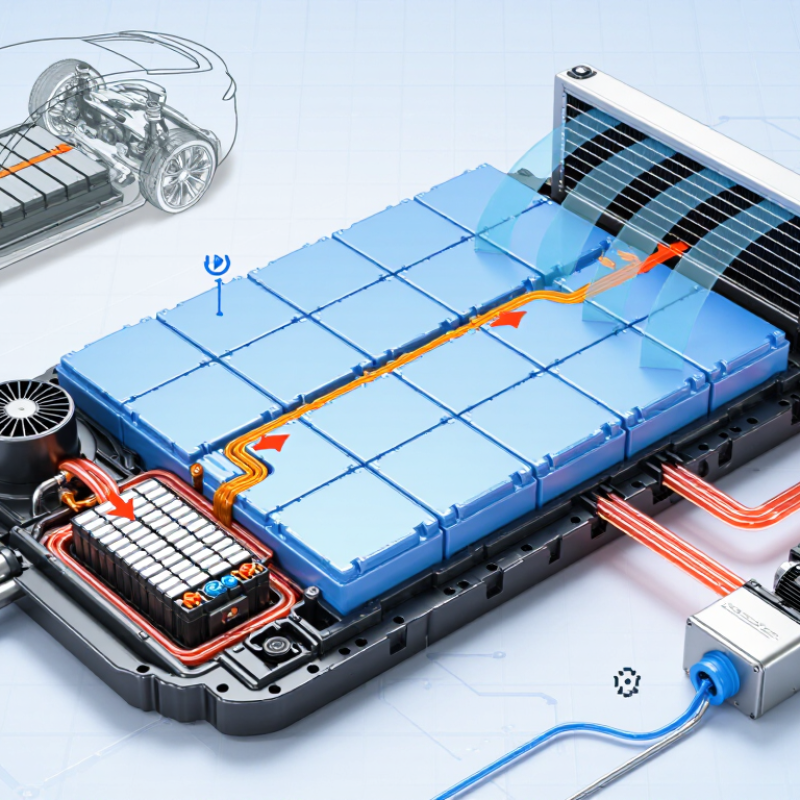
In many electric vehicles, cooling works through channels or plates near the battery cells. A pump moves coolant through these passages, carrying heat away from the pack. The warmed coolant may then pass through a radiator or Heat Exchanger, where airflow or a refrigeration circuit helps lower its temperature. Sensors monitor conditions at different points. A control system adjusts pumps, fans, or valves as needed. Some batteries use air cooling instead, though its effectiveness depends on pack design and operating conditions.

The details vary by vehicle and battery chemistry. A Battery Cooler is not simply a fan or a small accessory; it is part of a coordinated thermal-management system. During fast charging, for example, the system may work harder as the pack warms. Drivers might never see the coolant moving, but a dashboard warning or unusual temperature reading can signal a problem. Maintenance guidance differs by manufacturer, so owners should follow the vehicle manual rather than assume every system uses the same coolant or service interval. It is worth remembering that cooling cannot prevent every form of battery aging. It manages temperature; it does not make a battery immune to wear.
What Is a Battery Cooler and How Does It Work?

What a Battery Cooler Does: A Common 15–35°C Li-Ion Operating Target

A battery cooler manages heat inside a lithium-ion pack, helping cells stay near a practical 15–35°C operating target. This is a design range, not a universal limit: chemistry, cell design, and manufacturer guidance can shift the preferred temperatures. NREL’s research on vehicle battery thermal management highlights temperature control and even heat distribution as important design goals. Small differences matter. One section of a pack can run warmer than another during fast charging or a steep climb.

Cooling systems move heat away from cells using air or liquid. Sensors track temperatures, while pumps, fans, and control software respond when readings rise. In cold conditions, some systems also warm the pack; a cooler alone cannot solve both extremes. The U.S. Department of Energy’s battery research identifies temperature as a factor in battery performance and durability, supporting the need for active thermal management rather than relying on the vehicle’s outer casing.

The 15–35°C target helps balance usable power, charging performance, and long-term cell health. It is not a magic window. Real packs face uneven loads, changing weather, and imperfect sensor placement, so temperatures may vary across the module. NREL technical studies emphasize managing those temperature differences, not merely keeping one sensor reading inside range. A dashboard number can look reassuring while hiding warmer cells deeper in the pack.

Key Components: Cold Plates, Pumps, Coolant, Fans, and Heat Exchangers

A battery cooler controls cell temperature by moving heat away from the battery pack. In many liquid-cooled systems, cold plates sit beneath or around the cells. Heat passes from the cells into the plates, then into circulating coolant. The plate’s channels and contact with the pack affect how evenly heat is removed. Small gaps can matter.

A pump keeps the coolant moving through hoses and cold plates. The warmed fluid then reaches a heat exchanger, where heat transfers to outside air or another cooling circuit. Fans push air across the exchanger when natural airflow is not enough. The cooled fluid returns to the pack, and the cycle repeats. Simple in principle, but not effortless. A weak pump, blocked passage, or uneven cell contact can leave hot spots. Temperature sensors and control software help adjust pump and fan operation as conditions change. Cooler parts may improve heat transfer, yet add weight, cost, and possible leak points. That trade-off deserves attention. A system that performs well in a test may behave differently during repeated fast charging or in dusty, hot surroundings.

What Is a Battery Cooler and How Does It Work?

Approximate specific heat capacity of common coolant fluids at 20°C

A battery cooler circulates coolant through cold plates to carry heat away from battery cells. The pump moves the fluid, while a heat exchanger transfers heat out of the coolant; fans can help remove that heat to the surrounding air. Water-glycol mixtures provide freeze protection, but typically store less heat per kilogram per degree than water. Values are approximate and vary with mixture ratio and temperature.

How Cooling Works: Moving Heat from Battery Cells to Air or Coolant

A battery cooler moves heat away from battery cells so they can operate within their intended temperature range. Heat first passes through cell surfaces into nearby cooling plates, channels, or airflow. With air cooling, fans guide air across the pack. With liquid cooling, a pump circulates coolant through narrow passages beside the cells. The warmed coolant then releases heat through a heat exchanger, often to outside air. The path is simple in principle. The details matter.

Temperature sensors help a control system adjust fan speed or coolant flow as conditions change. During charging or heavy use, cells generate more heat, so cooling may need to increase. In practice, heat does not spread perfectly evenly. Cells near the middle of a pack may shed heat differently from those near an edge. A tidy diagram can hide that design challenge. Cooling also has to avoid making one area much colder than another.

Tips: Keep air inlets clear and check for visible leaks if your system uses liquid coolant. Follow the vehicle or equipment maker’s maintenance guidance. Don’t assume a louder fan means a fault; it may simply be responding to heat. If temperatures rise repeatedly, have the system inspected rather than guessing.

Cooling Methods Compared: Air-Cooled and Liquid-Cooled Battery Packs

What Is a Battery Cooler and How Does It Work?
Cooling Methods Compared: Air-Cooled and Liquid-Cooled Battery Packs

A battery cooler manages heat and helps keep cells within a suitable operating range. Heat builds during charging, driving, or sustained high power use. Managing it can support consistent performance and reduce uneven cell aging. The ideal temperature depends on the battery chemistry and pack design.

Air-cooled packs use fans and ducts to move air around the cells. They have fewer fluid components, but airflow can be less even during heavy use or hot weather. Liquid-cooled packs circulate coolant through channels or plates near the cells. This can remove heat more effectively and help balance temperatures. However, pumps, hoses, and seals add complexity and require inspection. Not always better. Pack size, workload, and climate all matter.

Tips: Keep air inlets clear of dust and debris. Watch for unusual temperature warnings, reduced performance, or visible coolant leaks. If anything seems off, follow the pack maker’s service guidance rather than opening the system yourself.

Temperature Control: Why Many Designs Target Cell-to-Cell Variation Near 5°C

A battery cooler moves heat away from cells through air channels, cooling plates, or circulating liquid. Its job is not simply to lower the pack’s average temperature. It also helps keep neighboring cells at similar temperatures. Small differences matter. Cells that repeatedly run warmer may age faster or behave differently during charging and discharging.

A cell-to-cell spread near 5°C is often an engineering target, not a universal pass-or-fail limit. A narrower spread can support more consistent performance and aging across a pack. But one number cannot describe every operating condition. Sensor position, ambient temperature, charging rate, and measurement timing all affect the reading. A probe near a cooling plate may not capture the hottest point inside a cell.

Consider a module working hard on a warm day: cells near the coolant inlet may be cooler than those farther along the flow path. Engineers can check several locations and adjust flow paths or cooling surfaces. No layout is perfectly uniform. Even a carefully tested system can show unexpected hot spots when real driving conditions change.

What Is a Battery Cooler and How Does It Work? - Temperature Control: Why Many Designs Target Cell-to-Cell Variation Near 5°C
Aspect Illustrative value or method How it works and why it matters
Battery cooler A thermal-management system for removing or adding heat It transfers heat between battery cells and a cooling or heating medium, helping keep cell temperatures within the limits selected for the battery chemistry and operating conditions.
Cell-to-cell temperature spread ΔT = hottest measured cell temperature − coolest measured cell temperature; around 5°C is a common design objective in many systems Limiting the spread can reduce uneven aging and performance among cells. A 5°C objective is not a universal regulatory limit; the acceptable value depends on the pack design, chemistry, test conditions, and manufacturer requirements.
Typical operating-temperature planning Many lithium-ion applications manage cells within an approximate 15–35°C operating region, subject to chemistry and system specifications This is a broad engineering reference, not a universal charging or operating limit. The battery maker’s specified temperature limits take precedence, especially during fast charging and cold-weather operation.
Air cooling Fans move ambient or conditioned air through ducts and around cells Air carries heat away by convection. The system is relatively simple, but airflow distribution and air temperature can affect how evenly cells are cooled.
Liquid cooling A pump circulates coolant through channels, often in cold plates near the cells Heat passes from cells into the plate and then into the flowing coolant. Flow distribution, plate contact, coolant temperature, and channel layout influence temperature uniformity.
Refrigerant-based cooling A refrigeration circuit removes heat through an evaporator or a connected coolant loop The system can provide active cooling when ambient air or a basic coolant loop is not sufficient. Controls must manage temperature and avoid local overcooling or condensation risks.
Immersion cooling Cells or modules contact a dielectric liquid that does not conduct electricity like water-based coolant The liquid absorbs heat directly from exposed surfaces and can help distribute heat. Fluid compatibility, sealing, serviceability, and system design are important considerations.
Sensors and control Temperature sensors report readings to the battery-management or thermal-control system The controller can adjust pumps, fans, valves, heaters, or refrigeration based on temperature readings and operating state. Sensor location and measurement accuracy affect the estimated cell-to-cell spread.
Heating in cold conditions A heater or heat-pump-based system may warm the battery when needed Heating can bring cells into a suitable temperature range before or during operation. Charging limits at low temperatures remain chemistry- and specification-dependent.
What affects temperature uniformity? Cell spacing, heat generation, contact resistance, coolant or airflow distribution, and pack geometry Designers assess these factors under different loads and ambient conditions. A single average pack temperature may not reveal local hot or cold spots.
Note: Temperature ranges and the approximately 5°C cell-to-cell spread are general engineering context, not universal limits or guarantees. Refer to the battery system’s specifications for applicable operating and charging requirements.

Article Source:

en_USEnglish