
Request a Quote
  • Affiliates

How to Choose the Right Electric Stacker?

Choosing the right Electric Stacker is not simply a matter of comparing prices. It requires a clear understanding of your warehouse layout, lifting needs, and daily workflow. A narrow aisle may favor a compact model with precise steering. A high rack may demand greater lift height and stronger residual capacity. Floor condition matters too. Small cracks can affect stability, especially when loads are elevated. These details often receive too little attention.

This guide explains the practical factors behind a dependable Electric Stacker purchase. It examines load capacity, lift height, battery type, charging time, turning radius, and operator visibility. Manufacturer specifications should be checked against real working conditions, not viewed as promises without context. Independent testing data and recognized safety guidance can provide useful confirmation. Still, no checklist is perfect. A machine that performs well in one warehouse may feel awkward in another. Operators should test controls, braking response, mast visibility, and noise levels before making a final decision. Small discomforts become expensive problems after hundreds of operating hours. A careful trial can reveal more than a polished brochure. The best choice balances safety, productivity, maintenance access, and long-term operating cost. It should also fit the people who use it every day. That point sounds obvious. It is often missed.
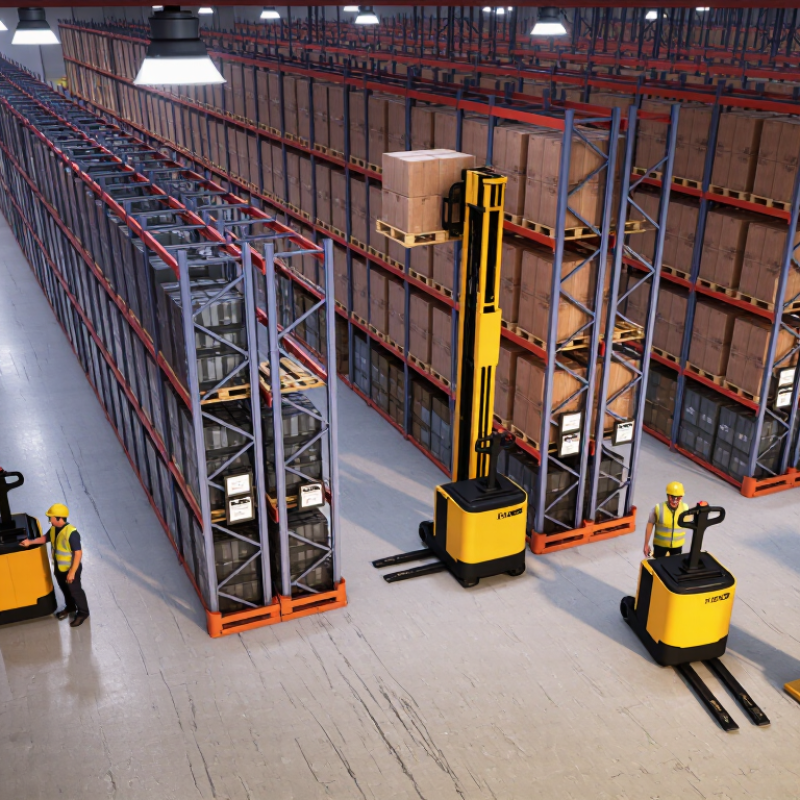
How to Choose the Right Electric Stacker?

Define Your Material Handling and Warehouse Requirements

Choosing the right electric stacker starts with defining work, not comparing lift heights. Walk the warehouse. Measure aisle width, rack height, floor slope, and turning space. Record pallet dimensions, load centers, daily moves, and peak-hour traffic. The Occupational Safety and Health Administration emphasizes rated capacity, stability, training, and operating conditions for powered industrial trucks. A stacker rated for 1,200 kilograms may not safely handle that load at maximum lift. Load charts matter. So does visibility.

Match the machine to the workflow. A pedestrian stacker may suit short transfers and occasional pallet storage. A platform model can reduce walking during longer routes. Check battery runtime against shifts, charging access, noise limits, and cold-room temperatures.

The MHI 2024 Annual Industry Report found that 83% of respondents planned to increase supply-chain technology investment within five years. This supports careful modernization, not automatic automation. Energy use, service access, and operator feedback deserve equal attention.

I have seen specifications look excellent, then fail because the turning radius was underestimated. A small mistake.

Tips:

Test with your real pallet. Load it fully. Drive the narrowest aisle. Repeat the busiest route. Ask operators where fatigue appears.

Compare five-year costs, including batteries, tires, inspections, training, and downtime. ISO 3691-1 provides safety requirements for industrial trucks, but local rules still apply.

Document test results. Recheck them after seasonal volume changes. A neat spreadsheet can still hide poor assumptions.

Compare Electric Stacker Types and Lifting Configurations

Choosing an electric stacker begins with the work pattern, not the highest advertised lift. Pedestrian models suit short travel, narrow aisles, and occasional pallet movement. Their compact chassis gives close control around storage racks. Platform models reduce walking over longer routes. Rider versions can improve throughput when pallets travel across a busy warehouse. Yet extra speed can expose poor aisle planning. Measure actual traffic first.

Lifting configuration changes more than height. A simplex mast offers limited lift and keeps the machine relatively low. It works where overhead clearance is restricted. Duplex masts provide greater elevation, often with useful free lift for low roofs or containers. Triplex masts reach higher locations while collapsing to a manageable transport height. Free lift matters when forks rise before mast sections extend. Check ceiling height, beam height, pallet weight, and load center. A small error here becomes expensive.

Capacity also depends on travel surface, battery condition, and turning space. Counterbalanced electric stackers handle loads without extended support legs, but they need wider aisles. Straddle-leg designs work well with open-bottom pallets, although leg clearance can limit flexibility. Review the residual-capacity chart at the exact lifting height. Do not rely on the rated maximum alone. The first configuration is often not the best one. I would rather accept slower lifting than choose a mast that repeatedly meets the ceiling. Test the stacker with a real pallet, uneven flooring, and the operators who will use it.

Check Load Capacity, Lift Height, and Aisle Compatibility

How to Choose the Right Electric Stacker?

Check the rated load capacity before comparing prices or battery options. A 1,000-kilogram stacker may not safely lift 1,000 kilograms at maximum height. Load center distance, mast design, and lift height can reduce its residual capacity. Check the technical data sheet carefully. Then compare it with your heaviest pallet, not your average one. Leave a practical safety margin. However, a fixed margin is not suitable for every warehouse.

Lift height should match the highest storage position and the available ceiling clearance. Measure beams, sprinklers, doors, and lighting fixtures. A pallet lifted too close to a ceiling can create dangerous contact. The floor also matters. Uneven concrete, expansion joints, and wet areas may affect stability and braking. Small details matter.

Aisle compatibility is equally important. Measure the narrowest aisle, pallet length, rack depth, and turning space. Do not rely only on the published turning radius. Real pallets may be damaged, oversized, or poorly centered. I would mark the aisle with tape and test a loaded unit at walking speed. Watch the rear swing and visibility. It may feel slow, but that test reveals problems quickly. Also confirm charging access, battery runtime, and operator sightlines. A stacker that fits on paper may still be awkward during a busy shift. Recheck the measurements before ordering.

How to Choose the Right Electric Stacker? - Check Load Capacity, Lift Height, and Aisle Compatibility

Compare typical electric stacker configurations against your load, rack, floor, and operating-space requirements.

Typical specification ranges for selection guidance. Actual capacity and dimensions vary by mast, attachment, pallet type, and manufacturer configuration.
Electric Stacker Type Rated Load Capacity Typical Lift Height Recommended Aisle Width Typical Turning Radius Best-Fit Applications
Walkie Electric Stacker 1,000–1,500 kg 1.6–3.5 m 2.4–2.8 m 1.5–1.8 m Short travel distances, low- to medium-height stacking, small warehouses
Straddle-Leg Stacker 1,000–1,500 kg 2.5–3.5 m 2.3–2.7 m 1.5–1.8 m Mixed pallet sizes, block stacking, applications requiring adjustable leg width
Counterbalance Electric Stacker 1,500–2,000 kg 3.0–5.0 m 2.8–3.2 m 2.1–2.5 m Closed-bottom pallets, open floor areas, heavier loads, frequent handling
Reach Stacker 1,200–2,000 kg 3.0–5.5 m 2.6–3.1 m 1.8–2.3 m High-density racking, longer travel distances, pallet placement at upper levels
Platform Ride-On Stacker 1,200–2,000 kg 2.5–4.5 m 2.6–3.0 m 1.8–2.2 m Medium- to long-distance pallet movement and high-throughput warehouse work

Selection Checklist

Check Dimension What to Confirm Practical Selection Rule
Load Capacity Load weight, load center, pallet condition, and attachment weight Choose a rated capacity above the maximum real load, and verify the capacity at the required lift height.
Lift Height Top rack beam height, pallet height, ceiling clearance, and collapsed mast height Select a mast that reaches the highest storage position while remaining below the available overhead clearance.
Aisle Compatibility Aisle width, pallet length, rack depth, turning space, and required maneuvering clearance Measure the narrowest operating aisle and compare it with the manufacturer’s specified right-angle stacking aisle width.
Pallet Design Open or closed bottom, entry direction, fork length, and pallet overhang Use straddle legs or a counterbalance configuration when the pallet design prevents standard fork access.
Floor Conditions Flatness, slope, joints, ramps, surface strength, and indoor or outdoor exposure Confirm wheel type, ground clearance, braking performance, and slope rating for the actual worksite.
Operating Cycle Daily operating hours, travel distance, lifting frequency, and charging access Match battery capacity and charging method to the work cycle; consider a spare battery for multi-shift use.
Important: Capacity decreases as the load center increases and the forks are raised. Always use the official load-capacity chart for the selected configuration and verify the complete travel path before purchase.

Evaluate Battery Systems, Controls, Safety, and Operator Comfort

How to Choose the Right Electric Stacker?

Evaluate Battery Systems, Controls, Safety, and Operator Comfort

A suitable electric stacker starts with the battery system, not the purchase price. Check whether the battery supports your daily operating hours, charging schedule, and available power supply. Lithium batteries may allow faster charging, while lead-acid systems often require more maintenance and ventilation planning. Ask for tested runtime data under realistic loads. Catalog figures can look optimistic.

Controls should feel predictable when the operator wears gloves. Smooth acceleration helps protect fragile goods and reduces sudden load movement. Test the tiller, lifting buttons, emergency stop, and travel direction in person. I have found that small control delays become frustrating during repetitive work. This detail is easy to overlook.

Safety features need practical evaluation. Confirm visibility around the mast, braking response, warning alerts, and stability on uneven floors. The rated capacity must match the load center, lift height, and pallet condition. Operator comfort also matters. Adjustable handles, low vibration, and clear displays can reduce fatigue during long shifts. Even a quiet machine may feel tiring if the handle angle is wrong.

Tips: Measure your narrowest aisle before choosing. Test the stacker with actual pallets. Check battery access and charging time. Ask operators to use it for fifteen minutes. Their feedback may reveal problems that specifications miss. Do not ignore service training; a well-designed machine still depends on correct daily inspections.

How to Choose the Right Electric Stacker?

Key evaluation benchmarks for battery systems, controls, safety, and operator comfort

Compare models against practical operating benchmarks: lithium-ion systems can support approximately 2-hour opportunity charging, indoor stackers commonly operate near 6 km/h, safety packages should include at least three core protections, and ergonomic controls should be reachable without releasing the steering handle.

Assess Maintenance Needs, Total Cost, and Supplier Support

How to Choose the Right Electric Stacker?

An electric stacker should be judged beyond its purchase price. In daily warehouse operations, small maintenance delays can disrupt receiving, picking, and loading schedules. Check the battery system, drive components, brakes, forks, and safety controls before choosing a model. Ask for recommended inspection intervals and expected replacement costs. A clear maintenance plan is more valuable than impressive lifting figures alone.

Calculate the total cost over several years. Include electricity, batteries, tyres, servicing, training, downtime, and technician visits. A lower-priced machine may become expensive if spare parts arrive slowly. I once underestimated charging requirements, and the unit lost useful hours during busy shifts. That mistake showed me that floor space, charging access, and operator habits also affect ownership costs. Request documented service records and realistic energy estimates. Do not rely only on sales claims.

Tips: Ask suppliers about response times, technician coverage, spare-part availability, and warranty limits. Request a practical demonstration with your pallet sizes and aisle widths. Speak with current users if possible. Their complaints may reveal more than polished specifications. Compare at least three written quotations, including service fees. Leave room for uncertainty; maintenance costs can change with workload and operator training. Reliable support should be measurable, not merely promised.

en_USEnglish